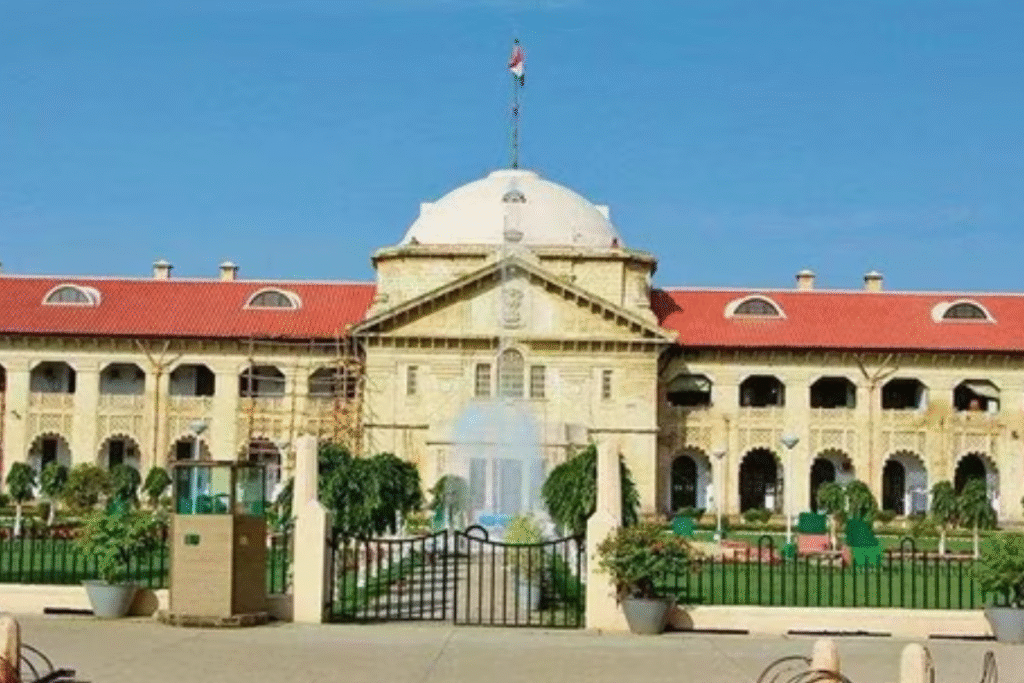
The Allahabad High Court has advised all trial court judges in Uttar Pradesh to refrain from recording abusive or offensive language in judicial orders and witness statements.
Justice Harvir Singh made this observation while hearing Santreepa Devi v. State of UP and 6 Others, noting that both the Supreme Court and the High Court have repeatedly emphasised the use of decent and dignified language in judicial proceedings.
The direction came after the Court found that a Special Judge under the Scheduled Castes and Scheduled Tribes (Prevention of Atrocities) Act, 1989, had reproduced objectionable and abusive words in both an order and a witness statement.
“The recording of filthy or abusive language in pleadings is unnecessary and inappropriate. All judicial officers across the State are advised to take due precautions and avoid such language, ensuring that the decorum and dignity of the judiciary are reflected in every order,” Justice Singh stated.
He further clarified that the direction was issued with a positive intention and should not be taken in a negative sense. The Court has also instructed that the order be circulated among all judicial officers in Uttar Pradesh for compliance.
The case before the Court involved a criminal revision plea challenging the dismissal of a complaint by the Special Judge under the SC/ST Act. The complaint related to an altercation in which a woman alleged her mangalsutra was snatched at gunpoint and injuries were inflicted.
However, the trial court had dismissed the case due to insufficient evidence. The High Court agreed with that decision, observing that the statements of witnesses were inconsistent and lacked coherence to make out a prima facie case.
“The other witnesses did not support the version of PW1, the complainant herself. Mere allegations are not enough unless supported by other credible material. The medical report shows that the injuries were simple in nature, and there is no clear evidence about the weapon used. Hence, the order of the Special Judge cannot be considered illegal or arbitrary,” the Bench concluded.
——————————————–
Have a case update, article, or deal to share? Courtroom Today welcomes contributions from lawyers, law firms, and legal professionals. Write to contact@courtroomtoday.com