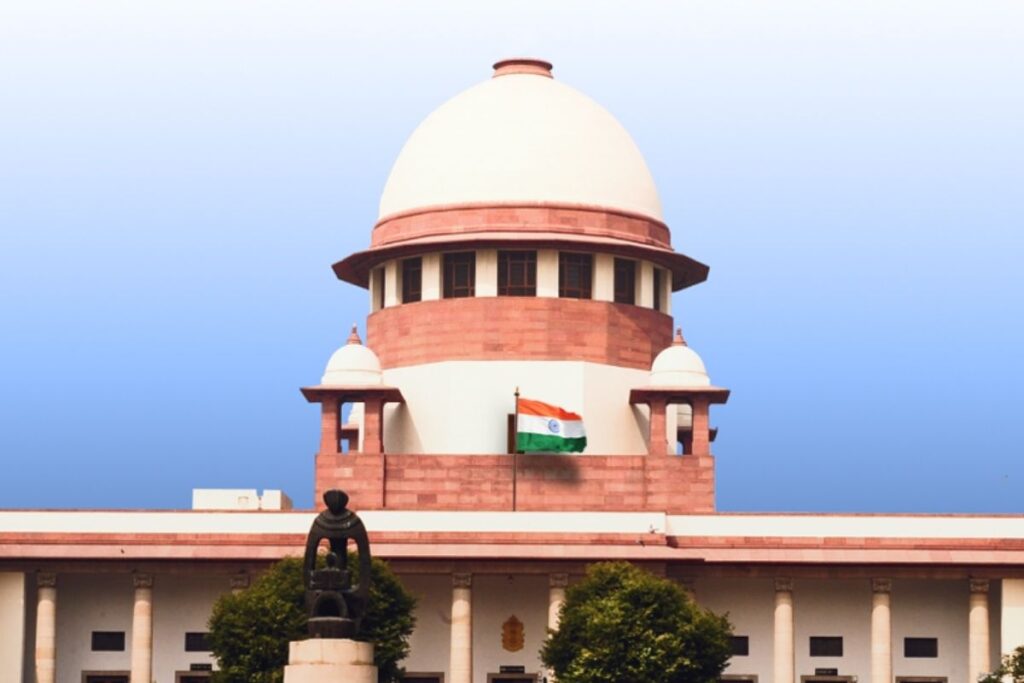
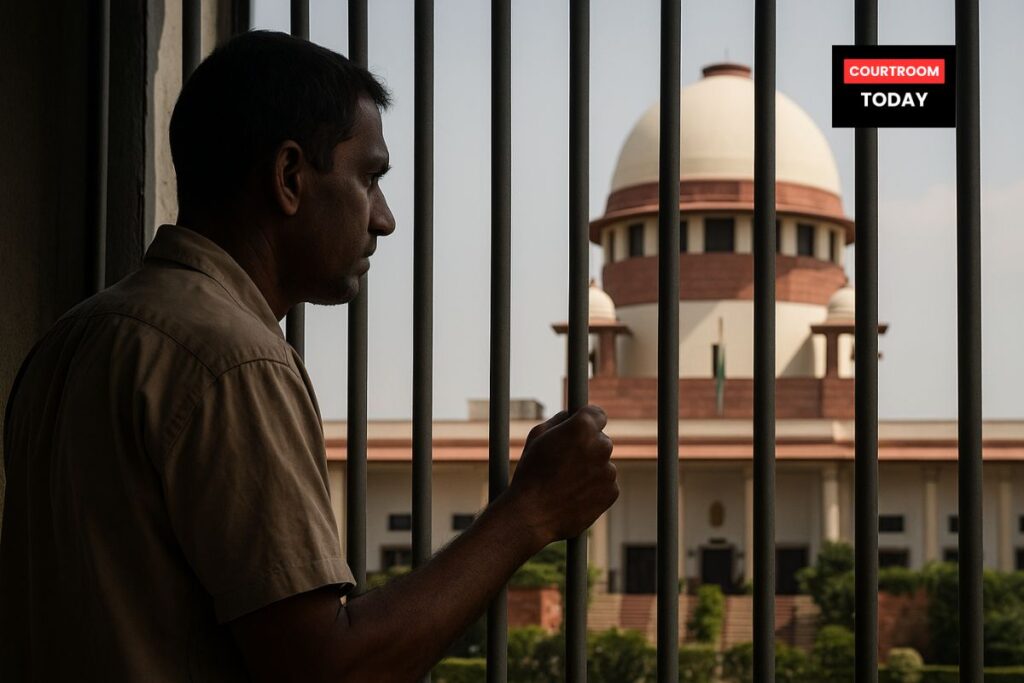
A public interest litigation (PIL) has been filed in the Supreme Court challenging the denial of voting rights to undertrial prisoners in India. The petition, filed by lawyer Sunita Sharma, argues that the blanket ban under Section 62(5) of the Representation of the People Act, 1951 is arbitrary and unconstitutional.
A Bench of Chief Justice of India BR Gavai and Justice Vinod Chandran has sought responses from the Central government and the Election Commission of India (ECI) on the matter.
Section 62(5) of the Act currently bars anyone confined in a prison—from those awaiting trial to those convicted—from voting. The provision reads:
“No person shall vote at any election if he is confined in a prison, whether under a sentence of imprisonment or transportation or otherwise, or is in the lawful custody of the police.”
The petitioner contends that this restriction unfairly includes undertrials, who are yet to be convicted of any offence, and thus violates the principle of presumption of innocence.
According to Sharma, over 75% of India’s prisoners are undertrials, many of whom spend years, even decades, in custody before acquittal. “In 80 to 90 percent of cases, such individuals are ultimately acquitted, yet they are denied the democratic right to vote during their long incarceration,” the plea highlights.
She also pointed out an inconsistency in the law: convicted politicians can still contest elections unless disqualified for specific serious offences under Section 8 of the same Act, while undertrial citizens are denied even the basic right to vote.
“If convicted individuals can influence law-making by contesting elections, how can citizens who have not been proven guilty be denied their right to choose representatives?” the plea questions.
The petition further notes that the Election Commission has previously arranged for “mobile voting” facilities for people in hospitals and nursing homes. Sharma argued that similar arrangements—such as polling booths inside jails or postal ballots—can be easily introduced to allow undertrials to exercise their right to vote.
“It is both feasible and constitutionally essential to facilitate voting for incarcerated electors,” the petition states, adding that this could be done through polling stations in India’s 1,350 prisons or by postal ballots.
While the Supreme Court in 1997 (Anukul Chandra Pradhan v. Union of India) had upheld the validity of Section 62(5), that ruling treated voting as a statutory right. Sharma now argues that the Court’s more recent interpretation, especially in Anoop Baranwal v. Union of India (2023), recognises voting as a fundamental right under Part III of the Constitution.
The petitioner has urged the Supreme Court to issue guidelines enabling undertrial prisoners to vote, except those convicted of corrupt practices under election laws. She has also requested that the Court clarify Section 62(5) by specifying conditions under which a prisoner may be denied voting rights—such as the nature or seriousness of the offence.
——————————————–
Have a case update, article, or deal to share? Courtroom Today welcomes contributions from lawyers, law firms, and legal professionals. Write to contact@courtroomtoday.com