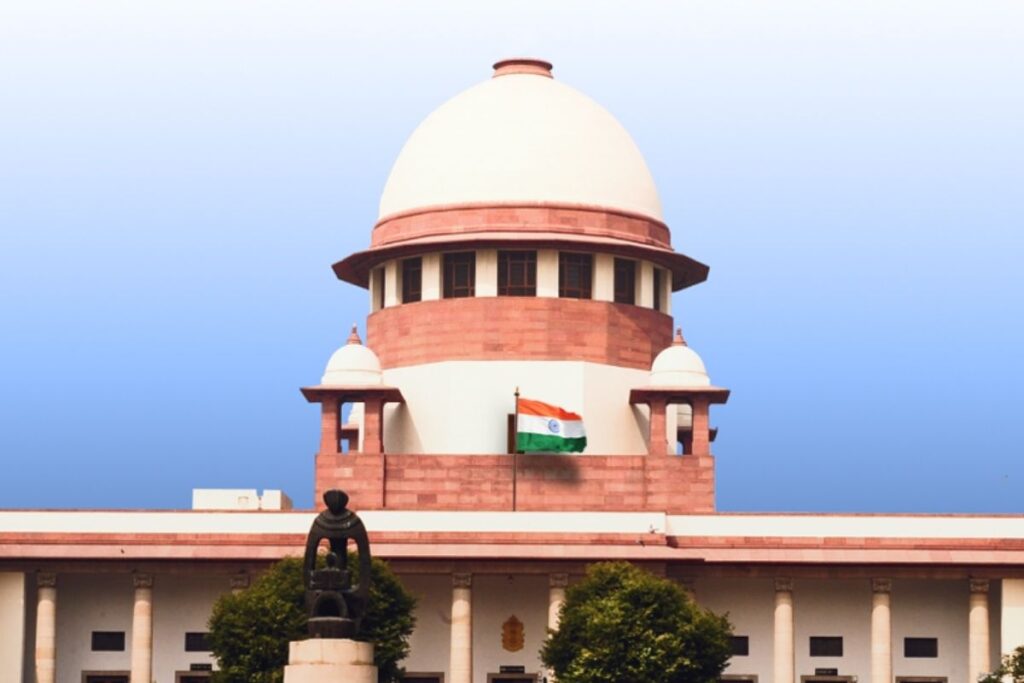
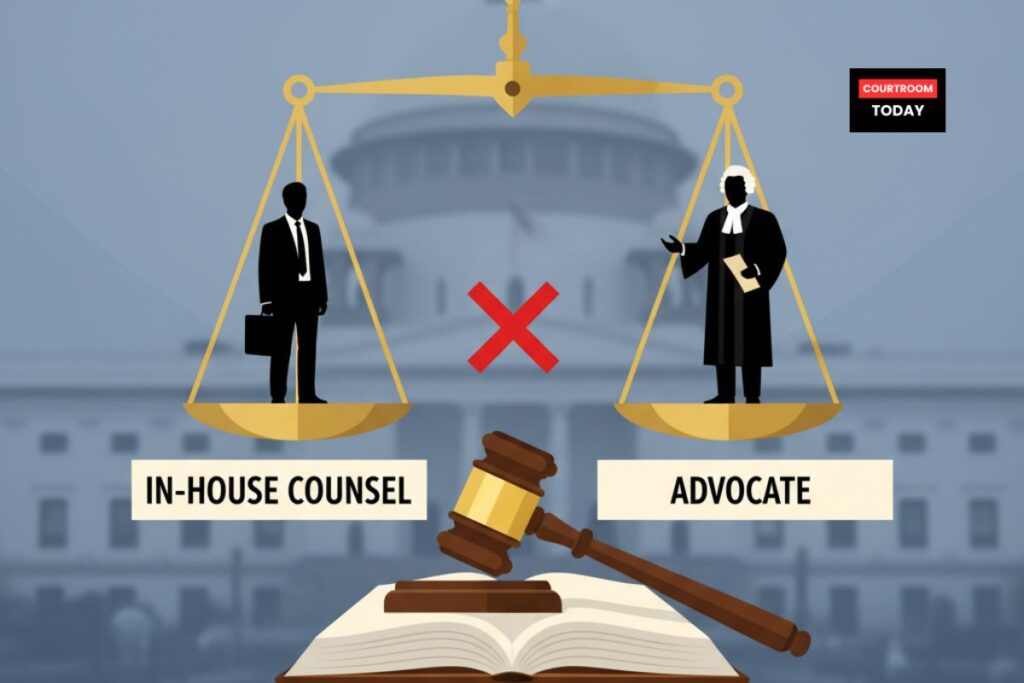
The Supreme Court of India has clarified that in-house legal counsels employed by companies are not “advocates” under the law and, therefore, cannot claim attorney–client privilege under Section 132 of the Bharatiya Sakshya Adhiniyam, 2023 (BSA).
A Bench comprising Chief Justice of India BR Gavai, and Justices K Vinod Chandran and NV Anjaria made this ruling in a suo motu matter concerning the summoning of advocates by investigating agencies to disclose information about their clients.
The Court held that Section 132’s protection applies only to advocates who are engaged in practising law before courts and not to salaried legal professionals employed by companies.
“In-house counsel will not be entitled to the privilege under Section 132 since they are not Advocates practising in courts as spoken of in the BSA,” the Bench observed.
Background of the Case
The issue arose after the General Counsels Association of India (GCAI) intervened in the proceedings. The association argued that in-house counsels perform the same legal functions as external advocates and should therefore be given equal protection of confidentiality under the law.
However, the Court disagreed, citing Rule 49 of the Bar Council of India Rules, framed under the Advocates Act, 1961, which prohibits full-time salaried employees from practising as advocates.
The Bench also relied on the Constitution Bench decision in Rejanish KV v. K Deepa, which reaffirmed that a person who takes up regular employment ceases to have the right to practise as an advocate.
Court’s Reasoning
The judges emphasised that independence is a key feature of the legal profession, and this independence is compromised when a lawyer becomes part of a company’s management structure.
“An in-house counsel, though engaged in advising his employer on legal matters, would naturally be influenced by the company’s business interests and obliged to protect them,” the Court said.
Hence, such a person cannot be considered an “advocate” within the meaning of the Advocates Act.
Limited Confidentiality Still Applies
While denying attorney–client privilege to in-house counsels under Section 132, the Court noted that Section 134 of the BSA still provides a limited form of confidentiality.
Section 134 prevents a person from being forced to disclose confidential communications with their legal adviser before a court. This means in-house lawyers may still be able to claim general confidentiality protection, even though they are not entitled to the statutory privilege reserved for practising advocates.
Key Takeaways
- In-house counsels are not “advocates” under the Advocates Act.
- Attorney–client privilege under Section 132 of the BSA applies only to practising advocates.
- Rule 49 of the Bar Council of India Rules bars salaried employees from practising as advocates.
- In-house lawyers may still claim limited confidentiality under Section 134 of the BSA.
- Independence and freedom from employer influence are central to the recognition of professional privilege.
Conclusion
This ruling draws a clear line between independent advocates and company-employed legal advisors, reaffirming that professional privilege under Indian law is meant to protect independent legal practitioners.
At the same time, the Court acknowledged that corporate legal communications deserve some level of confidentiality, ensuring a fair balance between transparency and privacy in legal processes.
——————————————–
Have a case update, article, or deal to share? Courtroom Today welcomes contributions from lawyers, law firms, and legal professionals. Write to contact@courtroomtoday.com