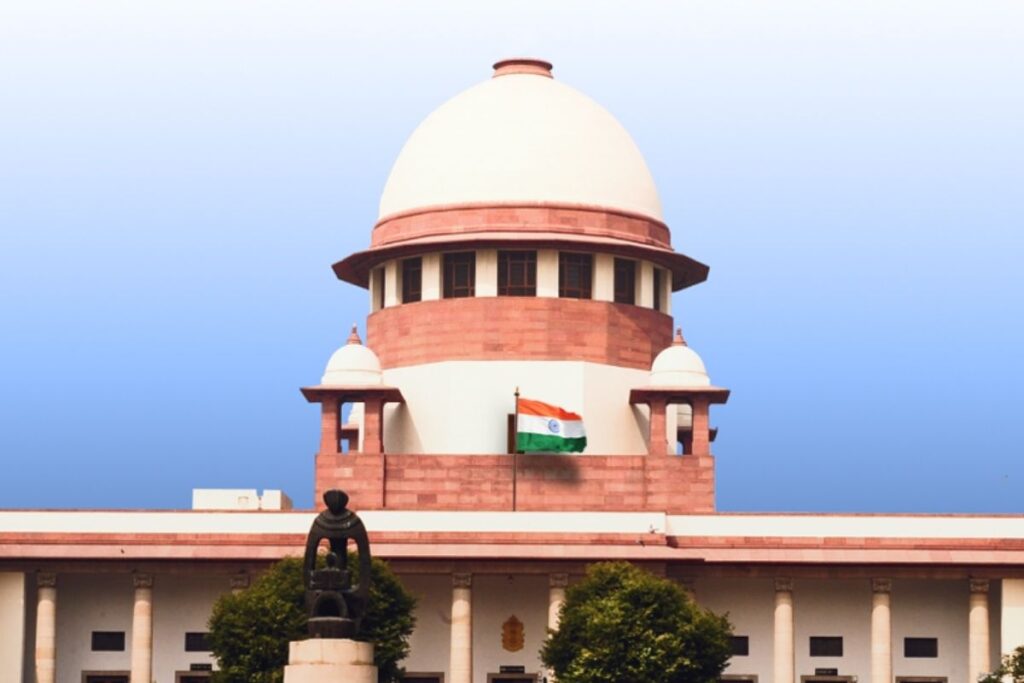

The Supreme Court has ruled that investigating agencies such as the Enforcement Directorate (ED) cannot, as a general rule, summon lawyers in connection with the advice they give to their clients.
A Bench of Chief Justice of India BR Gavai and Justices K Vinod Chandran and NV Anjaria clarified that such summons can be issued only in exceptional situations mentioned under Section 132 of the Bharatiya Sakshya Adhiniyam, 2023 (BSA), and only after approval from a senior investigating officer.
Section 132 of the BSA protects the confidentiality of lawyer–client communications. It, however, allows limited exceptions—such as when a lawyer becomes aware of an illegal act or fraud committed by the client.
“Investigating officers shall not issue summons to lawyers appearing for the accused. If such summons are issued, they must specify the exceptions under Section 132 and state them clearly,” the Court directed.
Although the Court noted that the law was already clear, it issued a set of directions to safeguard privileged communications between advocates and their clients.
Key Directions by the Supreme Court
- No routine summons: Investigating agencies cannot summon lawyers representing accused persons just to extract case-related information unless it falls under exceptions in Section 132 of the BSA.
- Detailed justification required: If a summons is issued, the agency must mention the specific exception being invoked and record the satisfaction of a senior officer not below the rank of Superintendent of Police before issuing it.
- Judicial review allowed: Such summons can be challenged by the lawyer or the client before a court under Section 528 of the Bharatiya Nagarik Suraksha Sanhita, 2023 (BNSS).
- Documents and evidence: While lawyers’ communications are protected, the production of documents is governed by Section 94 of the BNSS and Section 165 of the BSA in criminal cases, and by Order XVI Rule 7 of the Civil Procedure Code in civil cases.
- Handling of digital devices: If digital devices like laptops or phones belonging to lawyers are produced before a court, they can only be accessed in the presence of the advocate or client, and with the help of a digital expert chosen by them. The confidentiality of other clients’ data must also be preserved.
- In-house counsel not covered by privilege: The Court clarified that in-house legal advisors employed by companies are not “advocates” under the BSA and thus cannot claim the same privilege of confidentiality. However, they are still protected under Section 134 of the BSA for communications made to them in their capacity as legal advisors.
Background of the Case
The judgment came in a suo motu case initiated after reports surfaced that the ED had summoned Senior Advocates Arvind Datar and Pratap Venugopal.
The summons were related to the agency’s investigation into the issuance of Employee Stock Option Plans (ESOPs) worth over ₹250 crore by Care Health Insurance to former Religare Enterprises chairperson Rashmi Saluja. Datar had given a legal opinion on the matter, while Venugopal was the advocate-on-record.
Following widespread criticism from bar associations across India, the ED withdrew the summons. Attorney General R Venkataramani told the Court that the ED’s action was wrong, and Solicitor General Tushar Mehta agreed, stating that lawyers cannot be summoned merely for professional advice.
However, the Solicitor General also pointed out that statements made during court hearings are sometimes taken out of context, and cautioned against creating false narratives against institutions or agencies.
Supreme Court’s Observation on Gujarat Case
The Bench also struck down a summons issued by the Assistant Commissioner of Police, Ahmedabad, to a lawyer, calling it illegal.
It expressed surprise that the Gujarat High Court had refused to quash the summons, calling that decision “flawed and erroneous.” The top court emphasised that such actions by investigating officers undermine the legal protection afforded to advocates and erode the principle of client confidentiality.
Significance of the Judgment
This ruling reaffirms the independence of the legal profession and ensures that advocates can represent their clients without fear of harassment or misuse of investigative powers. It balances the need for fair investigation with the protection of professional privilege—a cornerstone of the justice system.
——————————————–
Have a case update, article, or deal to share? Courtroom Today welcomes contributions from lawyers, law firms, and legal professionals. Write to contact@courtroomtoday.com