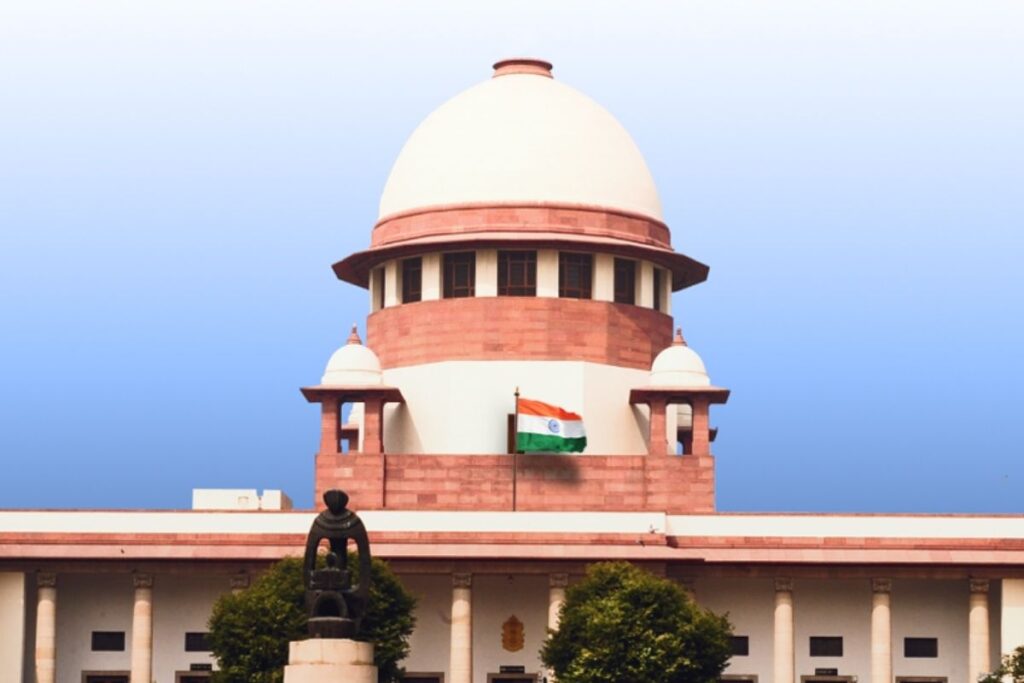
The Supreme Court on Tuesday reserved its verdict on creating uniform seniority rules for judges in higher judicial services across India. The move aims to end long-standing disparities in career progression between direct recruits and promotee judges from the lower judiciary.
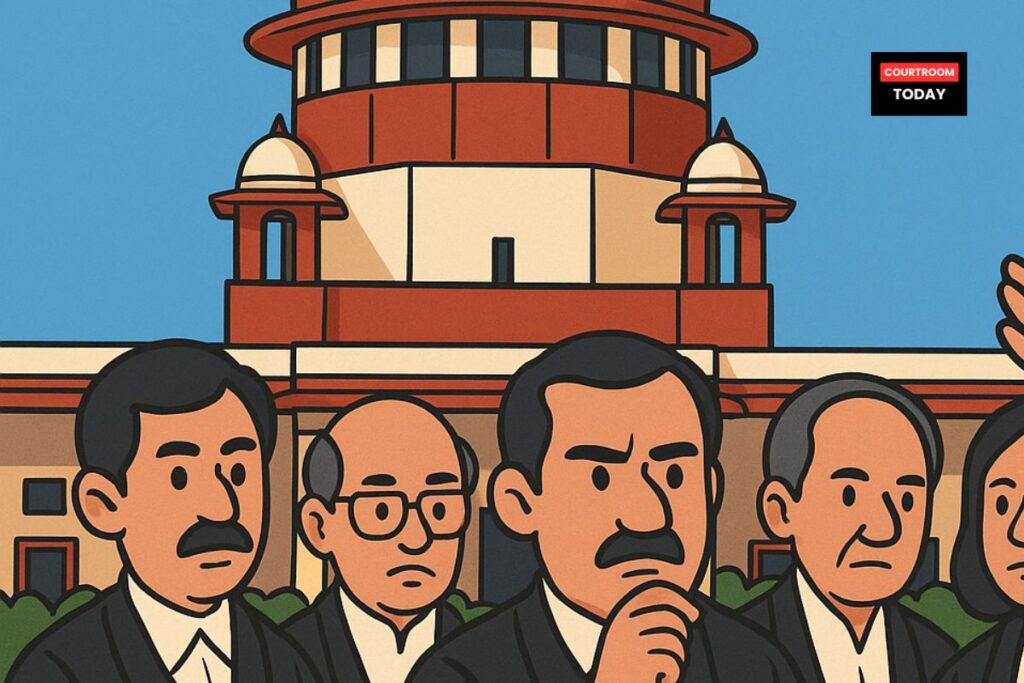
A Constitution Bench led by Chief Justice B.R. Gavai, along with Justices Surya Kant, Vikram Nath, K. Vinod Chandran, and Joymala Bagchi, heard detailed arguments in the case All India Judges Association v. Union of India (W.P.(C) No. 1022/1989). The key question before the court is whether a reservation quota should be introduced for Civil Judges (Junior Division) while appointing District Judges.
Key Submissions Before the Bench
Senior Advocate P.S. Patwalia highlighted that even when candidates join in the same year, their dates of joining are often treated differently, leading to unfair seniority rankings. He suggested a 50:50 balance between direct recruits and promotees in the zone of consideration but admitted this would not completely resolve the issue.
Senior Advocate Jaideep Gupta pointed out inconsistencies in how states apply the ROTA system (rotation of vacancies). He said, “Some states allocate the first two posts to promotees and the next three to direct recruits, which means promotees end up dominating the cadre.”
Gupta argued against introducing any new quota system, stating that merit should remain the deciding factor. “Simpler reforms within the existing structure can address the issue,” he suggested, warning that drastic changes could disrupt the current balance.
Senior Advocate Jayant Bhushan supported the view that educational qualification, not the mode of recruitment, should determine classification.
Senior Advocate Gopal Sankarnarayanan submitted that it was wrong to assume promotee judges are superior to direct recruits. “None of the 34 judges in this court are promotees,” he remarked, underlining that performance should be assessed individually.
Debate on Diversity and Data Reliability
During the hearing, one counsel stressed the importance of diversity and the need for an impact assessment before finalising the policy. Responding, Chief Justice Gavai clarified, “No one is against diversity. The idea is to ensure representation from all areas.”
Another counsel representing direct recruits from Maharashtra argued that the Shetty Commission report was outdated, and the Court should not rely on decade-old data. The Chief Justice assured that the Bench was not doing so.
Concerns Over Recruitment Delays
When the hearing resumed post-lunch, Senior Advocate Vipin Sanghi said the main issue was “bunching”—a problem arising when recruitment is not held every year. He explained that annual recruitments would naturally maintain proportional representation under the ROTA system.
He proposed that eligibility should be based on the year the vacancy arises, and age limits should correspond to that year.
Counsel for direct recruits from Madhya Pradesh argued that the problem was not pan-India, and reforms should not be imposed uniformly if only a few states were facing issues.
Another lawyer pointed out that the non-implementation of the ROTA system, rather than its structure, was the real cause of imbalance. “If implemented properly, the system would work efficiently,” he said.
Counsel from Haryana added that due to long waiting periods, direct recruits were being denied opportunities for promotion. “We had only six direct recruits in ten years. One candidate waited three years to join and will retire as an Additional District Judge without promotion,” he noted.
Amicus Curiae’s Recommendations
Amicus Curiae Senior Advocate Siddharth Bhatnagar told the Court that the matter is of national importance, not limited to a few states. He said, “Even if the roster functions smoothly, the age disparity between direct recruits and promotees will continue to affect promotions and financial progressions.”
He explained that when judges from different entry levels merge into one cadre, they cannot demand quota benefits based on earlier distinctions. His concluding remark summed up the debate:
“This is not about taking away opportunities but improving the efficiency of the system.”
After extensive arguments, the Supreme Court reserved its judgment, marking the end of another significant chapter in the long-running litigation concerning judicial service reforms in India.
——————————————–
Have a case update, article, or deal to share? Courtroom Today welcomes contributions from lawyers, law firms, and legal professionals. Write to contact@courtroomtoday.com