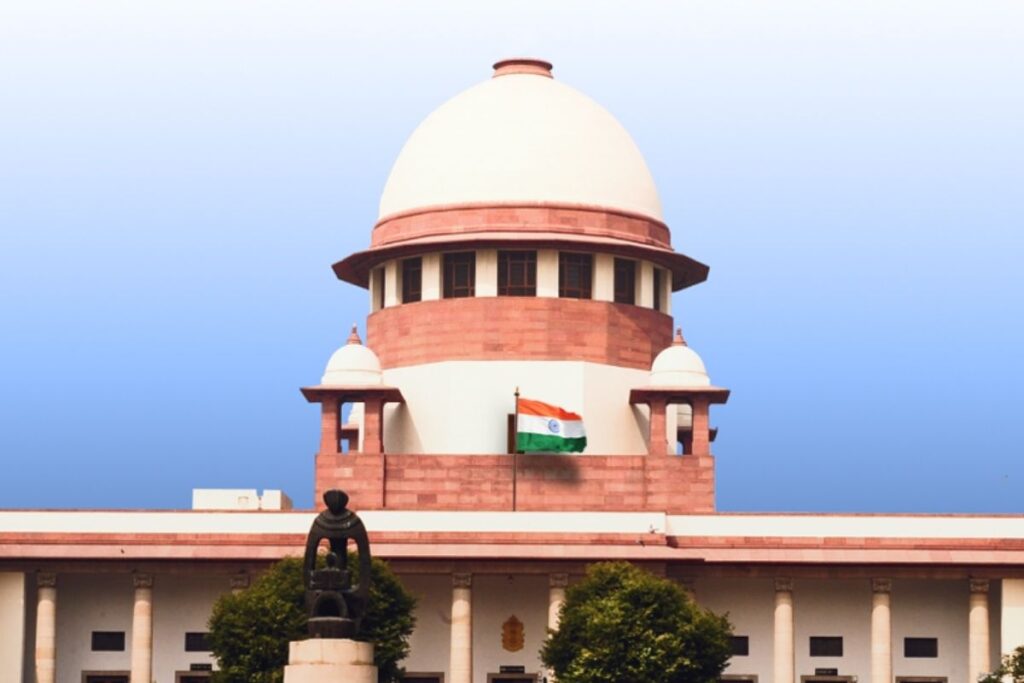
The Supreme Court has ruled that a company buying software to manage or automate its business operations cannot be treated as a “consumer” under the Consumer Protection Act, 1986. The judgment came in the case M/S Poly Medicure Ltd. vs. M/S Brillio Technologies Pvt. Ltd., decided by a Bench of Justices JB Pardiwala and Manoj Misra.
The Court clarified that when a business purchases software to improve its functioning, the transaction is directly connected to commercial activity and profit-making. Since the Consumer Protection Act excludes purchases made for commercial purposes, such companies cannot file consumer complaints.
Background
Poly Medicure, a medical devices company involved in export and import, bought a licence for Brillio’s “Opti Suite” software. It later alleged that the software malfunctioned and filed a complaint before the Delhi State Consumer Disputes Redressal Commission in 2019, seeking refund of the licence fee and development charges.
Both the State Commission (2019) and the National Consumer Disputes Redressal Commission (2020) rejected the complaint. They held that the company had bought the software to support its business processes, which made the transaction a commercial one.
Poly Medicure then appealed to the Supreme Court, arguing that the software was purchased for “self-use”, not for resale, and that internal use should not be treated as a commercial purpose. It relied on previous judgments where self-employed individuals were considered consumers even when the product supported their livelihood.
Supreme Court’s Findings
The Court rejected these arguments.
It observed that while companies may file consumer cases, they can do so only if the goods or services are not linked to commercial profit. In this case, the software was used for export documentation, tracking consignments, handling foreign exchange, and managing statutory benefits — all of which were core business functions.
The Court also clarified that the benefit given to self-employed individuals cannot be extended to companies. For businesses, the key test is the dominant purpose behind purchasing the product.
Automating operations helps save time, reduce costs, and increase efficiency — all of which contribute to profit. Therefore, the software purchase had a clear commercial nexus.
The Court observed:
The software had a direct connection with the company’s profit generation. Hence, the buyer cannot be treated as a consumer under Section 2(1)(d) of the 1986 Act.
With this reasoning, the Supreme Court upheld the earlier orders and dismissed the company’s appeal.
——————————————–
Have a case update, article, or deal to share? Courtroom Today welcomes contributions from lawyers, law firms, and legal professionals. Write to contact@courtroomtoday.com