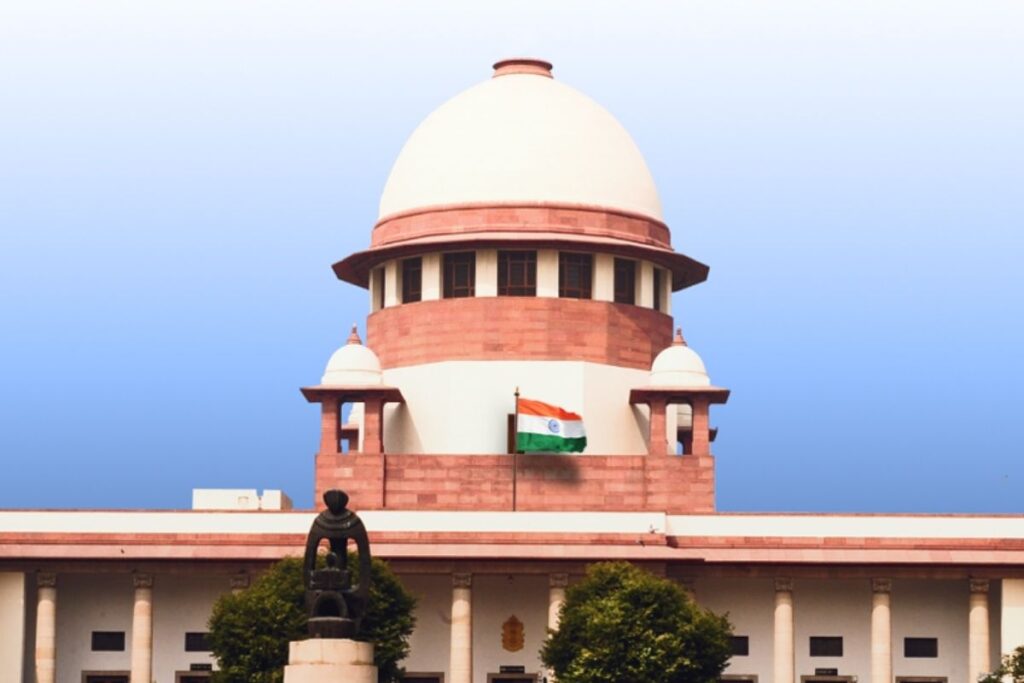
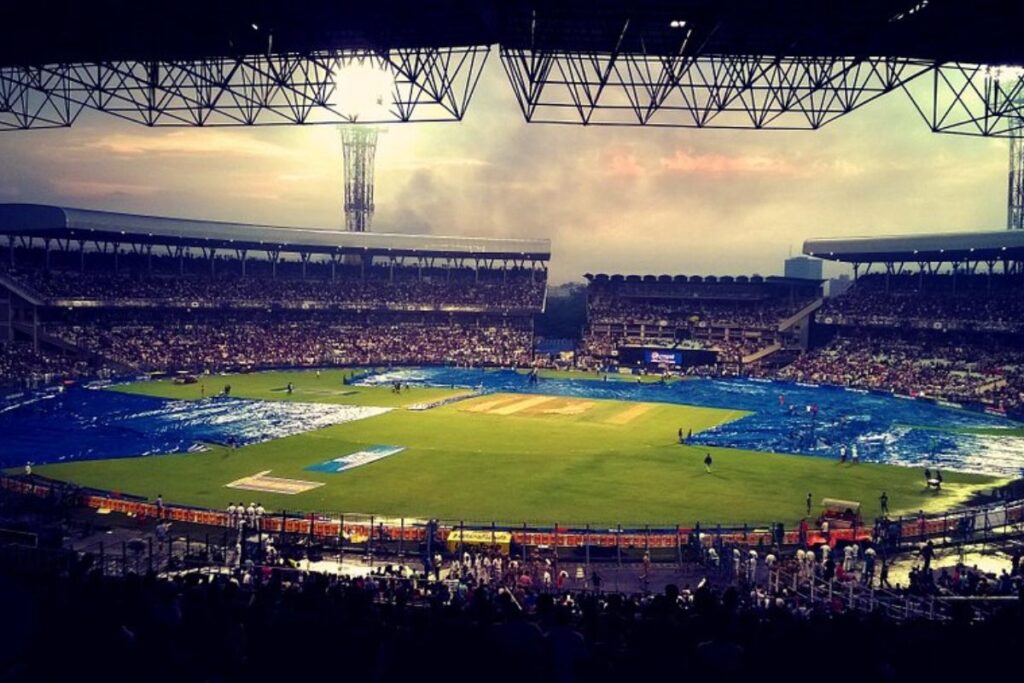
The Supreme Court in The Kolkata Municipal Corporation And Anr. Versus The Cricket Association Of Bengal And Ors., Slp(C) No. 28566/2025 has upheld the Calcutta High Court’s view that Eden Gardens stadium cannot be treated as a public place for charging advertisement tax under the Kolkata Municipal Corporation Act. A bench of Justices Vikram Nath and Sandeep Mehta dismissed Kolkata Municipal Corporation’s (KMC) challenge to the High Court decision.
Senior Advocate Jaideep Gupta, appearing for KMC, argued that advertisements inside Eden Gardens should attract tax because events held there are open to the public through tickets, are broadcast nationwide, and parts of the stadium are visible from outside. He claimed this made the stadium a space in “public view”.
The bench was not convinced. It observed that only the outer boundary wall is visible from outside, and visibility through drones or telecasts cannot convert a private venue into a public place. Justice Mehta remarked that accepting such an argument would stretch the meaning of “public view” too far. After the petition was dismissed, KMC requested that the legal question be kept open, but the Court declined.
How the Dispute Began
The issue traces back to the 1996 Wills World Cup, when the Cricket Association of Bengal (CAB) organised the opening ceremony and a key semifinal match at Eden Gardens. After the events, KMC issued a notice demanding ₹51,18,450 as advertisement tax for in-stadium branding under Section 204 of the KMC Act.
CAB challenged the demand on several grounds—lack of jurisdiction, violation of natural justice, and constitutional protection under Article 285. A Single Judge accepted its arguments and quashed the tax notice. KMC appealed to a Division Bench, which again ruled in favour of CAB.
Arguments Before the High Court
KMC contended that when Eden Gardens sells tickets and allows public entry, it becomes a restricted public place rather than a private one. It argued that advertisements inside the stadium were visible to spectators and to viewers watching broadcasts from public locations, which should bring them within the scope of advertisement tax.
CAB rejected this. It stated that in-stadium advertising is visible only to those who enter the venue with valid tickets, and nothing is visible from outside. It emphasised that Eden Gardens is not open to the public by default—entry is controlled, limited to specific match days, restricted to designated areas, and subject to CAB’s rules. Therefore, the stadium cannot be treated as a public place.
High Court’s Findings
The High Court concluded that Eden Gardens cannot be classified as a public place because:
- Entry is not free or unrestricted.
- Access depends entirely on CAB’s permission.
- Tickets allow entry only for limited hours and to specific areas.
- The public has no general right to enter the stadium.
The Court held that the size of the venue or the number of spectators does not determine whether a place is public. The real test is whether the general public has an absolute right of entry—Eden Gardens does not meet this requirement. Thus, in-stadium advertisements cannot be taxed under the KMC Act.
The Supreme Court has now affirmed this position, ending the long-standing dispute.
Case: The Kolkata Municipal Corporation & Anr. v. The Cricket Association of Bengal & Ors., SLP(C) No. 28566/2025
——————————————–
Have a case update, article, or deal to share? Courtroom Today welcomes contributions from lawyers, law firms, and legal professionals. Write to contact@courtroomtoday.com