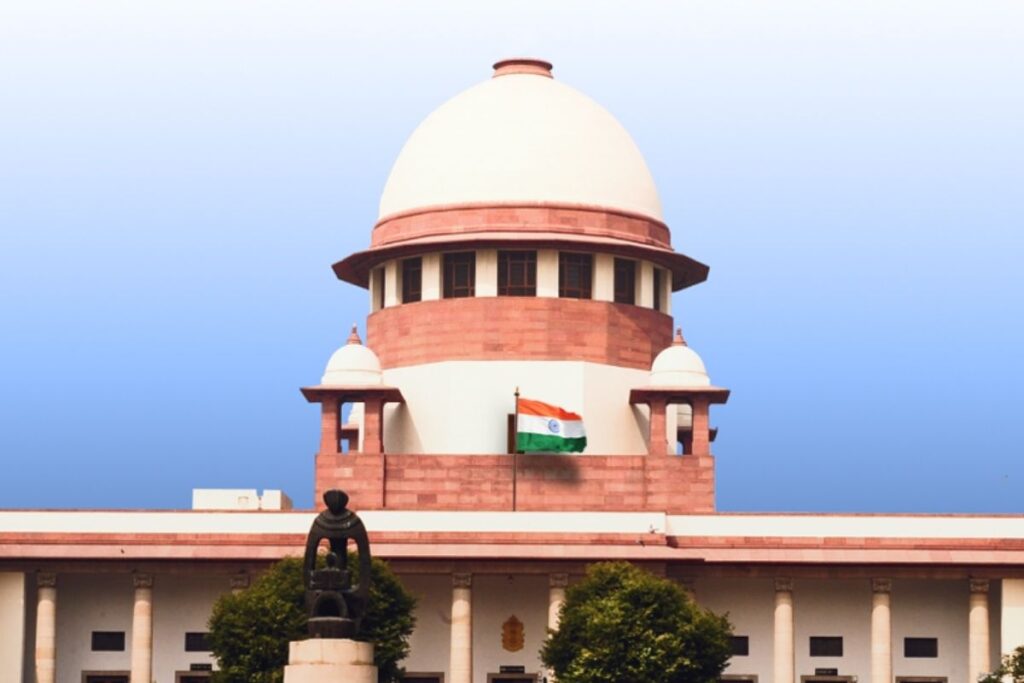
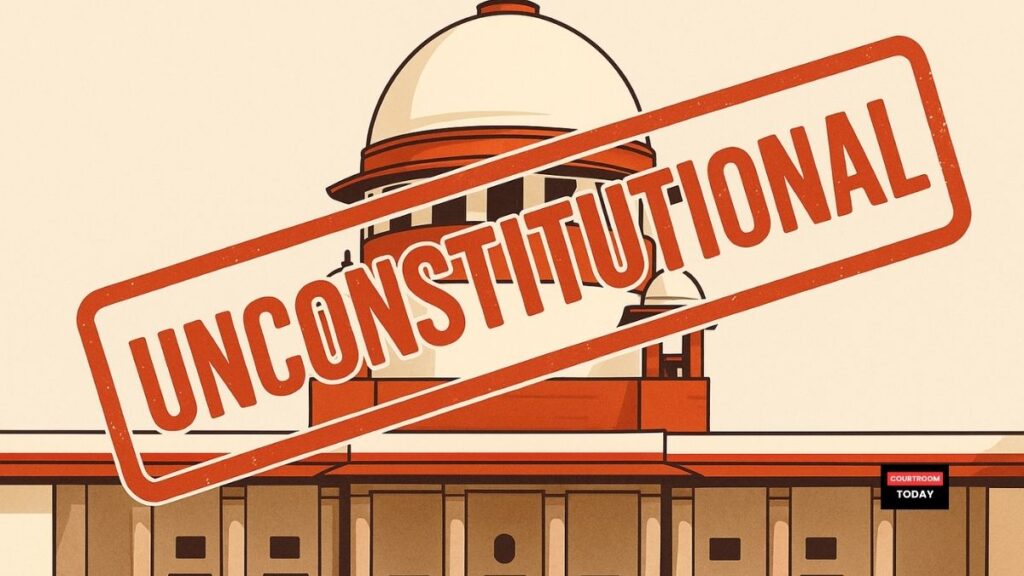
The Supreme Court in Madras Bar Association v. Union of India on Wednesday, 19 November, struck down key provisions of the Tribunal Reforms Act, 2021, holding that the law violated the basic constitutional principles of judicial independence and separation of powers.
A Bench led by Chief Justice BR Gavai and Justice K Vinod Chandran criticised the Union Government for repeatedly bringing back the same provisions that the Court had already invalidated in earlier judgments. The Bench noted that the 2021 Act simply reintroduced measures that had earlier been struck down in the Madras Bar Association cases (MBA IV and MBA V), without fixing the constitutional issues identified by the Court.
What the Court Held
The Court said that Parliament cannot “re-enact” provisions that have already been held unconstitutional, unless it cures the underlying defects. In this case, the 2021 Act kept the same disputed requirements—such as the minimum age of 50 years, short 4-year tenure, upper age limits, and restrictive selection process—all of which were previously struck down for undermining judicial independence in tribunals.
These measures, the Bench said, gave excessive control to the executive over tribunal appointments, affecting judicial autonomy.
Directions Issued
- The struck-down provisions of the Tribunal Reforms Act, 2021, will not apply.
- Until Parliament passes a new, constitutionally compliant law, the guidelines laid down in MBA IV and MBA V will continue to operate.
- The Union Government must establish a National Tribunals Commission within four months.
- Appointments recommended before the Act came into force, but formally notified later, will be protected and governed by earlier rules.
Why the Act Was Invalidated
The Court emphasised that judicial independence is not an “abstract principle” but a core constitutional requirement. Any law affecting tribunals must ensure:
- adequate tenure,
- independence in appointments,
- autonomy from executive interference, and
- structural integrity in decision-making.
Re-enacting provisions that were already declared unconstitutional amounts to an impermissible legislative override, the Court said.
Background
The Madras Bar Association had challenged the Act in 2021, pointing out that it ignored earlier rulings which required:
- at least 5-year tenure for tribunal members, and
- eligibility for advocates with minimum 10 years’ experience.
The Act had undone these protections by reducing tenure to four years and introducing a minimum age requirement of 50 years.
The Supreme Court also rejected the Union’s request to refer the case to a larger bench, calling it belated and unnecessary.
——————————————–
Have a case update, article, or deal to share? Courtroom Today welcomes contributions from lawyers, law firms, and legal professionals. Write to contact@courtroomtoday.com