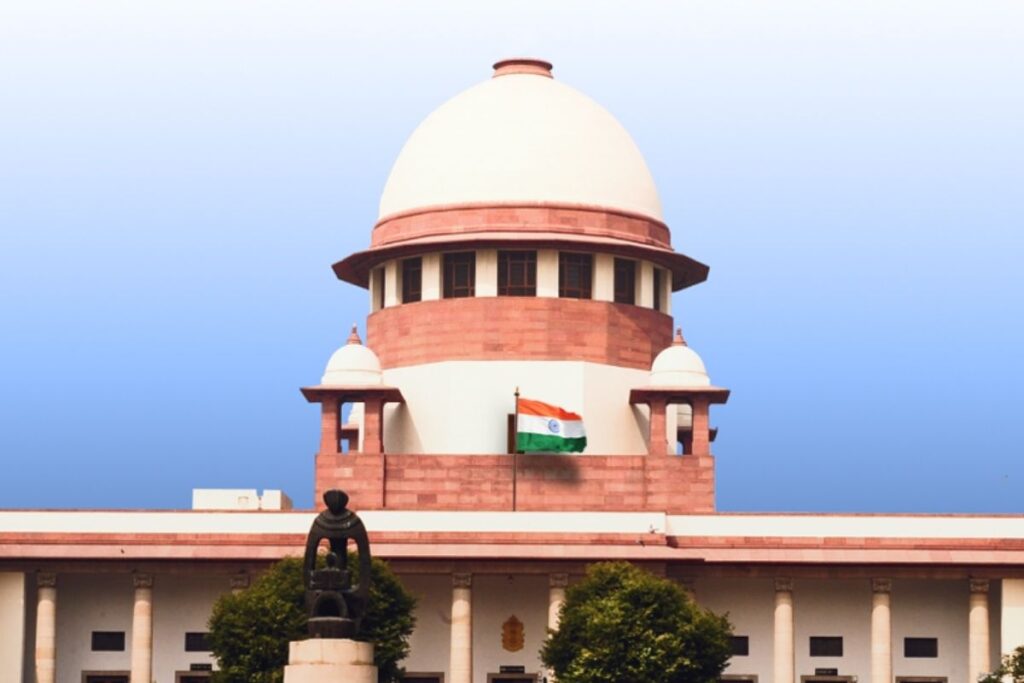
The Supreme Court has agreed to examine a petition filed by the Supreme Court Women Lawyers Association (SCWLA) challenging a Bombay High Court ruling that said the POSH Act does not apply to bar councils.
The Bombay High Court, in its July 7, 2025 decision in UNS Women Legal Association v. Bar Council of India, held that women advocates cannot seek protection under the Sexual Harassment of Women at Workplace (Prevention, Prohibition and Redressal) Act, 2013 because advocates are not “employees” of bar councils. The Court also refused to direct the Bar Council of Maharashtra and Goa (BCMG) and the Bar Council of India (BCI) to set up permanent Internal Complaints Committees (ICCs).
A Bench of Justices BV Nagarathna and R Mahadevan has now issued notice to the BCI, BCMG, the Union government and the State of Maharashtra.
During the hearing, Justice Nagarathna referred to the complaints received by the Supreme Court’s own Gender Sensitisation and Internal Complaints Committee (GSICC). She said that the Committee is required to process and act upon such complaints, even when they do not strictly fall within the usual scope of sexual-harassment cases.
SCWLA argued that although it was not a party before the High Court, the judgment affects all women advocates because it effectively denies them the protections offered by the POSH Act.
The petition challenges the High Court’s finding that women advocates can instead seek remedies under Section 35 of the Advocates Act, 1961, which deals with professional misconduct. SCWLA said that Section 35 does not provide core POSH safeguards such as confidentiality, strict timelines, an independent external member, interim relief or compensation. It also does not have a specific mechanism to address sexual-harassment complaints.
According to the petition, the judgment deprives women lawyers of a specialised statutory remedy meant to ensure a safe and supportive workplace for women across all professions.
SCWLA also pointed out earlier Supreme Court rulings which held that statutory bodies must maintain redressal systems aligned with the principles of the POSH Act. It highlighted that even the Supreme Court’s GSICC Regulations extend protection to individuals who are not employees, such as volunteer solicitors. This, it argued, shows that workplace-safety measures can apply beyond formal employer-employee relationships.
The petition added that bar councils across the country follow inconsistent systems. For example, the Bar Council of Delhi has a POSH Committee and an online complaint-filing mechanism. SCWLA submitted that all bar councils should have uniform and effective structures so that women lawyers in different states receive equal protection.
The SCWLA is being represented by Senior Advocate Mahalakshmi Pavani and Advocates Sneha Kalita, Ragini Juneja and Shaurya Mishra.
——————————————–
Have a case update, article, or deal to share? Courtroom Today welcomes contributions from lawyers, law firms, and legal professionals. Write to contact@courtroomtoday.com