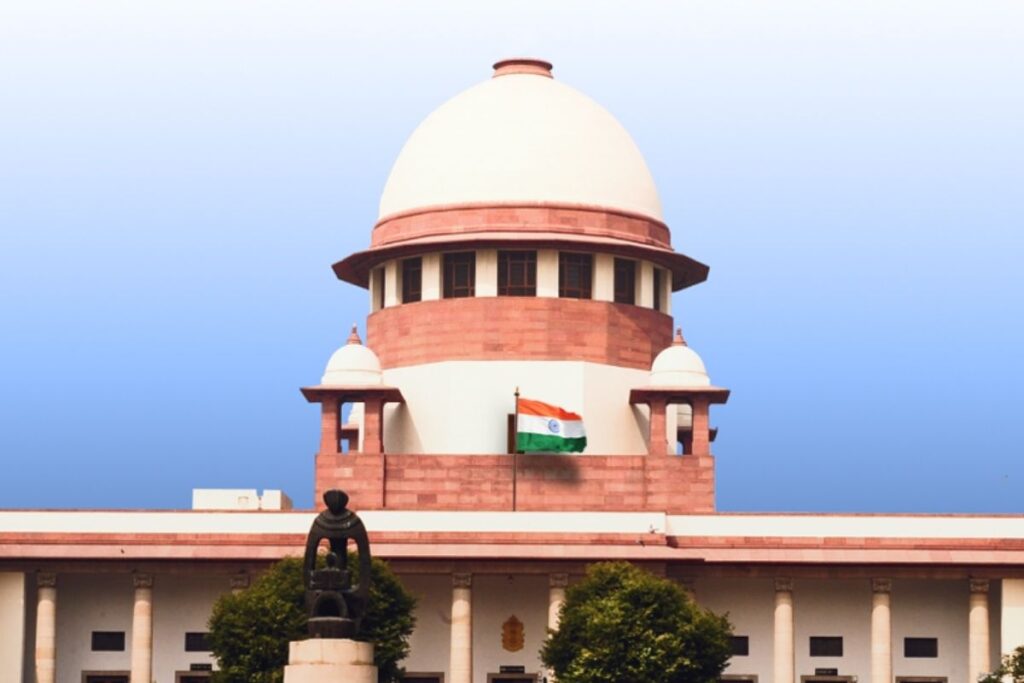

The Supreme Court in Reliance Industries Limited v. SEBI has refused to interfere with a decision of the Securities Appellate Tribunal (SAT), which had upheld a ₹30 lakh penalty imposed by the Securities and Exchange Board of India (SEBI) on Reliance Industries Limited (RIL) and two of its compliance officers. The penalty was linked to the alleged delay in disclosing information about Facebook’s 2020 investment in Jio Platforms before the news appeared in international media reports.
A Bench led by Chief Justice of India Surya Kant and Justice Joymalya Bagchi held that the case involved questions of fact already examined by SEBI and SAT, and therefore did not raise any substantial legal issue for the Court to consider.
The dispute began with SEBI’s order dated June 20, 2022, which imposed the penalty on RIL and its compliance officers Savithri Parekh and K. Sethuraman. SEBI said they failed to comply with Principle 4 of Schedule A under the SEBI (Prohibition of Insider Trading) Regulations, 2015, by not sharing unpublished price sensitive information (UPSI) about Facebook’s proposed stake purchase in Jio Platforms in a timely and transparent manner.
SEBI found that negotiations between RIL and Facebook (now Meta) had progressed steadily through late 2019 and early 2020. A non-binding term sheet was signed on March 4, 2020, followed by due diligence. The final binding agreement was signed on April 21, 2020, and RIL formally announced Facebook’s ₹43,574-crore investment on April 22, 2020.
However, international media outlets such as Reuters and Financial Times had already reported on March 24, 2020 that Facebook was close to acquiring a 10% stake in Jio. These reports triggered a sharp rise in RIL’s share price. SEBI held that once such reports surfaced during the UPSI period, RIL was duty-bound to promptly release accurate information so that all investors had equal access to the facts.
RIL argued that Regulation 30(11) of the SEBI (Listing Obligations and Disclosure Requirements) Regulations was discretionary at the time, meaning it was not compelled to verify or deny market rumours unless specifically asked by the stock exchanges. It also claimed that the deal had not reached a sufficiently “concrete” or “credible” stage to qualify as UPSI requiring disclosure.
SAT, in its order dated May 2, 2025, dismissed RIL’s appeal and confirmed SEBI’s findings. The Tribunal held that the discussions between RIL and Facebook had already attained a concrete stage by late February 2020, and that the market’s reaction to the leaked news clearly showed its price sensitivity. SAT also noted that information published in the media does not become “generally available” unless authenticated by the company involved. Therefore, RIL was required to issue a clarificatory statement once the leak occurred.
With the Supreme Court dismissing RIL’s appeal, SEBI’s ₹30 lakh penalty remains in force.
Senior Advocate Ritin Rai, along with Advocate Sasi Prabhu, represented RIL.
——————————————–
Have a case update, article, or deal to share? Courtroom Today welcomes contributions from lawyers, law firms, and legal professionals. Write to contact@courtroomtoday.com