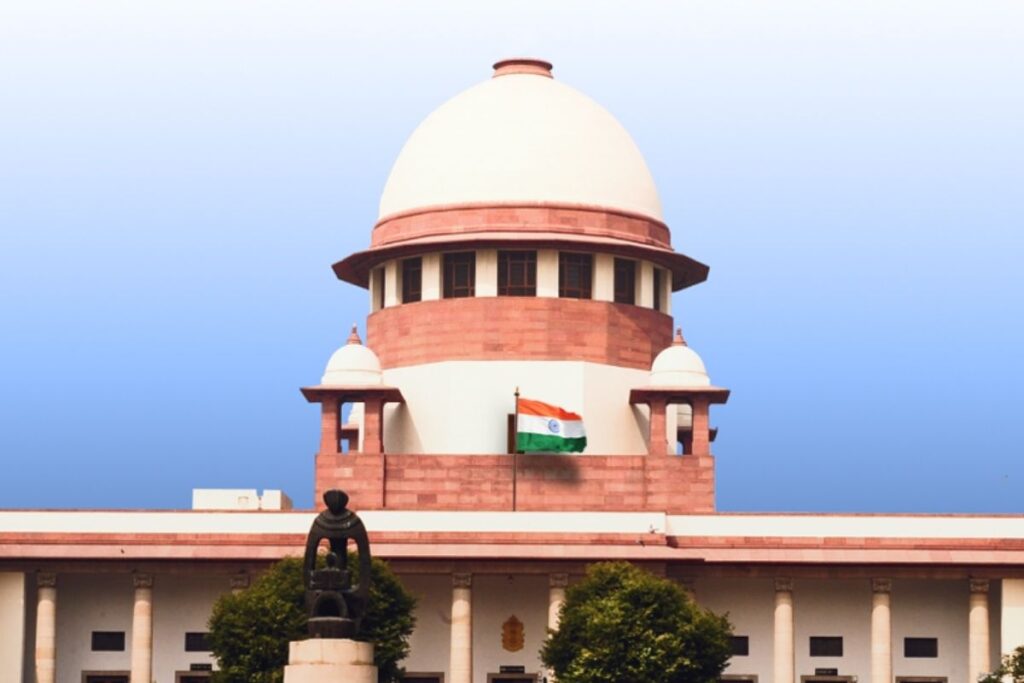
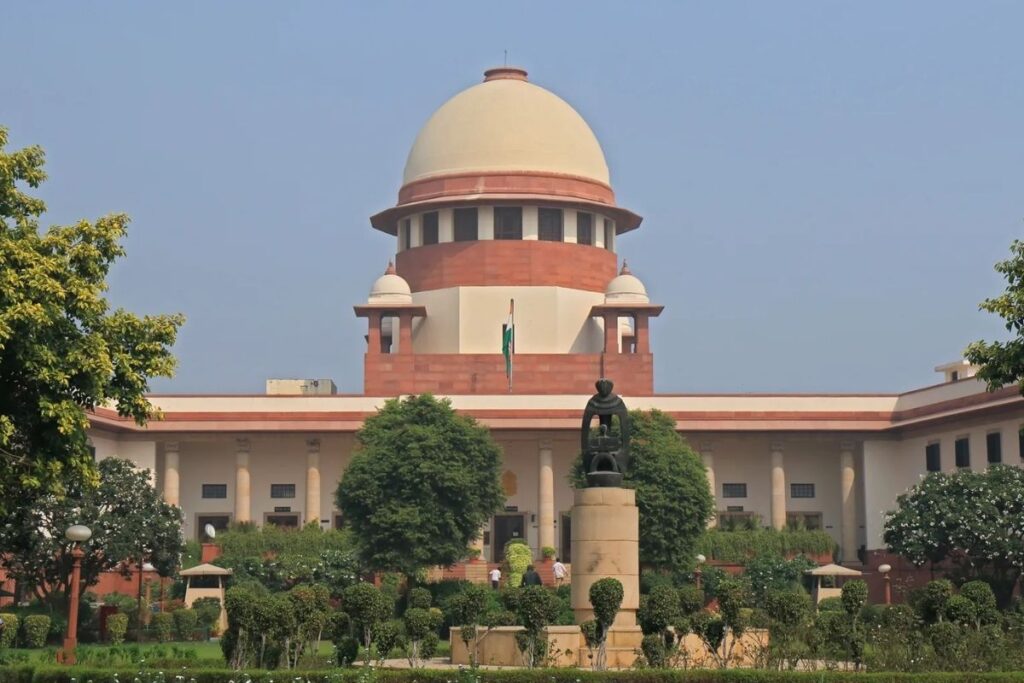
The Supreme Court in Shinu K R v. State of Kerala & Ors. has issued notice on a petition seeking reservation for persons with disabilities (PwD) in the posts of Additional Public Prosecutor and Additional Government Pleader, in line with the Rights of Persons with Disabilities (RPwD) Act, 2016.
The Bench of Justices Vikram Nath and Sandeep Mehta passed the order.
The petitioner is a practising advocate with 19 years of experience and has a benchmark disability under the RPwD Act. She had applied for the post of District Government Pleader/Additional Public Prosecutor in Kerala under the Kerala Government Law Officers (Appointment and Conditions of Service) Rules, 1978. She also submitted a representation in 2022. However, the request was rejected on the ground that these posts are not considered “cadre posts”, and therefore Section 34 of the RPwD Act does not apply.
Section 34 of the RPwD Act mandates 4% reservation in the total vacancies of each group of posts for persons with benchmark disabilities.
The petitioner first approached the Kerala High Court, arguing before the Single Judge that appointments of Public Prosecutors are public employment made by the State. Hence, reservation must be provided as per Section 34.
The State government argued that Section 34 applies only where there is a cadre strength, which is not available for Public Prosecutors. It was further submitted that selecting an advocate is a matter of client choice, and in the case of Public Prosecutors, the government is the client and must have the freedom to choose the best advocate to defend its cases.
Relying on the Supreme Court’s decision in State of U.P. v. U.P. State Law Officers Association (1994), the Single Judge held that appointments and removals of Government Pleaders and Public Prosecutors are at the discretion of the government. The Court noted that no advocate has a right to demand appointment to these posts, and dismissed the petition, observing:
“Appointment of Advocates as Government Pleader or Public Prosecutor is at the pleasure of the Government, which is a litigant before the Court. The Government is entitled to appoint the best Advocates to defend its cases. No one has a right to be appointed as Government Pleader or Public Prosecutor.”
In an intra-court appeal, the Division Bench affirmed this view, holding that Section 34 does not apply as the posts are not permanent.
The petitioner has now approached the Supreme Court. She argues that Section 34 does not distinguish between permanent, temporary, or contractual posts. The High Court, by limiting reservation only to permanent posts, has added a requirement that the statute does not contain.
Her plea submits that the High Court’s approach defeats the purpose of the RPwD Act, which aims to ensure representation for persons with benchmark disabilities across government establishments. The submission states that the interpretation adopted by the High Court ignores the object of a beneficial legislation and results in injustice.
The petitioner also challenges the High Court’s view that the government acts like a private litigant while appointing law officers. She submits that the government is the “State” under Article 12 of the Constitution and cannot be equated with a private client who chooses counsel as per discretion.
Appearances for the Petitioner:
Advocates Abhilash M.R., Sayooj Mohandas, Ann Melvin, Manjari Singh, and M/s M.R. Law Associates (AOR)
Case Title: Shinu K R v. State of Kerala & Ors., Diary No. 63432-2025
——————————————–
Have a case update, article, or deal to share? Courtroom Today welcomes contributions from lawyers, law firms, and legal professionals. Write to contact@courtroomtoday.com