
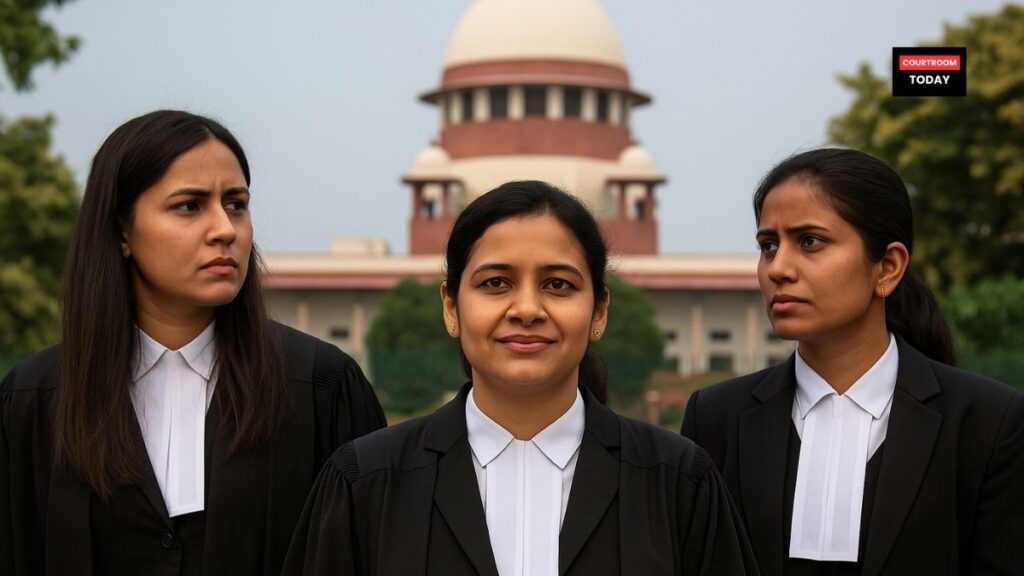
A recent survey by the Supreme Court Bar Association (SCBA) has highlighted the challenges faced by women lawyers in the profession, including gender bias, lack of leadership opportunities and the impact of marriage and motherhood on their careers.
The findings were shared at the SCBA event titled “We Women Empowerment in Law: A Panel Discussion on Strength, Struggle and Success.” A total of 301 women lawyers participated in the survey.
Most respondents (84.1%) said they were first-generation lawyers. When asked about their overall professional experience, 38.5% described the profession as discouraging. Only 25.2% found the experience encouraging, and a smaller percentage felt their journey was improving with time.
Leadership opportunities
Leadership positions continue to feel inaccessible for many women at the Bar.
Out of 296 responses, 57.8% said women do not receive equal chances to take up leadership roles, while 42.2% believed they do.
Even so, interest in leadership roles remained high—58.9% said they would consider contesting for positions in Bar councils or associations.
Gender bias in the profession
Among the 299 respondents, 33.1% said they had experienced gender bias, while 29.1% said they faced it occasionally.
Interestingly, first-generation women reported occasional bias at a higher level (39.6%) than others (35.1%).
Effect of marriage and motherhood
Marriage and family responsibilities posed significant career hurdles.
- 38.2% of 249 respondents faced difficulties continuing work after marriage.
- 33.5% struggled while deciding to have a child.
- After childbirth, 56.8% said they faced hardship, and 31.3% struggled to get deferments in cases during that period.
Support systems also differed—52.4% felt they received enough accommodation for caregiving duties, while 47.6% did not. A large majority (95.4%) supported institutional measures such as maternity leave, crèche facilities and flexible work hours.
Major challenges in the profession
Work–life balance was identified as the biggest challenge (34.2%). Other issues included:
- Limited job opportunities (16.4%)
- Lack of pay parity (14%)
- Inadequate mentorship (13.7%)
- Unrealistic expectations (9.6%)
- Sexual harassment at the workplace (6.2%)
- Mental health issues (2.1%)
- Gaps in training in court craft (2.1%) and drafting (1.4%)
- Limited access to research platforms (0.3%)
Career choices
Women also shared their views on career transitions:
- 43.1% were open to entering the judiciary.
- 64.1% said they would recommend a legal career to young girls in their family.
On preferred career streams, 39.6% chose corporate roles, followed by litigation (36.1%), judiciary (13.5%) and academics (10.8%).
Generational differences were visible:
First-generation lawyers preferred litigation (34.9%) and corporate roles (18.4%), while second-generation lawyers leaned towards judiciary (39.2%) and academics (15.7%).
——————————————–
Have a case update, article, or deal to share? Courtroom Today welcomes contributions from lawyers, law firms, and legal professionals. Write to contact@courtroomtoday.com