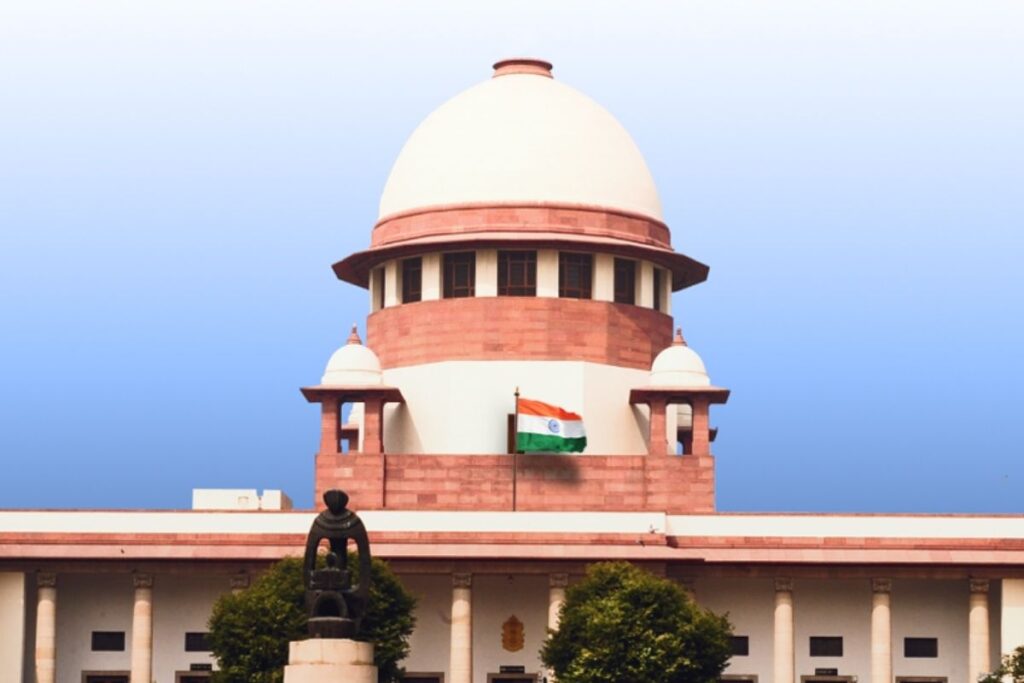
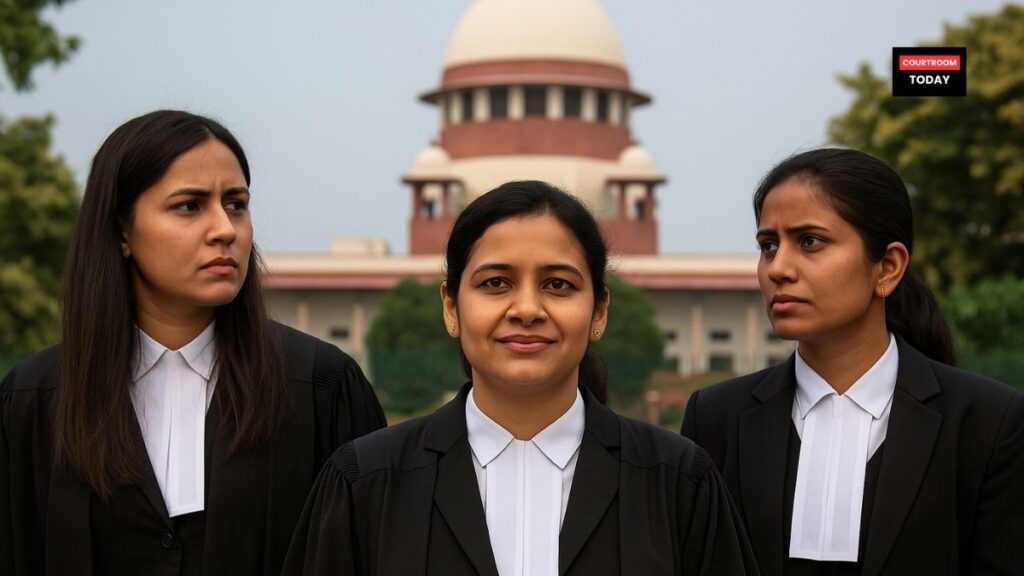
The Supreme Court on Monday once again made it clear that the requirement to reserve 30% seats for women in all State Bar Councils is non-negotiable. The Court said that if ongoing elections make it difficult to apply this rule immediately, the remaining seats must be filled through co-option so that women advocates still get their rightful share of representation. This direction was issued in the case Yogamaya MG vs Union of India & Others.
A Bench led by Chief Justice of India Surya Kant and Justice Joymalya Bagchi stated that the Bar Council of India (BCI) must ensure that women ultimately occupy at least 30% of all seats in every State Bar Council. The Court also recorded that BCI Chairman Senior Advocate Manan Kumar Mishra had informed the Court that the Council agrees with this reservation policy.
Mishra said the BCI has “gladly accepted” the 30% quota and has already passed a resolution supporting the move. The Chief Justice emphasised that the directive must be implemented in both letter and spirit.
The Court noted that some States—like Bihar and Chhattisgarh—have already completed their Bar Council elections. Elections in four other States have also been notified. In such situations, the Court said that changing election rules midway would not be appropriate. Therefore, in these States, the shortfall must be corrected through a co-option mechanism after elections conclude.
For the remaining States, women must receive 20% representation through direct elections and another 10% through co-option, so that the total reaches 30%.
The Bench said co-option is an effective tool to ensure that qualified and active women lawyers find space in the State Bar Councils. A detailed proposal on how women will be co-opted must be submitted to the Court.
Senior Advocate Meenakshi Arora, appearing for one of the petitioners, highlighted that in some States, the number of women appearing on the electoral rolls is extremely low. In States like Maharashtra, the number of actively practising women advocates is also limited.
Responding to this concern, the Chief Justice observed that representation must reflect lawyers who are actively practicing. He said that those who are not practising should not be counted towards representation.
The petitions filed by advocates Yogamaya MG and Shehla Chaudhary point to the severe underrepresentation of women in Bar Council governance. Data submitted before the Court showed that of 441 elected representatives across 18 State Bar Councils, only 9 are women, which is just 2.04%. The Bar Council of India itself has never had a woman member since it was established in 1961.
On December 4, the Court had already directed that 30% of all seats in State Bar Councils must be reserved for women, and the relevant rules under the Advocates Act, 1961 would be treated as amended to include this mandate. The directive also applies to posts of office bearers.
The Court said this measure is consistent with India’s constitutional vision and the national effort to promote gender equality in the legal profession. It also observed that the BCI must not stop at issuing a resolution but must ensure real inclusion by using the co-option system wherever necessary.
The Court has asked the BCI to file a detailed proposal explaining how co-option will be implemented across the country. The matter will be taken up again on the next hearing date.
Senior Advocate Shobha Gupta and advocates Sriram Parakkat and Deepak Prakash appeared for lead petitioner Yogamaya MG, while Advocate Charu Mathur appeared for petitioner Shehla Chaudhary.
——————————————–
Have a case update, article, or deal to share? Courtroom Today welcomes contributions from lawyers, law firms, and legal professionals. Write to contact@courtroomtoday.com