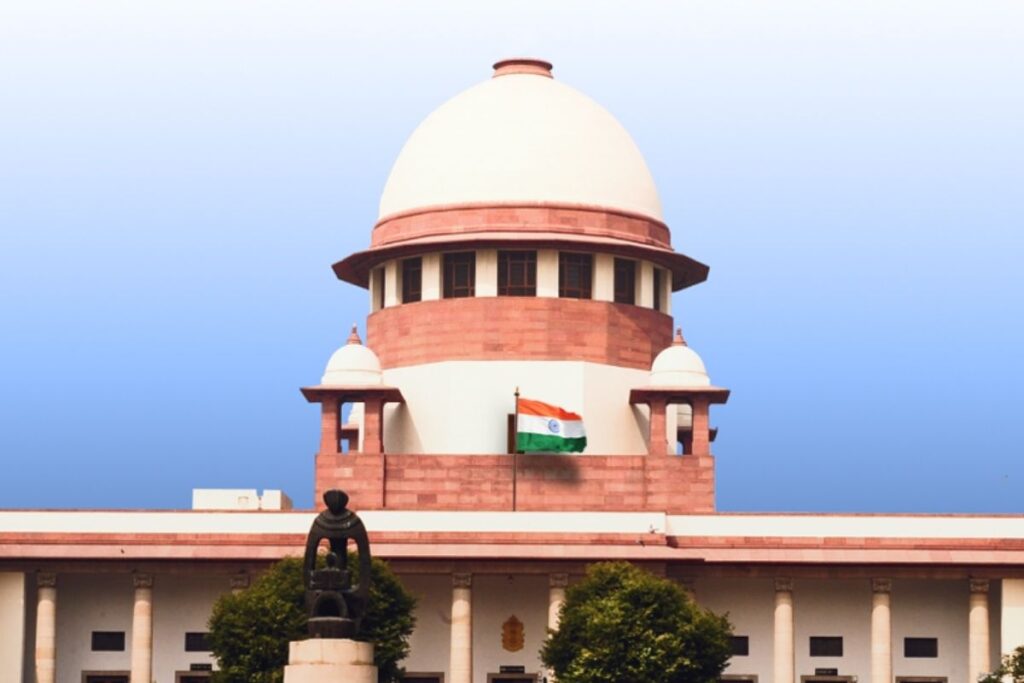

A group of retired judges have issued a public statement defending Chief Justice of India (CJI) Surya Kant after criticism surfaced over the Supreme Court’s recent remarks in cases involving Rohingya migrants. The former judges said that the campaign targeting the CJI appeared “motivated and misleading,” and warned that such attacks could undermine judicial independence.
According to them, the criticism was based on a distorted version of what actually happened in court. They explained that the CJI had only asked a basic legal question about whether any lawful authority had granted refugee status to the Rohingya petitioners seeking protection. Such questions, they said, are a normal part of judicial scrutiny, especially when courts assess the rights claimed by foreign nationals under Indian law.
The retired judges emphasised that the Bench was examining issues related to the legality of entry, immigration status and documentation under laws such as the Foreigners Act and the Passports Act. They added that the critics ignored the fact that the Court had clearly stated that no person present in India, regardless of nationality, can be subjected to torture, disappearance or any form of inhuman treatment. This, they said, aligns with long-standing principles under Articles 14 and 21 of the Constitution.
Their statement further clarified that India is not a signatory to the 1951 UN Refugee Convention or the 1967 Protocol, meaning there is no statutory mechanism to grant “refugee status.” Under Indian law, Rohingya individuals are treated as “foreigners,” and any protection they receive comes from domestic legal provisions, not international treaty obligations.
Referring to earlier Supreme Court judgments, the retired judges noted that India, as a sovereign nation, has the authority to control the entry, stay and deportation of foreign nationals. They highlighted that issues of identity, legal status and rights must therefore be assessed strictly under Indian legislation.
The judges also expressed concern about reports suggesting that some Rohingya individuals had obtained Aadhaar cards, ration cards and other Indian identity documents despite entering the country without authorisation. They warned that such incidents raise questions about document fraud, official lapses and potential security concerns.
In their view, these allegations justify the need for a Court-monitored Special Investigation Team (SIT). Such a team, they said, should examine how these documents were obtained, investigate possible violations of the Aadhaar Act, offences of cheating and forgery under the Indian Penal Code, and breaches under the Foreigners Act and the Passports Act. A specialised investigation, they argued, would help uncover systemic gaps and reveal whether organised networks are facilitating the illegal procurement of identity papers.
The retired judges also pointed out that the Rohingya face a complicated citizenship situation in Myanmar, where they are categorised as illegal migrants under the 1982 Citizenship Law. This uncertain legal background, they said, adds another layer of complexity to the claims made before Indian courts and highlights the need for decisions to be rooted firmly in domestic legal standards, not political or humanitarian labels.
In their concluding remarks, the retired judges cautioned that personal attacks on judges for asking relevant legal questions weaken judicial independence, a core constitutional value. They reiterated their confidence in the Supreme Court and in CJI Surya Kant, stating that the approach adopted in the Rohingya matters reflects a careful balance between national security interests and the protection of human dignity.
——————————————–
Have a case update, article, or deal to share? Courtroom Today welcomes contributions from lawyers, law firms, and legal professionals. Write to contact@courtroomtoday.com