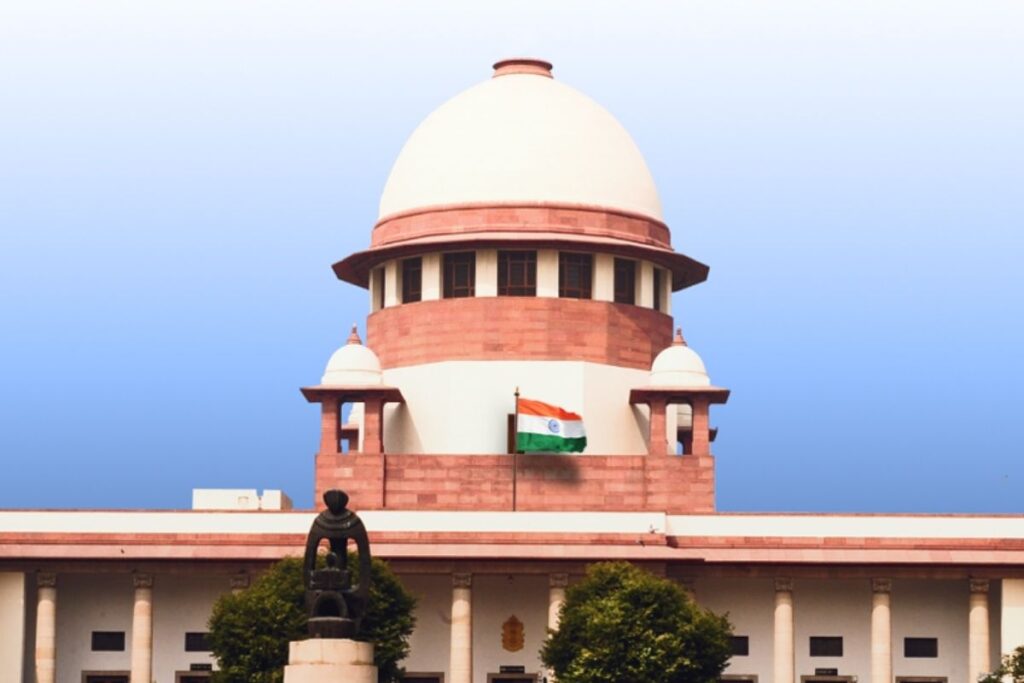
The Supreme Court has recently delivered two important judgments on reservation in government jobs. These rulings clearly explain who can be considered under the General (Open) Category and when candidates from reserved categories can or cannot claim general category seats.
Through these decisions, the Court has reinforced the importance of merit-based selection, while also drawing a clear boundary on the use of reservation benefits.
What the Supreme Court Said About General Category
The Supreme Court made it clear that General or Open Category posts are open to everyone, regardless of caste, category, or gender. The only requirement for selection under this category is merit.
If a candidate belonging to a reserved category (such as SC, ST, OBC, EWS) scores higher than the general cut-off without using any relaxation or concession, that candidate must be considered under the General Category.
However, if a candidate uses reservation benefits at any stage, even at the preliminary level, they cannot later claim a general category seat.
The Court also clarified that merely mentioning a reserved category in the application form does not automatically restrict a candidate to reserved posts. It only allows the candidate to compete within that reserved category.
Case 1: Rajasthan High Court Recruitment Matter
This case related to the recruitment of Junior Judicial Assistants and Clerk Grade-II in Rajasthan courts.
After the results were declared, it was found that:
- Cut-offs for some reserved categories were higher than the general category cut-off.
- Several candidates crossed the general cut-off but were excluded because they did not meet their category-specific cut-off.
These candidates challenged the process, claiming it violated Articles 14 and 16 of the Constitution.
The Rajasthan High Court ruled that:
- Any candidate who clears the general cut-off must be considered under the open category, regardless of their reserved status.
The Supreme Court upheld this ruling and rejected the argument that such candidates were getting a “double benefit”. The Court stated that this is not an extra benefit but a recognition of pure merit.
Case 2: Karnataka IFS Examination Dispute
The second case involved the Indian Forest Service (IFS) Examination, 2013.
In this case:
- An SC candidate cleared the preliminary exam using relaxed cut-off marks.
- Later, the candidate secured a better final rank than a general category candidate.
- However, there was only one general category insider post available in Karnataka.
The Karnataka High Court ruled in favour of the SC candidate due to higher final ranking.
But the Supreme Court overturned this decision.
The Court held that:
- The IFS exam is a single, integrated selection process.
- If a candidate uses any relaxation at the preliminary stage, that benefit cannot be ignored later.
- Such a candidate cannot be considered for an unreserved post, even if the final rank is higher.
What Do These Two Judgments Mean?
Together, these rulings clearly establish that:
- No relaxation at any stage → Eligible for General Category
- Relaxation used at any stage → Only Reserved Category consideration
The Supreme Court has not introduced a new rule but has strengthened the principles laid down earlier, especially those established in the Indra Sawhney case.
These judgments bring clarity, consistency, and fairness to recruitment processes and ensure that merit remains the key factor for open category appointments.
——————————————–
Have a case update, article, or deal to share? Courtroom Today welcomes contributions from lawyers, law firms, and legal professionals. Write to contact@courtroomtoday.com