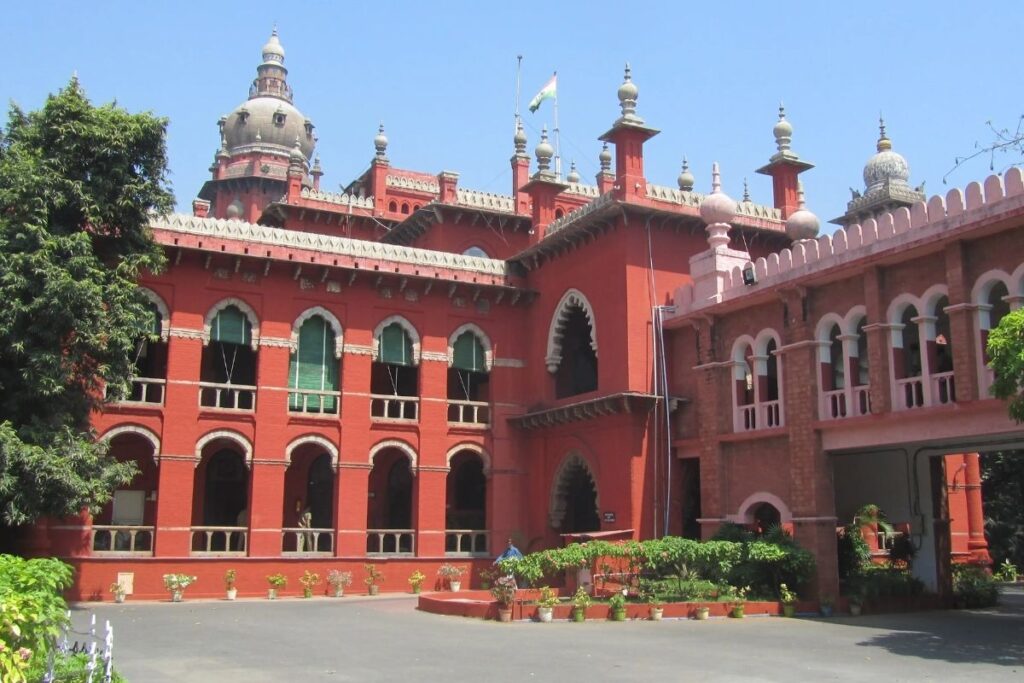
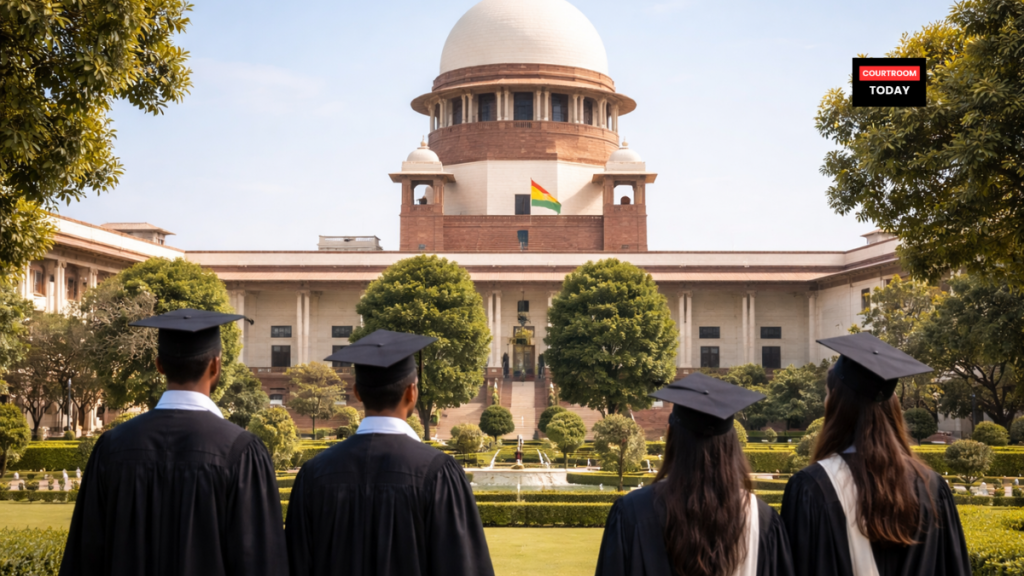
The Supreme Court has made it clear that studying or completing a course from a government institution does not automatically give a person the right to a government job. The Court rejected the argument that students can claim employment based on a “legitimate expectation”, especially when government policies and recruitment systems change over time.
A Bench of Justices Rajesh Bindal and Manmohan allowed the appeal filed by the State of Uttar Pradesh and set aside the Allahabad High Court’s decision, which had ordered the appointment of certain candidates as Ayurvedic Staff Nurses.
What was the case about?
The case involved candidates who had completed an Ayurvedic Nursing Training Course from a government institution in Uttar Pradesh. For many years, when the course was offered only by a single government institute with just 20 seats, most trained candidates were directly appointed as Staff Nurses due to a large number of vacancies and the absence of a competitive selection process.
However, from 2011 onwards, the State allowed private institutions to offer the same course. This led to a sharp increase in the number of trained candidates, far more than the available government posts. Later, recruitment to Ayurvedic Staff Nurse posts was brought under the Uttar Pradesh Subordinate Services Selection Commission (UPSSSC), and formal service rules were notified in 2021. After these changes, appointments were to be made only through a competitive selection process.
Claim of “legitimate expectation”
The candidates argued that since earlier batches from the government institute were given direct appointments, they also had a legitimate expectation of being employed after completing their training. Accepting this argument, the Allahabad High Court had directed the State to appoint them.
The Supreme Court, however, disagreed.
Supreme Court’s reasoning
The Court held that the doctrine of legitimate expectation is not an absolute or independent right. It must pass the test of fairness and non-arbitrariness under Article 14 of the Constitution.
The Bench noted that the earlier practice of direct appointments was limited to a very small number of seats and existed only due to the circumstances at that time. Once private colleges were allowed to conduct the course and the number of candidates increased significantly, the State was justified in changing its recruitment policy.
Importantly, the Court observed that no candidate admitted after the 2010–11 session was given automatic appointment under the old system, except in a few cases due to specific court orders. This showed that the earlier practice had already been discontinued.
The Court also clarified that neither the government orders nor the training advertisements promised automatic employment. Even the bond requiring candidates to serve the government for five years applied only if they were selected and appointed—it did not guarantee a job.
No discrimination, says Court
Rejecting the claim of discrimination, the Court pointed out that no similarly placed candidate from the same or later batches had been directly appointed by the State. Since everyone after the policy change was treated equally, there was no violation of Article 14.
The Court emphasised that when eligible candidates far exceed available vacancies, a competitive selection process is the normal and fair method to ensure merit-based appointments.
Final outcome
The Supreme Court allowed the State’s appeal and set aside the High Court’s order directing appointments. It reaffirmed that admission to or training in a government institution does not create a vested right to a government job, especially when recruitment rules and policies have lawfully changed.
——————————————–
Have a case update, article, or deal to share? Courtroom Today welcomes contributions from lawyers, law firms, and legal professionals. Write to contact@courtroomtoday.com