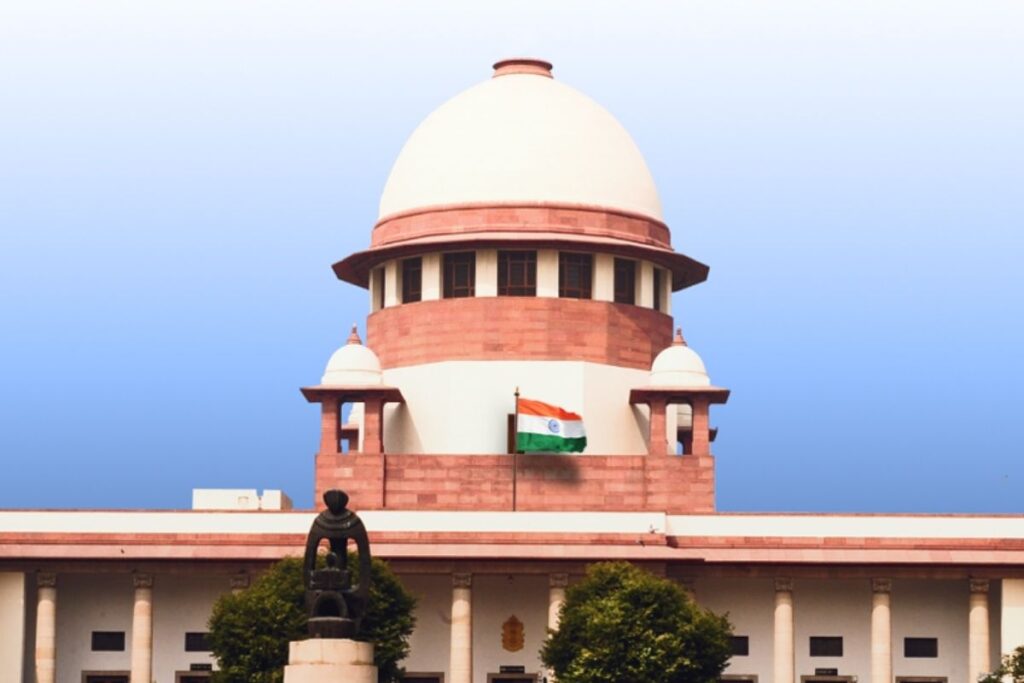
The Supreme Court of India has delivered a split verdict on the validity of Section 17A of the Prevention of Corruption Act, 1988. This section requires prior approval from the government before investigating public servants for decisions taken in their official capacity.
A two-judge Bench gave differing opinions. Justice B V Nagarathna held that Section 17A is unconstitutional. According to her, the provision acts as a shield for corrupt officials. She explained that making prior approval mandatory even before a preliminary inquiry creates a major hurdle for investigators. As a result, genuine complaints may never be examined, allowing corruption to remain hidden.
Justice Nagarathna also rejected the argument that Section 17A protects honest officers from harassment or policy paralysis. She observed that honest officials do not need such protection. Instead, the provision could encourage misuse of power by senior officers, as they may feel protected from investigation. She further held that the section violates Article 14 of the Constitution, as it mainly benefits higher-level officers without a valid reason, creating an unequal and unreasonable classification.
On the other hand, Justice K V Viswanathan upheld the constitutionality of Section 17A, but with safeguards. He said the purpose of the provision is not to protect corruption, but to prevent frivolous and malicious complaints against sincere public servants. According to him, honest decision-making must not be paralysed by the fear of criminal investigation.
Justice Viswanathan pointed out that the law lacks an independent screening mechanism. To address this gap, he suggested that complaints should first be examined by independent bodies such as the Lokpal or Lokayukta. If the complaint is found to be baseless, approval for investigation can be denied with recorded reasons. If it appears genuine, an inquiry can be ordered.
Due to the split verdict, the matter has now been referred to the Chief Justice of India for placement before a larger Bench, which will finally decide the issue. Section 17A was introduced through a 2018 amendment and was challenged by the NGO Centre for Public Interest Litigation.
——————————————–
Have a case update, article, or deal to share? Courtroom Today welcomes contributions from lawyers, law firms, and legal professionals. Write to contact@courtroomtoday.com