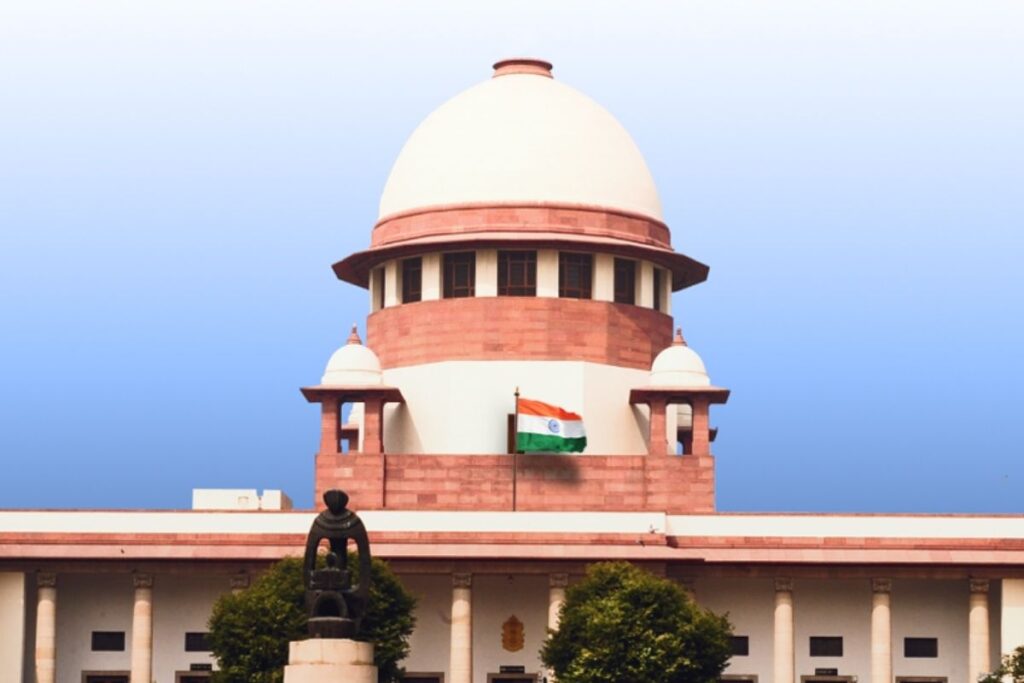
The Supreme Court on Tuesday came down heavily on WhatsApp and its parent company Meta over their 2021 privacy policy, saying companies cannot “play with the right to privacy of this country” for commercial gain.
The Court was hearing appeals filed by WhatsApp and Meta against a ₹213.14 crore penalty imposed by the Competition Commission of India (CCI). The penalty was earlier upheld by the National Company Law Appellate Tribunal (NCLAT).
A Bench led by Chief Justice of India Surya Kant, along with Justices Joymalya Bagchi and Vipul Pancholi, criticised WhatsApp’s “take it or leave it” policy and questioned the absence of a real opt-out option for users.
The Chief Justice remarked that the policy appeared to allow private data to be taken without meaningful consent. He pointed out that most users are compelled to accept the terms because WhatsApp has become essential to daily life.
The Bench also questioned how an average user—especially someone in rural India or a person unfamiliar with English—would understand such complex terms. The Court observed that merely publishing information in newspapers does not amount to informed consent.
The judges warned WhatsApp that it cannot expect to escape scrutiny for violating users’ privacy. The Chief Justice said that forcing users into accepting data-sharing conditions amounts to making a “mockery of constitutional values”.
The Court also discussed concerns around targeted advertising and the use of personal data for commercial purposes. CCI’s counsel argued that users effectively become products, as WhatsApp’s revenue model is driven by advertising.
Senior Advocate Mukul Rohatgi, appearing for WhatsApp, sought permission to file a short affidavit explaining how data sharing works under the policy. The Bench allowed this and adjourned the matter to February 9.
The Court also impleaded the Union government as a party and permitted it to file a counter affidavit.
The dispute traces back to January 2021, when WhatsApp updated its privacy policy and made data sharing with Meta mandatory. Unlike the earlier policy, users were no longer allowed to opt out if they wished to continue using the app.
In 2024, the CCI held that the policy amounted to abuse of dominance under the Competition Act, 2002, and barred WhatsApp from sharing user data with Meta for five years. While NCLAT later set aside some findings against Meta, it upheld the penalty on WhatsApp and restored user-choice safeguards.
During the hearing, the Bench stressed that WhatsApp’s role is to provide messaging services—not to monetise personal data. The judges also noted that India’s data protection law is yet to be enforced and cannot be relied upon to justify current practices.
Solicitor General Tushar Mehta, representing the Centre, supported the Court’s concerns and stated that personal data today has clear monetary value and is being commercially exploited.
——————————————–
Have a case update, article, or deal to share? Courtroom Today welcomes contributions from lawyers, law firms, and legal professionals. Write to contact@courtroomtoday.com