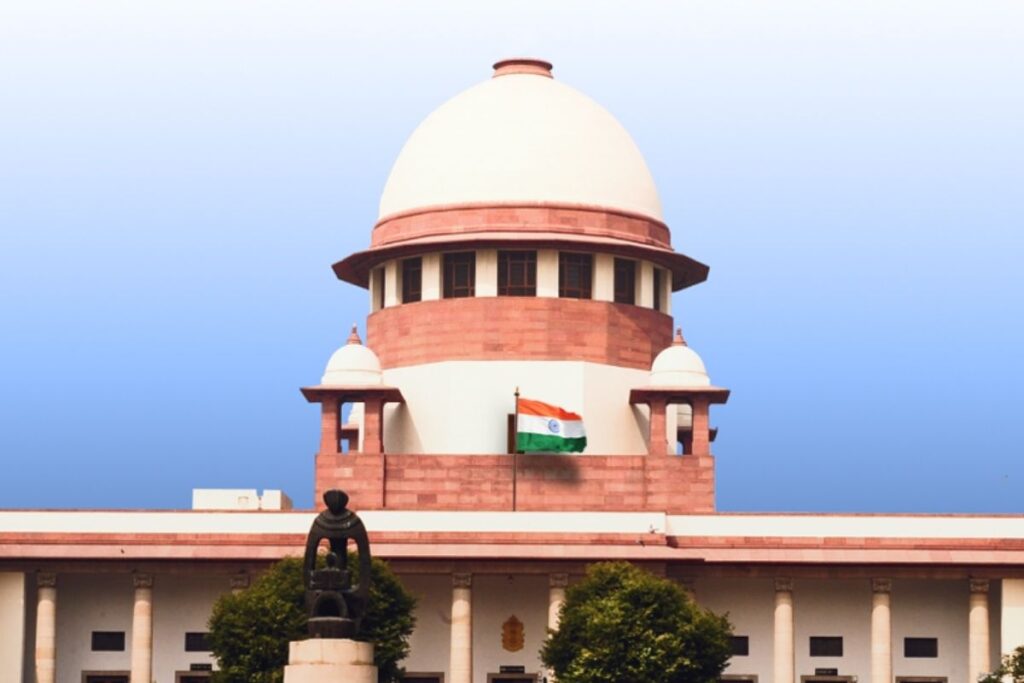
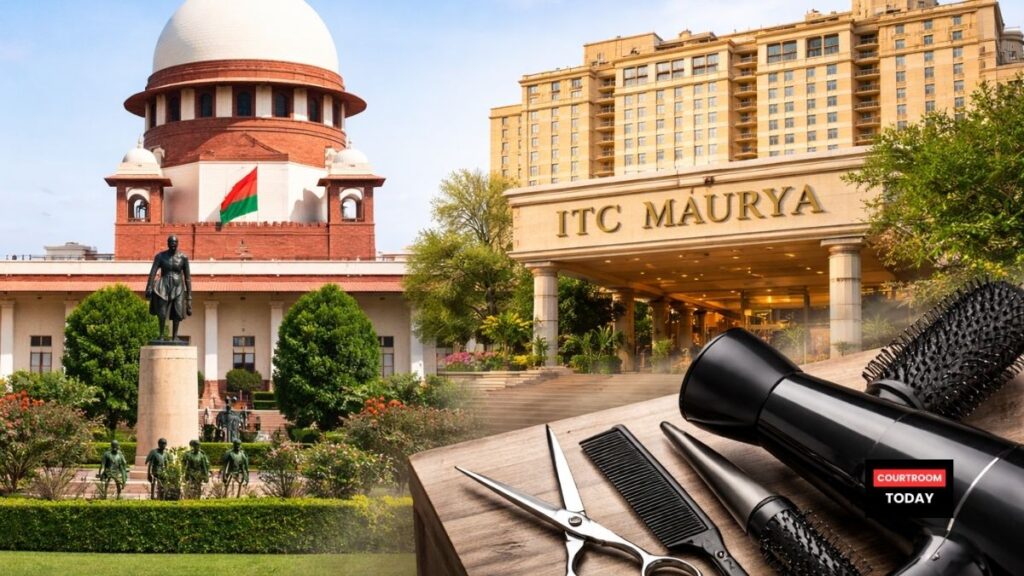
The Supreme Court of India has set aside an order directing ITC Maurya Hotel, New Delhi to pay ₹2 crore as compensation to a model for a faulty haircut. The Court held that such a large compensation amount was not justified without clear and reliable proof of actual loss.
A Bench of Justice Rajesh Bindal and Justice Manmohan observed that the National Consumer Disputes Redressal Commission (NCDRC) failed to properly assess how the complainant had suffered a loss worth ₹2 crore. The Court noted that a general discussion about loss, without strong evidence, cannot justify awarding such a huge amount.
The dispute dates back to a complaint filed by a model who claimed that a haircut at ITC Maurya affected her professional assignments and income. In 2023, the Supreme Court had already set aside a similar compensation order passed by the NCDRC, pointing out that the model had not produced sufficient material to prove her claim. The matter was then sent back to the NCDRC to reassess the compensation amount.
However, even after reconsideration, the NCDRC again directed ITC Maurya to pay ₹2 crore. This time, the decision was mainly based on photocopies of documents submitted by the complainant to support a claim of losses exceeding ₹5 crore.
Disagreeing with this approach, the Supreme Court ruled that claims involving crores of rupees cannot be accepted merely on the basis of photocopied documents. The Court made it clear that damages cannot be awarded based on assumptions, emotional considerations, or unsupported claims. When compensation of such a high value is sought, credible and reliable evidence must be placed on record.
The Bench also rejected the NCDRC’s reasoning that photocopies could be accepted because the complainant may not have preserved original documents due to trauma. The Court said that even if originals were unavailable, there were other lawful ways to substantiate the claim, which were not explored.
As a result, the Supreme Court partly allowed ITC’s appeal and reduced the compensation to ₹25 lakh. Since this amount had already been deposited by ITC with the NCDRC, no further payment was required.
The case was titled ITC Limited v. Aashna Roy and has been reported as 2026 LiveLaw (SC) 129.
——————————————–
Have a case update, article, or deal to share? Courtroom Today welcomes contributions from lawyers, law firms, and legal professionals. Write to contact@courtroomtoday.com