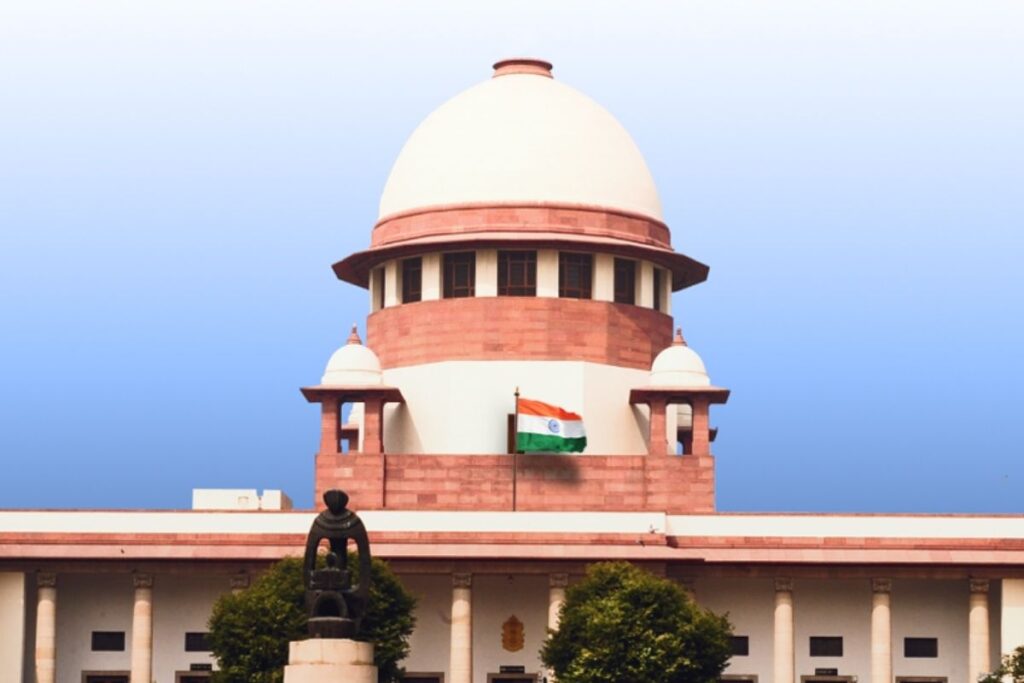
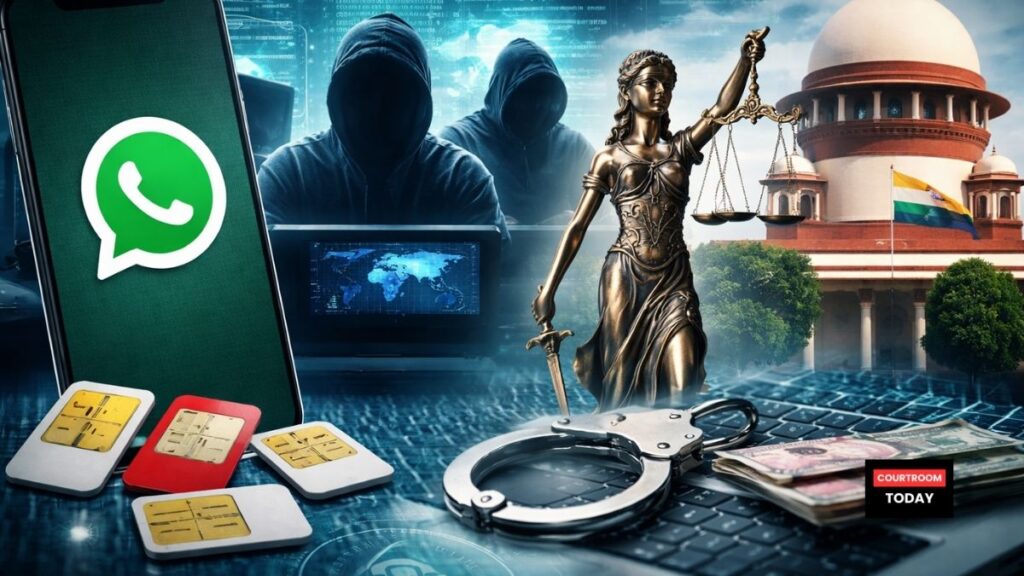
The Central government has told the Supreme Court that linking SIM cards with messaging platforms like WhatsApp could be an effective step to control the rising number of digital arrest scams.
In a status report filed before the Court, the Department of Telecommunications (DoT) under the Ministry of Electronics and Information Technology explained that SIM-binding can reduce misuse of online calling and messaging services that are often used to impersonate law enforcement agencies.
The report was submitted in a suo motu case initiated by the Court in October 2025 after a surge in cases where victims were threatened with fake arrests and coerced into transferring money.
A Bench led by Surya Kant, along with Joymalya Bagchi, was informed that the Centre has formed an inter-departmental committee to examine the issue. The committee has already met twice and discussed gaps in SIM issuance and management that are being exploited by fraudsters.
Senior Advocate NS Nappinai, who is assisting the Court as amicus curiae, flagged the misuse of OTT platforms, especially WhatsApp, as a major concern. She stressed that any solution must work effectively on the ground and also address existing SIM connections.
The DoT informed the committee that the Telecommunications Act, 2023 allows biometric verification for SIM cards. Draft rules for this have been finalised after public consultation and are expected to be notified soon. These rules are aimed at tightening SIM issuance going forward.
To tackle spoofed calls, the DoT has deployed systems at international gateways to block calls originating abroad but showing Indian numbers. Under the Central International Out Roamer (CIOR) mechanism, around 1.35 crore such calls were blocked in October 2024 alone. This figure has now dropped sharply to about 1.5 lakh calls.
On SIM issuance limits, the DoT stated that telecom companies can issue only three SIMs per day per person, but admitted there is currently no system to track this across different service providers. The department said it is exploring technological solutions to plug this gap.
The committee also discussed VoIP calls routed through platforms like WhatsApp and Telegram. While these platforms fall outside the DoT’s direct control under the IT Act, 2000, Nappinai pointed out that VoIP services provided by telecom operators are also being misused and need closer scrutiny.
The case began after a senior citizen couple informed the Court that they were cheated of ₹1.5 crore by scammers posing as officials of the Central Bureau of Investigation, Intelligence Bureau and the judiciary. The Court was told that the CBI has identified nearly ₹10 crore linked to such scams nationwide.
Banks are now using AI-based tools to detect suspicious transactions, and the government has also put in place a memorandum of understanding and a standard operating procedure to deal with digital arrest cases. The Court has directed that these measures be implemented without delay.
——————————————–
Have a case update, article, or deal to share? Courtroom Today welcomes contributions from lawyers, law firms, and legal professionals. Write to contact@courtroomtoday.com