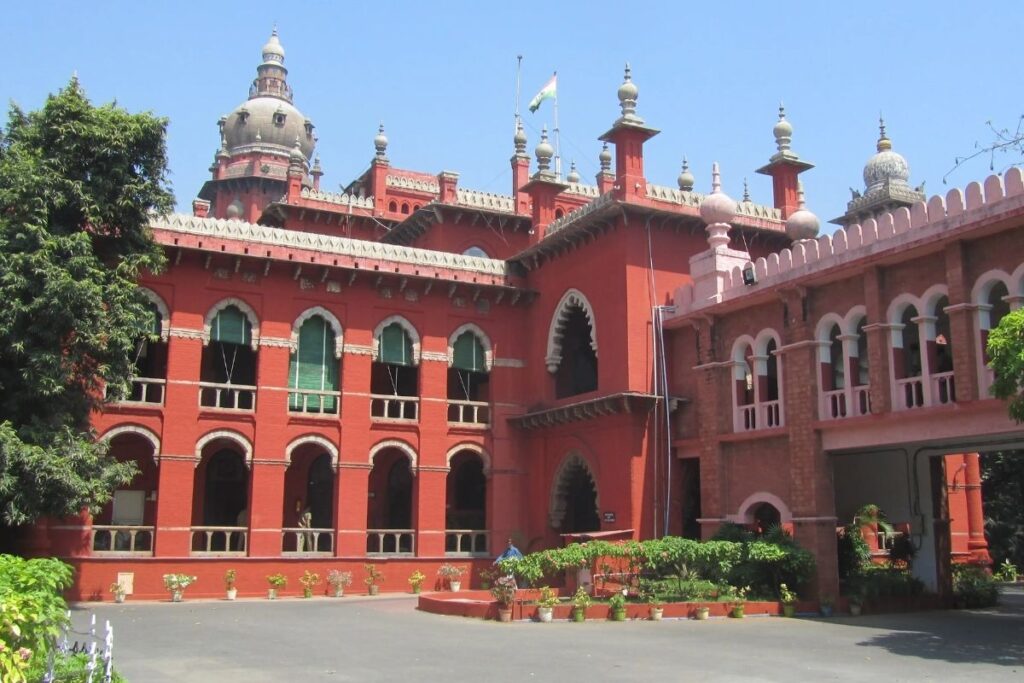

In MIOT Hospitals v. Dr Balaram Palaniappan, the Madras High Court held that non-compete clauses between hospitals and doctors are unlawful. The Court described the hospital’s attempt to enforce such a clause as a “witch-hunt” and dismissed its arbitration petition with costs.
The judgement was delivered by Justice N Anand Venkatesh while rejecting a plea filed under Section 11 of the Arbitration and Conciliation Act, 1996. The hospital had sought appointment of an arbitrator against a cardio-thoracic surgeon who resigned and joined another hospital.
MIOT Hospitals had engaged the doctor as a Consultant Cardio Thoracic Surgeon, including overseas assignments. After serving for over two years, the doctor submitted his resignation. The hospital alleged that he failed to comply with the notice period and violated non-compete and non-solicitation clauses.
The hospital claimed ₹42 lakh as liquidated damages and initiated arbitration proceedings. However, the doctor argued that such restrictive clauses were void under Sections 23 and 27 of the Indian Contract Act, 1872, which prohibit agreements in restraint of trade and those opposed to public policy.
The Court agreed with the doctor. It held that an agreement containing non-compete or non-solicitation clauses between a hospital and a doctor is opposed to public policy and hit by Section 23. Such clauses were declared unlawful, unenforceable and void ab initio.
The Court observed, “An agreement entered into by a doctor with a hospital, which contains a non-solicitation and/or non-compete clause, is certainly opposed to public policy and such an agreement is squarely hit by Section 23 of the Indian Contract Act, 1872.”
It further stated that the petition “has been filed to witch-hunt a doctor, whom the petitioner hospital expected to dance to their tunes for ever.” The Court noted that the doctor had given three months’ notice as required under the contract.
Justice Venkatesh strongly criticised the hospital’s approach. In earlier hearings, he had questioned whether the institution was running a hospital or a commercial establishment. The final verdict also reflected similar concerns about treating healthcare like a profit-driven trade.
The Court rejected the idea of rivalry between hospitals. It held that terms used in commercial trade cannot be applied to institutions meant to serve patients. Healthcare, the Court said, cannot be equated with business competition.
Drawing a comparison with the legal profession, the Court observed that an advocate leaving a law firm cannot be restrained from practising independently. The same principle applies to doctors, who are independent professionals and not ordinary employees.
The judgement emphasised patient trust and choice. “Ultimately, whether it is a patient or a client, he will engage a firm/ hospital or an advocate/doctor, with whom, he has confidence,” the Court noted.
The Court also found that the doctor had resigned in January 2024 and continued working at the hospital’s request. It recorded that he was even willing to settle by paying one month’s professional fee, yet the hospital pressed for arbitration.
Holding that no arbitrable dispute survived, the Court dismissed the petition and imposed ₹1 lakh as costs on MIOT Hospitals, directing payment to the doctor.
——————————————–
Have a case update, article, or deal to share? Courtroom Today welcomes contributions from lawyers, law firms, and legal professionals. Write to contact@courtroomtoday.com