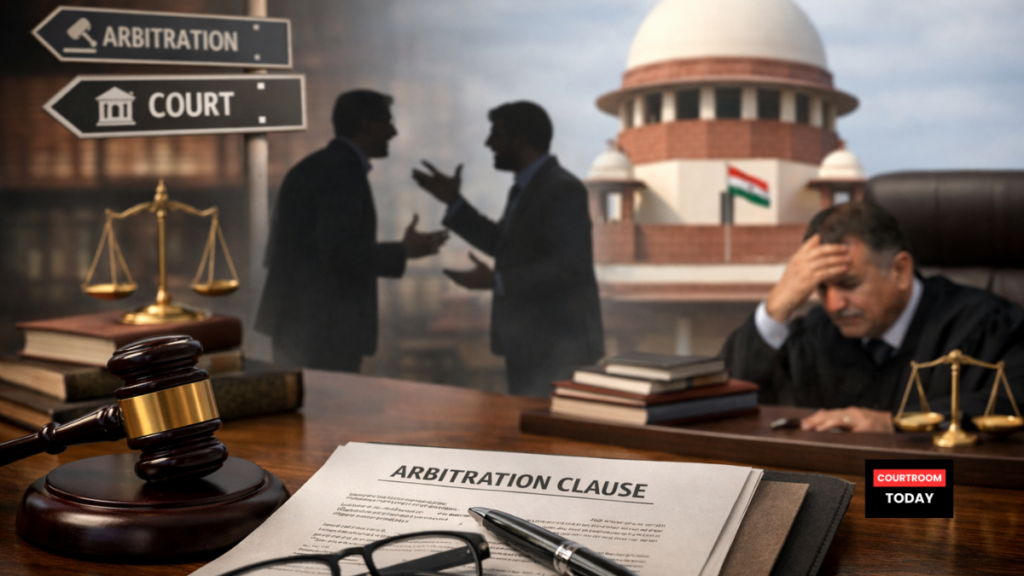
In Himadri Speciality Chemicals Limited v. Jindal Coke Limited, the Supreme Court has strongly criticised law firms for drafting confusing arbitration clauses that lead to unnecessary litigation. The Court observed that such drafting practices amount to professional misconduct and add to the already heavy burden on courts.
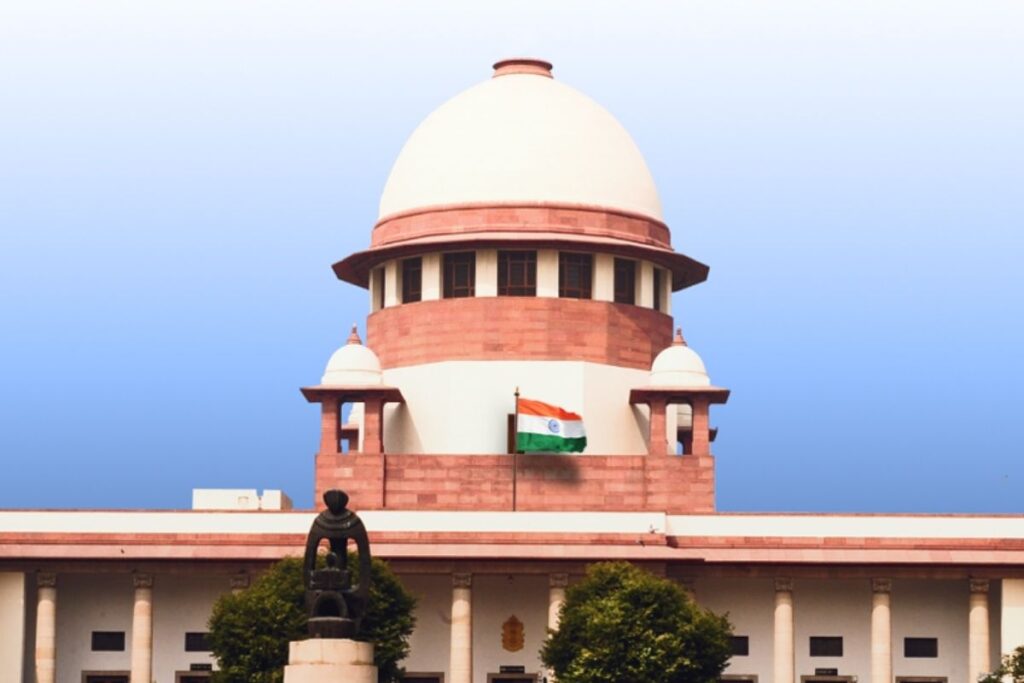
A Bench of Chief Justice Surya Kant, Justice Joymalya Bagchi, and Justice Vipul Pancholi made these remarks while hearing a plea concerning a conflict between a jurisdiction clause and an arbitration clause in the same agreement.
The dispute arose from an agreement containing two key clauses. Clause 14 stated that disputes would be referred to arbitration and that the venue would be New Delhi. However, Clause 13 provided that Indian law would govern the agreement and that courts at Jajpur would have exclusive jurisdiction.
The Delhi High Court had relied on earlier Supreme Court decisions and held that the “venue” clause effectively made Delhi the seat of arbitration. It appointed Senior Advocate V. Mohana as the sole arbitrator under the Delhi International Arbitration Centre.
Himadri Speciality Chemicals Limited challenged this order before the Supreme Court. Senior Advocate Jayant Mehta argued that different High Courts have taken varying views on whether a jurisdiction clause can prevent a venue clause from being treated as the seat of arbitration.
He submitted that once a place is declared as the seat, all further proceedings under Sections 34 and 37 of the Arbitration and Conciliation Act, 1996 would lie before that court. Therefore, the issue had significant consequences beyond merely appointing an arbitrator.
Chief Justice Surya Kant, however, expressed serious concern over the drafting of such clauses. He questioned why agreements could not be drafted clearly to avoid confusion and observed that these clauses were “deliberately, mischievously, designed.”
He further remarked, “To my mind this is professional misconduct, misguiding your party. Creating, generating litigation is part of a serious professional misconduct on the part of the law professionals, those who indulge in this.”
The Chief Justice emphasised that it is simple to state in one line that arbitration proceedings will be conducted at a specific place and that disputes arising from arbitration will be handled by a particular court. He criticised what he described as “luxury clauses” that generate avoidable disputes.
He also raised questions about accountability within law firms, asking how such clauses could be drafted without understanding the distinction between seat and venue in arbitration law.
Justice Bagchi added that while such technical issues may assume importance in international commercial arbitration, domestic arbitration should be streamlined and expedited rather than delayed by procedural objections.
Ultimately, the Supreme Court declined to interfere with the Delhi High Court’s order. The Bench observed that although certain arguable points were raised, an arbitrator had already been appointed and both parties were willing to proceed with arbitration.
The Special Leave Petition (C) No. 6470/2026 was dismissed. The Court’s strong remarks, however, send a clear message to the legal community about the responsibility involved in drafting arbitration clauses and the consequences of careless or strategic ambiguity.
——————————————–
Have a case update, article, or deal to share? Courtroom Today welcomes contributions from lawyers, law firms, and legal professionals. Write to contact@courtroomtoday.com