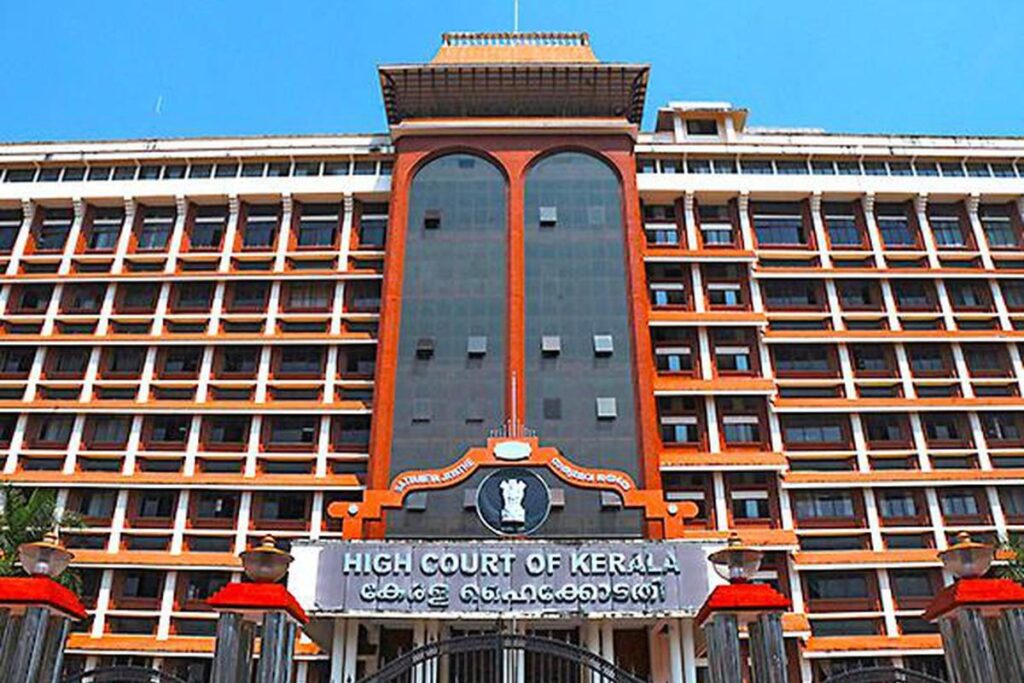
The Kerala High Court in Dr. Rasheed Ahammed P. and Anr. v. State of Kerala and Ors. dismissed a writ petition alleging violation of privacy after bulk messages were sent to government employees regarding benefits through data available on the State’s SPARK portal.
The petition challenged the use of employee data for sending WhatsApp messages about government benefits, claiming that the Chief Minister’s Office (CMO) had illegally accessed personal information. However, the Court found no illegality in the use of the data for such administrative communication.
Justice Bechu Kurian Thomas held that the data was used for legitimate purposes related to governance and employee welfare. The Court observed that the information was used to communicate official updates such as enhancements in Dearness Allowance and other employment-related benefits.
While pronouncing the judgement in open court, Justice Thomas stated:
“Thus, for legitimate purposes, including for good governance in a social welfare State, the data collected can be utilised without falling within vile of infringement of privacy. Since KSITM is a part of government of Kerala and the impugned messages were sent through the Whatsapp account registered in the name of KSITM by using the data in its possession, the nature of the messages was not for any illegitimate purpose…the data, there is no merit in this writ petition. Message sent by KSITM dealing with benefits like DA…cannot be regarded as violating privacy of the recipients of those messages. Hence, this writ petition is dismissed.”
The Court noted that the messages in question merely informed employees about salary-related benefits, including Dearness Allowance revisions and housing advances. Such communication, according to the Court, was consistent with the role of a welfare state and could not be interpreted as political campaigning or misuse of personal information.
The petition was filed by a government employee from the Department of General Administration and an Associate Professor from KTM College, Malappuram, who is also a Syndicate member of the University of Calicut. They argued that the State had accessed personal data such as phone numbers and email IDs without proper consent.
The petitioners contended that the alleged data access violated the Digital Personal Data Protection Act, 2023, and infringed the right to privacy under Article 21 of the Constitution of India. They relied on the Supreme Court’s landmark decision in Justice K.S. Puttaswamy (Retd.) v. Union of India, which recognised privacy as a fundamental right.
According to the petitioners, the information submitted to the SPARK portal was originally collected for payroll administration and could not be used for other purposes without explicit consent from employees.
However, the State government, represented by Advocate General Gopalakrishna Kurup, argued that the government acts as the custodian of such data once employees provide it for administrative systems like SPARK. The State maintained that there was no law prohibiting the use of such data for communicating official benefits.
The Advocate General also clarified that the messages were sent through the Kerala State IT Mission (KSITM) and that access to the system is strictly regulated through a two-step authorisation process.
The Court also interacted with officials from the State’s e-governance system during the hearing to understand how the messaging system functioned.
After considering the submissions, the High Court concluded that the messages were administrative in nature and aimed at informing employees about government benefits. It held that such communication did not violate privacy rights and dismissed the writ petition.
——————————————–
Have a case update, article, or deal to share? Courtroom Today welcomes contributions from lawyers, law firms, and legal professionals. Write to contact@courtroomtoday.com