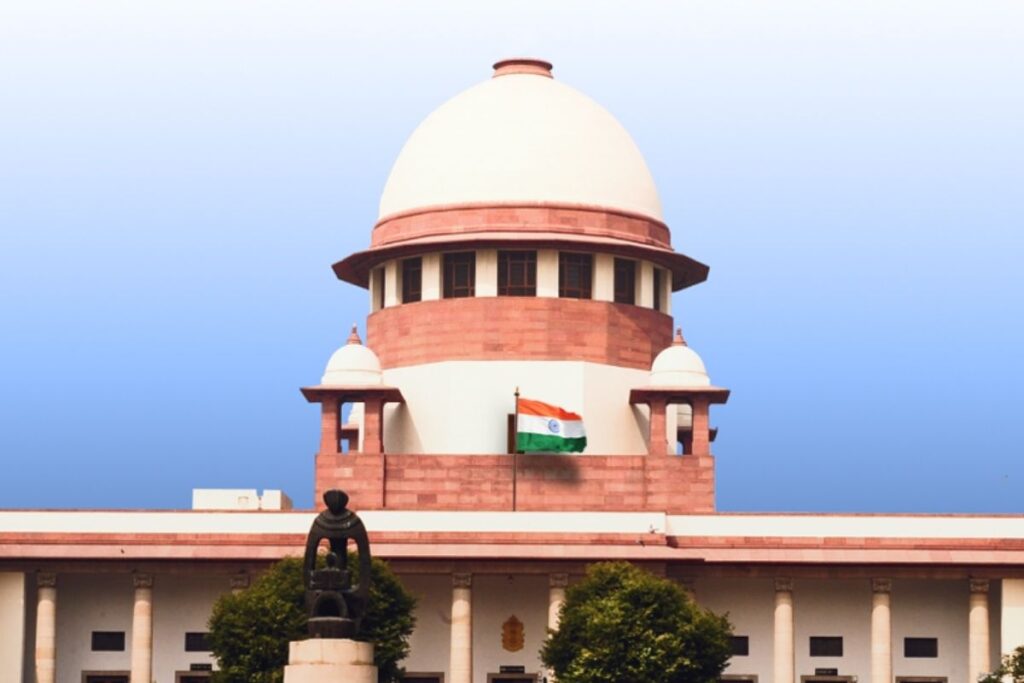
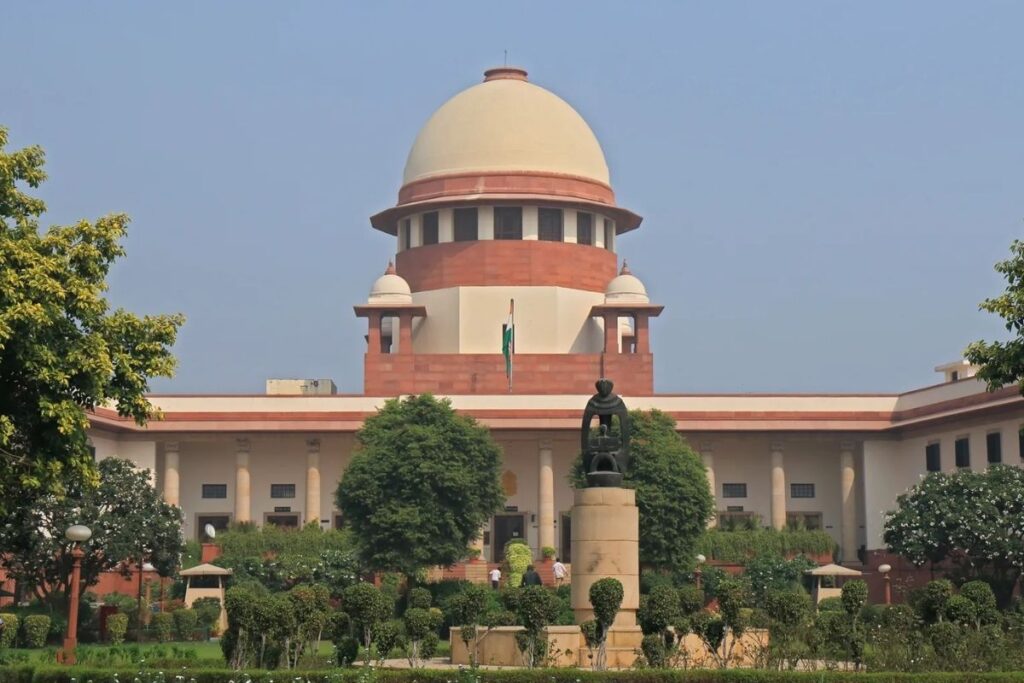
The Supreme Court on Tuesday stated that issues of “paramount importance” arise in the case concerning the validity of Fact Check Units (FCUs) under the Information Technology (Intermediary Guidelines and Digital Media Ethics Code) Amendment Rules, 2023. The matter is being heard in Union of India vs. Kunal Kamra.
A Bench comprising Chief Justice of India Surya Kant and Justice Joymalya Bagchi observed that the dispute involves a critical balance between regulation of misinformation and protection of constitutional freedoms. The Court therefore directed that the issue be decided by a three-judge Bench.
“Question is of paramount importance and it is better the Supreme Court lays down the law. It is about balancing without compromising the constitutional values,” CJI Surya Kant remarked during the hearing.
The case arises from the Central government’s appeal against the Bombay High Court’s September 2024 judgement striking down parts of the Information Technology Amendment Rules, 2023. The rules had empowered the government to establish Fact Check Units to identify allegedly false or misleading online content about the government.
These amendments modified the Information Technology (Intermediary Guidelines and Digital Media Ethics Code) Rules, 2021. Under the contested provision, online intermediaries would be required to remove or restrict content flagged as fake or misleading by the government’s Fact Check Units.
During the hearing, the Court raised concerns regarding the conduct of certain online platforms and the potential harm caused by misinformation circulating on digital media.
“The way some of these platforms are acting. See some of the laid out examples.. how dangerous are these. I am not on individual but such news can damage reputation of the institution as well. Clear demarcated guidelines is needed but without putting any onus on those who spread it all needs to be seen. Not an issue with print media much. Look at the army, policies etc,” the Chief Justice remarked.
Solicitor General Tushar Mehta, appearing for the Union government, argued that the objective of the rule was not to curb criticism or satire but to tackle misinformation.
“There is no intent to suppress any humour, satire, or critique,” Mehta told the Court.
On the other hand, Senior Advocate Arvind Datar, appearing for comedian Kunal Kamra and other petitioners, argued that proper regulatory mechanisms already exist under the Information Technology Act.
“It is about fact check units and proper rules need to be framed. Blocking rules are there.. section 69 is there,” he submitted.
The Supreme Court issued notice on the government’s appeal and directed the respondents to file their replies within four weeks. The Bench also allowed the government to file a rejoinder thereafter.
Although the Union government sought a stay on the Bombay High Court’s judgement, the Court declined to grant interim relief. Instead, it stated that the matter would be heard and decided expeditiously.
“Let us hear and decide the matter first and at the earliest,” CJI Surya Kant said.
The challenge to the IT Amendment Rules began before the Bombay High Court, where several petitions were filed, including one by stand-up comedian Kunal Kamra. The petitioners argued that the rule allowing the government to establish Fact Check Units violated constitutional guarantees of equality and free speech.
They contended that the rule exceeded the scope of Section 79 of the Information Technology Act and infringed Articles 14 and 19 of the Constitution.
The High Court initially delivered a split verdict in January 2024. Justice GS Patel struck down the rule, expressing concerns about potential censorship and the shifting of responsibility for content accuracy onto intermediaries.
In contrast, Justice Neela Gokhale upheld the validity of the amendment, observing that the rule targeted misinformation circulated with malicious intent and that possible misuse alone could not justify invalidating the provision.
Due to the split verdict, the matter was referred to Justice Atul Chandurkar for a final opinion. In September 2024, Justice Chandurkar held the provision unconstitutional and struck it down.
“I am of the opinion that it violates Articles 14 and Article 19 of the Constitution,” he concluded.
Following this judgement, the Union government approached the Supreme Court challenging the High Court’s decision.
With the Supreme Court now referring the issue to a three-judge Bench, the case is expected to play a crucial role in determining how India regulates online misinformation while safeguarding freedom of expression in the digital era.
——————————————–
Have a case update, article, or deal to share? Courtroom Today welcomes contributions from lawyers, law firms, and legal professionals. Write to contact@courtroomtoday.com