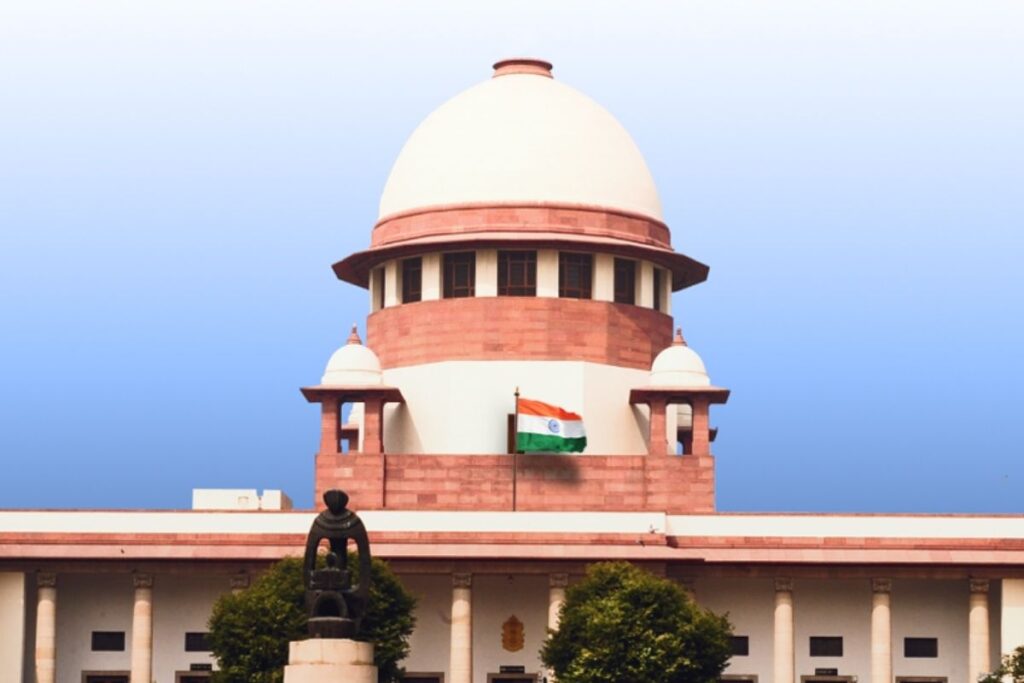
The Supreme Court in In Re: Social Science Textbook for Grade-8 (Part 2) published by NCERT and ancillary issues | SMW (C) 1/2026 expressed serious concern over the rewriting of a controversial chapter on judicial corruption in a Class 8 social science textbook prepared by the National Council of Educational Research and Training (NCERT).
A Bench comprising Chief Justice of India Surya Kant and Justices Joymalya Bagchi and Vipul M Pancholi said it was “disturbed” to learn that NCERT had already rewritten the chapter and planned to include the revised version in textbooks for the 2026–27 academic year.
The Court observed that despite earlier strong objections raised in the suo motu proceedings, NCERT proceeded with rewriting the chapter without disclosing the experts involved in the process. The affidavit filed by NCERT Director Professor Dinesh Prasad Saklani revealed the chapter had been revised but offered little clarity on its approval.
Expressing dissatisfaction with the explanation, the Court directed that the rewritten chapter must not be published until it receives approval from an independent committee of domain experts. The committee, the Court suggested, should preferably include a former judge, an academician, and a renowned legal practitioner.
“We direct that if at all chapter IV has been re-written, the same shall not be published unless it is approved by a committee of domain experts,” the Bench ordered, emphasising that the review process must be transparent and credible before the content is introduced in school textbooks.
The Court also criticised the manner in which the original chapter was prepared and approved. It noted that the curriculum appeared to have been developed casually without proper institutional scrutiny, raising concerns about how such sensitive content was introduced in educational material for young students.
In a strong observation, the Court questioned the competence of certain individuals involved in drafting the chapter. It remarked that the persons responsible either lacked proper understanding of the judiciary or had deliberately presented misleading information about it.
“At the outset, we have no reason to doubt that Professor Michel Danino, along with Ms Diwakar and Mr Alok Prasanna Kumar, either does not have reasonable knowledge about the Indian judiciary or they deliberately and knowingly misrepresented the facts in order to project a negative image of the Indian judiciary,” the Court said.
The Bench directed that these individuals should not be associated with any government curriculum project in the future. It ordered authorities across the Union and States to immediately disassociate them from any work involving public funds unless the individuals approach the Court seeking modification of the order.
Apart from curriculum concerns, the Court also expressed alarm over social media posts circulating content related to the disputed chapter. It directed the Union Government to identify the websites and persons responsible and provide complete details before the Court so that appropriate action could be initiated.
The matter arose after reports highlighted that a new NCERT social science textbook for Class 8 referred to corruption in the judiciary and case backlogs as challenges. Following the Court’s objections earlier, NCERT withdrew the book and issued an “unconditional and unqualified apology,” stating that the chapter would be revised.
——————————————–
Have a case update, article, or deal to share? Courtroom Today welcomes contributions from lawyers, law firms, and legal professionals. Write to contact@courtroomtoday.com