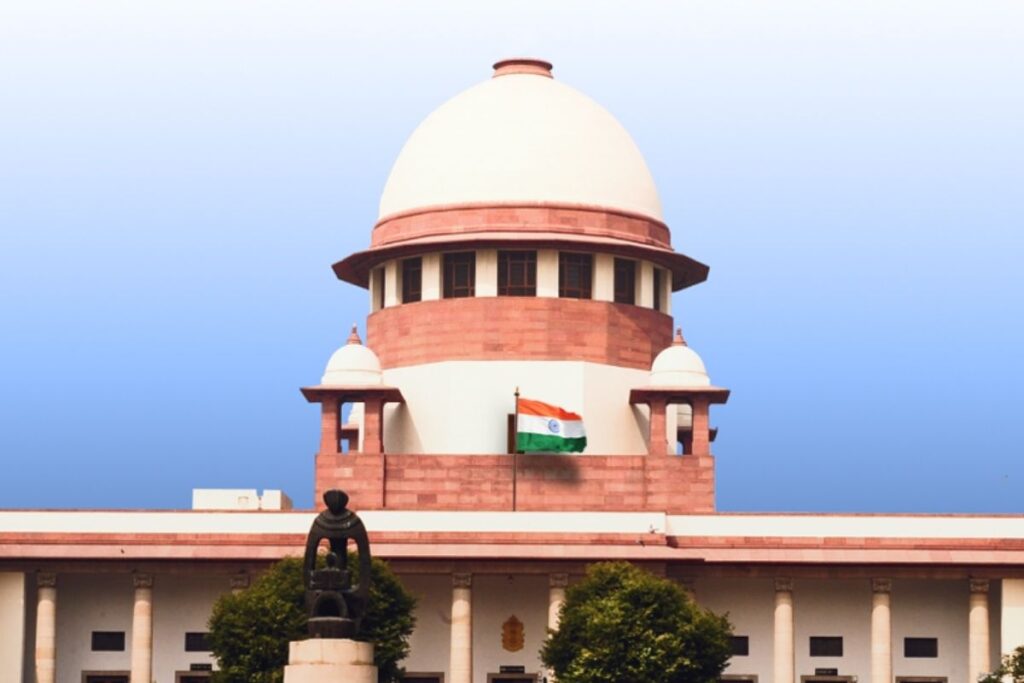

In Anoop Singh v. Union Territory of Jammu and Kashmir, the Supreme Court of India has strongly criticised the delay in criminal trials in Jammu and Kashmir, calling the situation “shocking” after learning that hundreds of cases have remained pending for more than five years.
The matter was heard by a bench of Justice JB Pardiwala and Justice KV Viswanathan. The Court emphasised that prolonged delays in criminal trials violate the fundamental right to a speedy trial, which is guaranteed under Article 21 of the Constitution of India.
During the hearing, the Court examined an affidavit filed by Chandraker Bharti, Principal Secretary of the Home Department of Jammu and Kashmir. The affidavit revealed that 351 sessions trials have been pending for over five years in the Union Territory.
These cases involve 585 accused persons who are currently facing trial. A particularly concerning aspect highlighted by the Court was that 235 of these cases are still pending at the stage of recording oral evidence of witnesses, indicating serious delays in the prosecution process.
The bench expressed strong concern over the functioning of trial courts in such circumstances. Justice Pardiwala questioned why trials continue for years even when the accused persons remain in custody.
He remarked, “What are the Trial Courts doing? Accused is in jail past five years, his trial is not concluded. That is something very very serious.”
The Court noted that the primary reason for the delay appears to be the failure of the prosecuting agencies to produce witnesses for examination. The bench stressed that this cannot be accepted as a valid justification for delaying criminal trials.
The judges also referred to a specific case where the accused had been in custody for more than seven years, yet the prosecution had examined only seven witnesses during that period. In one instance, the trial court had adjourned the case 23 times because prosecution witnesses were not produced.
Justice Pardiwala observed that even before the Supreme Court, the prosecution had failed to produce evidence despite 56 judicial hearings and repeated directions.
The Court acknowledged that some delay during the COVID-19 pandemic may have been unavoidable. However, the bench noted that continued delays after the pandemic period cannot be justified.
Raising broader institutional concerns, Justice Pardiwala asked whether the Union Territory was facing shortages of trial courts, judges, or public prosecutors. He also remarked that the Jammu and Kashmir High Court should have intervened earlier to address the delay.
The Supreme Court has now directed the authorities to provide detailed information regarding the pending cases. The State must disclose the date of framing of charges, number of witnesses cited, witnesses examined, reasons for delay, and the estimated timeline for completion of trials.
Justice Viswanathan described the exercise as a “pilot study” aimed at understanding the larger problem of delays in criminal trials.
The Court emphasised that prolonged detention without conclusion of trial undermines the criminal justice system. At the same time, it noted that victims and their families are also entitled to timely justice.
Observing that the issue has been taken very seriously, the Court asked the Jammu and Kashmir administration to formulate a concrete plan to ensure that long-pending criminal trials are concluded at the earliest.
——————————————–
Have a case update, article, or deal to share? Courtroom Today welcomes contributions from lawyers, law firms, and legal professionals. Write to contact@courtroomtoday.com