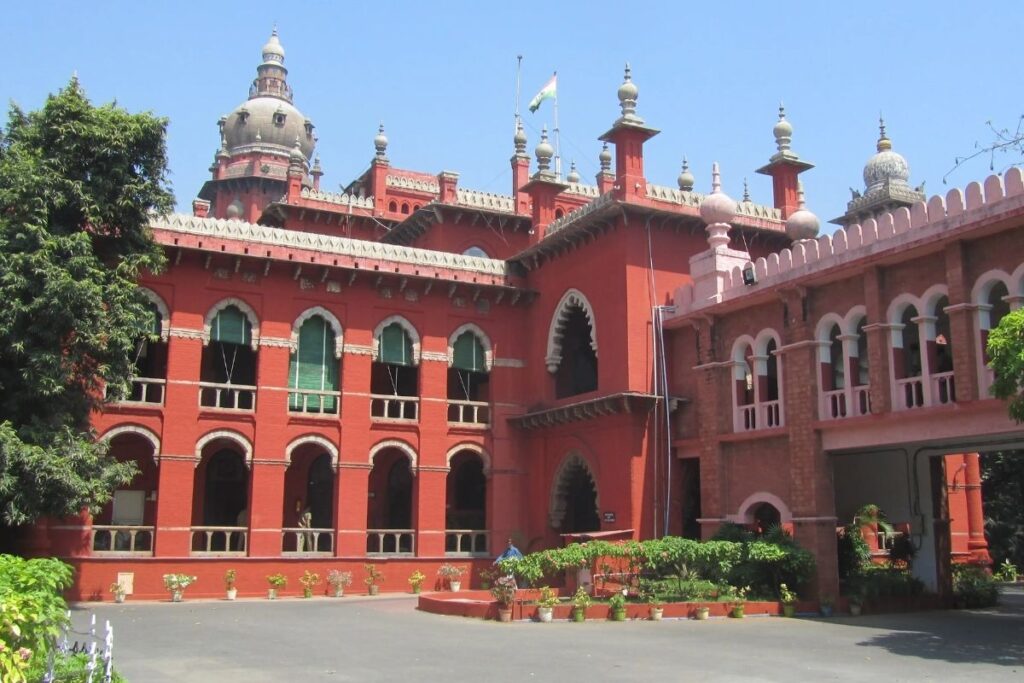

The Supreme Court recently delivered an important ruling in The State of Kerala & Anr. v. M/s. Panacea Biotec Ltd. & Anr., clarifying the scope of inquiry under Section 202 of the Code of Criminal Procedure (CrPC). The Court held that a Magistrate is not required to conduct a mandatory inquiry when the complaint is filed by a public servant in the discharge of official duties.
The judgement was delivered by a Bench comprising Justice Ahsanuddin Amanullah and Justice S. V. N. Bhatti. The Court examined whether the statutory requirement under Section 202 CrPC applies when summons are issued to an accused residing outside the territorial jurisdiction of the Magistrate.
Under Section 202(1) CrPC, a Magistrate ordinarily must conduct an inquiry before issuing summons if the accused resides beyond the court’s territorial jurisdiction. This safeguard was introduced to prevent harassment and unnecessary criminal proceedings against individuals living outside the court’s local limits.
The dispute arose from a complaint filed by a Drugs Inspector in Kerala under the Drugs and Cosmetics Act, 1940. The complaint alleged misbranding of a pentavalent vaccine by M/s Panacea Biotec Ltd. and others. The Chief Judicial Magistrate in Thrissur took cognisance and issued summons to the accused companies.
The accused challenged the summoning order before the Kerala High Court. They argued that the Magistrate had failed to comply with the mandatory inquiry requirement under Section 202 CrPC, particularly since the accused entities were located outside the Magistrate’s jurisdiction.
Accepting this argument, the High Court quashed the summoning order. It held that the inquiry requirement introduced through the 2005 amendment to Section 202 CrPC was mandatory in cases where the accused resides beyond the court’s territorial jurisdiction.
The State of Kerala challenged the High Court’s decision before the Supreme Court. The State argued that complaints filed by public servants performing official duties stand on a different legal footing and should not be subjected to the same procedural requirement.
The Supreme Court agreed with the State’s position and set aside the High Court’s decision. It emphasised that the statutory framework must be interpreted harmoniously by reading Section 202 alongside Section 200 of the CrPC.
The Court noted that the proviso to Section 200 exempts Magistrates from examining the complainant and witnesses when the complaint is filed by a public servant acting in official capacity. In such circumstances, insisting on an additional inquiry under Section 202 would defeat the legislative scheme.
“The present case emanates from a complaint by an officer, made in writing. In terms of Section 200 of the Code, the Magistrate is not required to examine the complainant and the witnesses, if a public servant is acting or purporting to act in discharge of his official duty or a Court has made the complaint. Here, an official complaint was made on authorisation by the State Government. In this factual setting, Section 202 of the Code would necessarily have to be construed harmoniously with Section 200 of the Code when considering postponement of the issue of process.”
The Court also relied on its earlier decision in Cheminova India Limited v. State of Punjab, which recognised that complaints filed by public servants occupy a distinct position within criminal procedure. Based on this reasoning, the Court upheld the Magistrate’s summoning order and allowed the State’s appeal.
——————————————–
Have a case update, article, or deal to share? Courtroom Today welcomes contributions from lawyers, law firms, and legal professionals. Write to contact@courtroomtoday.com