
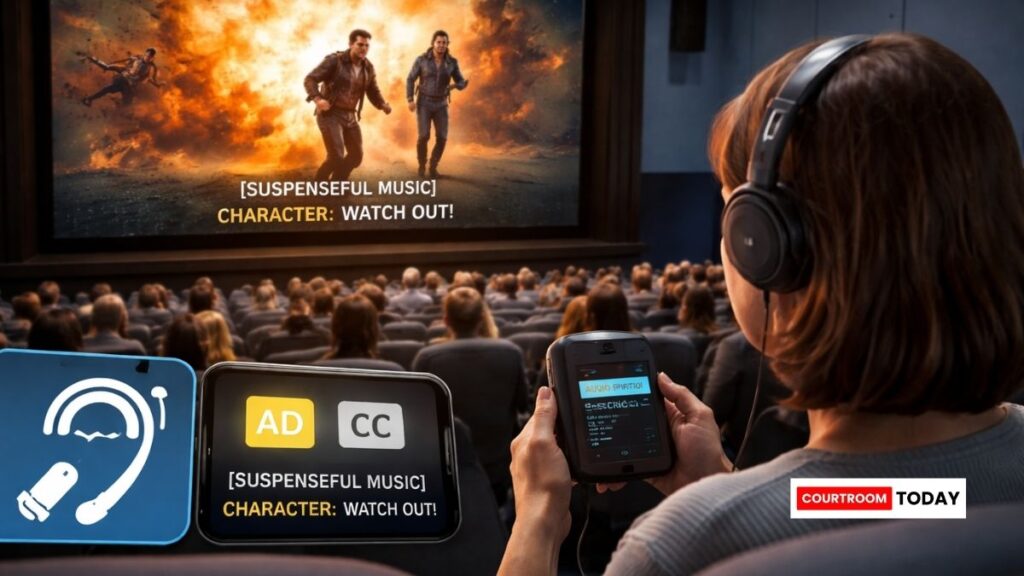
India’s film industry is entering a new phase of accessibility. From March 15, films seeking certification must include subtitles and audio descriptions. The decision by the Ministry of Information and Broadcasting aims to make cinema accessible to persons with disabilities.
The rule makes accessibility features a mandatory requirement for obtaining certification from the Central Board of Film Certification (CBFC). Without subtitles and audio descriptions, films will not receive a censor certificate, making these features a compulsory part of the certification process.
The policy emerged after discussions between the CBFC and members of the film industry. According to producer G. Dhananjayen, the move was triggered by representations from people with disabilities who highlighted the difficulties they faced while watching films in theatres.
“Six months ago, exhibitors, producers and trade bodies across India were invited for a discussion with the CBFC as people with disabilities had put forth a representation stating that they weren’t able to enjoy cinema because of the lack of these facilities in theatres.”
Industry members reportedly suggested making accessibility features optional for certain films. However, authorities decided against any differentiation. The reasoning was that persons with disabilities may choose to watch any film, and accessibility should not depend on the type of movie.
Many filmmakers agree that the step promotes inclusivity but believe the transition may take time. Director Sashi Kiran Tikka noted that subtitles are already commonly prepared during the certification process, making the change less disruptive.
Filmmaker Hemanth M. Rao said there could initially be technical challenges. He pointed out that ensuring correct syntax and language in audio descriptions may require specialised skills and careful preparation.
However, he also raised concerns about the timeline for implementation. According to him, films already nearing release may struggle to comply with the immediate deadline, and more time could help reduce errors.
Academics and disability rights advocates have welcomed the development. Someshwar Sati, professor at the University of Delhi and chairperson of the Indian Disability Studies Collective, believes the decision could significantly improve cinema accessibility.
“The introduction of audio description enhances the experience and will make movie-watching far more enjoyable. A true businessman would realise that if cinema is made accessible to more people, the size of the audience would also increase exponentially, enhancing a movie’s reach and expanding its market.”
Despite support for the idea, several practical concerns remain. Filmmaker Ranjan Ghosh questioned how quickly theatres and production houses can adapt to the new requirements and whether smaller cinemas will be able to comply.
Questions have also been raised about independent filmmakers and productions with minimal dialogue. Industry participants are uncertain how such films will integrate audio descriptions or subtitles.
Producers have also highlighted financial considerations. Sameer Bharat Ram suggested that the government could explore public-private partnership models to offset additional costs associated with implementing accessibility features.
Exhibitors have expressed particular concern about the expense of installing and maintaining equipment in theatres. Some believe financial support or incentives from the government may be necessary for smooth implementation.
Subtitling professionals have also noted that the policy could significantly increase their workload. The preparation of closed captions and detailed audio descriptions requires additional time, expertise, and compensation.
Even with these challenges, many industry voices agree that the initiative represents an important step towards inclusive entertainment. If effectively implemented, the rule could expand cinema access to millions of viewers who were previously excluded from the theatrical experience.
——————————————–
Have a case update, article, or deal to share? Courtroom Today welcomes contributions from lawyers, law firms, and legal professionals. Write to contact@courtroomtoday.com