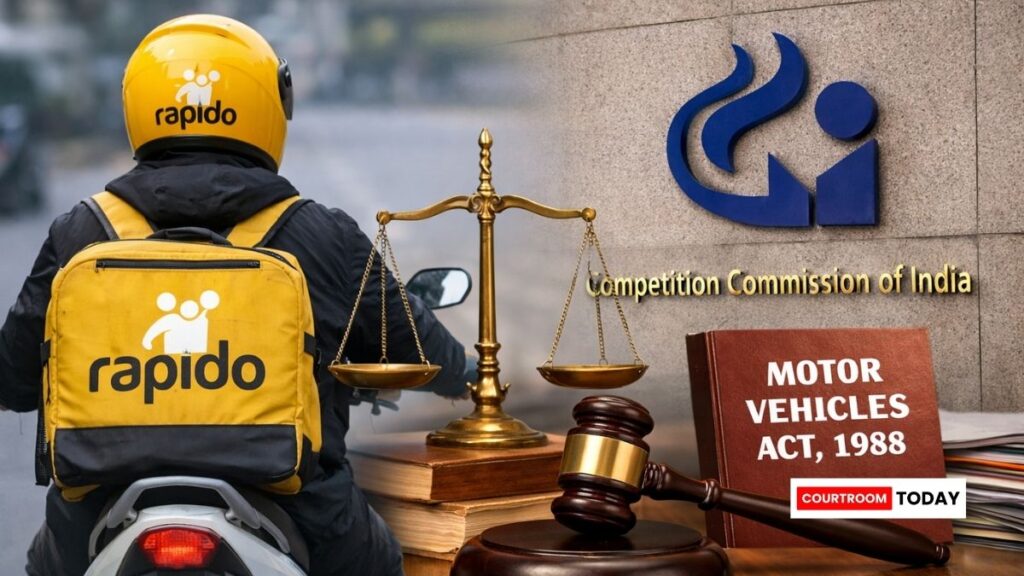
The Competition Commission of India (CCI) has dismissed a complaint against Rapido concerning its bike taxi operations using private vehicles. The decision was taken on March 17, with the Commission concluding that the matter did not fall within its jurisdiction under competition law.
The complaint was filed by Vedansh Pandey, director of a rival platform, ‘Anything Legit’. He alleged that Rapido was enabling bike taxi services using privately registered vehicles without permits or commercial insurance, particularly in parts of Uttarakhand.
According to the complaint, a covert audit conducted in July 2025 across Dehradun, Rishikesh and Tapovan showed that rides were being carried out using white number plate vehicles. It was claimed that such operations violated transport regulations.
Pandey further argued that this practice allowed Rapido to reduce fares by 15–30%, giving it an unfair advantage in the market. He stated that this led to a financial loss of ₹10 lakh for his platform and a significant drop in driver participation.
The complaint also alleged violations of Sections 3 and 4 of the Competition Act, 2002. These provisions deal with anti-competitive agreements and abuse of dominant position. It was argued that Rapido’s actions resulted in denial of market access and predatory pricing.
However, the CCI rejected these allegations at the preliminary stage. The Commission observed that the main issue raised was the use of private vehicles without proper permits, which is governed by the Motor Vehicles Act, 1988.
The Commission clarified that such regulatory concerns fall outside the scope of competition law. It noted that there was no material on record to establish anti-competitive conduct or abuse of dominance by Rapido.
“In view of the nature of allegations… the Commission is of the view that no prima facie case of contravention… has been made out,” the order stated.
Based on this reasoning, the CCI closed the matter at the threshold without ordering a detailed investigation. The quorum included Chairperson Ravneet Kaur and Members Anil Agrawal, Sweta Kakkad and Deepak Anurag.
Importantly, the Commission also stated that it had not examined the allegations under other legal frameworks. It left it open for the complainant to pursue remedies under relevant laws, such as transport regulations.
The decision highlights the distinction between regulatory violations and competition law issues. While concerns around permits and compliance may exist, they must be addressed under the appropriate statutory framework rather than through competition proceedings.
——————————————–
Have a case update, article, or deal to share? Courtroom Today welcomes contributions from lawyers, law firms, and legal professionals. Write to contact@courtroomtoday.com