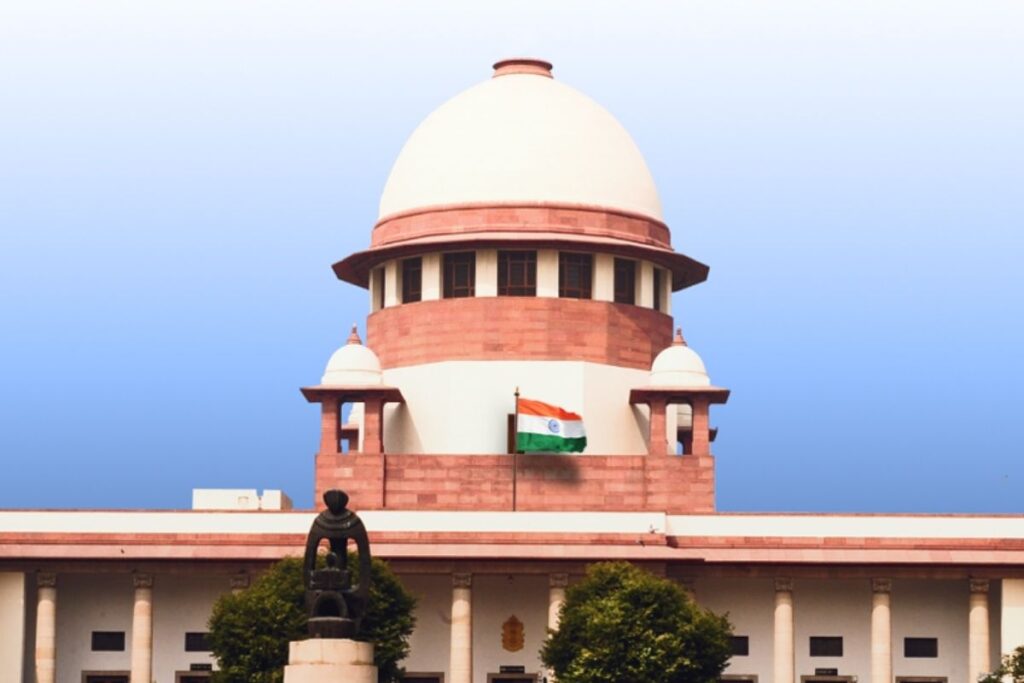

In Sujoy Ghosh v. State of Jharkhand, the Supreme Court has quashed a criminal case alleging copyright infringement against filmmaker Sujoy Ghosh in relation to his film “Kahaani 2: Durga Rani Singh”. The Court set aside the proceedings initiated under Section 63 of the Copyright Act, 1957.
The Bench comprising Justice Pamidighantam Sri Narasimha and Justice Alok Aradhe allowed Ghosh’s petition challenging the continuation of criminal proceedings pending before the Chief Judicial Magistrate in Hazaribagh, Jharkhand. The case stemmed from allegations that the film’s script was based on a copied work.
The complaint was filed by Umesh Prasad Mehta, who claimed that his script titled “Sabak” had been unlawfully used to create “Kahaani 2”. He alleged that he had shared his script with Ghosh in June 2015 for professional assistance and that it was later misused.
According to the complainant, the release of the film in December 2016 amounted to a clear instance of copyright infringement. Based on this allegation, criminal proceedings were initiated, leading to the issuance of summons by the Magistrate under Section 63 of the Copyright Act.
Ghosh, however, strongly denied these claims. He stated that he had begun writing the script for “Kahaani 2” as early as November 2012 and had registered the final draft with the Screen Writers Association in December 2013, well before the alleged interaction with the complainant.
He further denied ever meeting the complainant or receiving any script from him. Ghosh argued that the complaint was baseless and lacked any credible evidence to establish similarity or copying between the two scripts.
Before the Supreme Court, Ghosh contended that the Magistrate had issued the summoning order mechanically, without conducting any meaningful examination or comparison of the scripts. He argued that there was no prima facie case made out to justify criminal prosecution.
“The Impugned Order sets a dangerous precedent where criminal process against an honest film-maker can be initiated on the basis of self-serving allegations without making out any case of copyright infringement. This is contrary to the established legal principles regarding issuance of process under Section 200-204 of the CrPC,” the petition stated.
The Court found merit in these arguments and observed that the complaint did not disclose sufficient grounds to proceed with criminal action. It also noted that such proceedings should not be allowed to continue in the absence of basic verification or supporting material.
Additionally, Ghosh raised concerns regarding territorial jurisdiction, arguing that the alleged offence, if any, took place in Mumbai and not in Hazaribagh. This further weakened the maintainability of the complaint.
With this judgement, the Supreme Court has reaffirmed that criminal law cannot be used as a tool for harassment in cases involving creative disputes, especially where foundational requirements for prosecution are not met.
——————————————–
Have a case update, article, or deal to share? Courtroom Today welcomes contributions from lawyers, law firms, and legal professionals. Write to contact@courtroomtoday.com