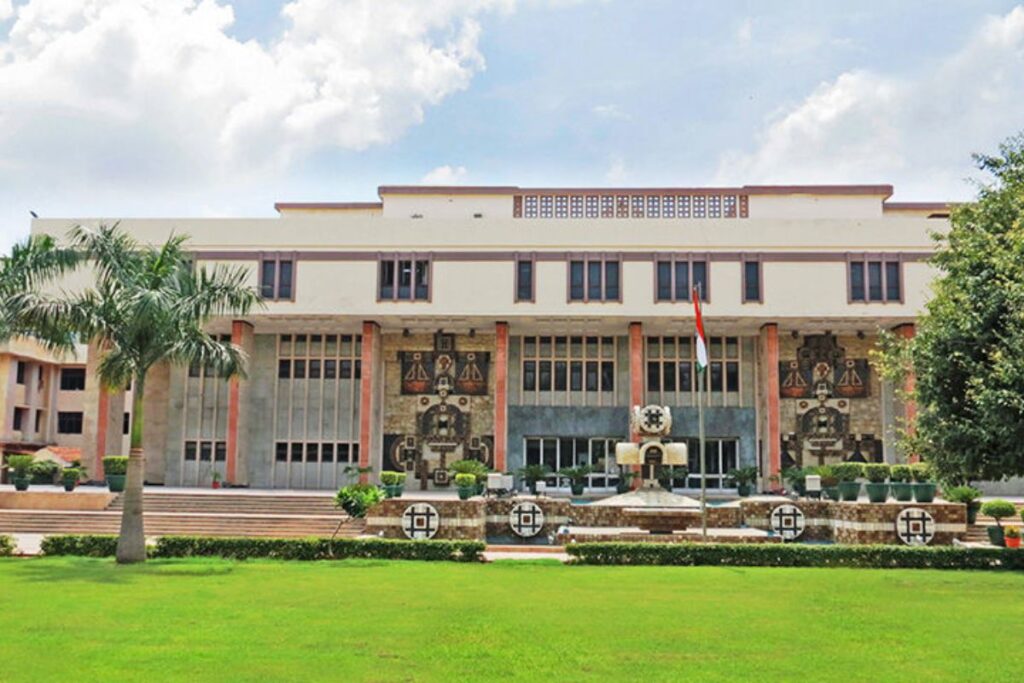
The Delhi High Court, in Garima Singh & Ors vs Union of India & Anr., declined to entertain a public interest litigation challenging the difference in dress codes prescribed for members of the Goods and Services Tax Appellate Tribunal (GSTAT). The Court held that such issues do not fall within the scope of judicial review.
A Division Bench comprising Chief Justice Devendra Kumar Upadhyaya and Justice Tejas Karia observed that the matter raised by the petitioner was not justiciable. The Court questioned the very maintainability of the plea, remarking, “How is this a PIL? These issues are not justiciable.”
The petition was filed by a lawyer who objected to an office order issued in June 2025 by the President of GSTAT. The order laid down separate dress codes for judicial members and technical members of the tribunal, which the petitioner argued created an unnecessary and visible distinction.
As per the order, the President and judicial members are required to follow the dress code applicable to judges of the Supreme Court and High Courts, albeit without the gown. In contrast, technical members are directed to wear formal attire consisting of black or striped trousers, a black coat, white shirt, and necktie.
The petitioner contended that such differentiation leads to an apparent disparity in status and authority among members. It was argued that the distinction creates confusion and undermines the perception of equal power among tribunal members. The counsel described the difference as “an eye-sore” and submitted that no other tribunal in the country follows such a practice.
During the hearing, the Court indicated that there may be a valid rationale behind the distinction. It noted that judicial members are typically drawn from the higher judiciary, whereas technical members do not hold judicial positions. The Bench remarked that allowing non-judicial members to wear judicial robes or bands may not be appropriate.
The Court suggested that the grievance raised by the petitioner was administrative in nature and could be more appropriately addressed by the President of the tribunal. It emphasised that courts should not intervene in such internal matters unless there is a clear violation of legal rights.
Accordingly, the High Court granted liberty to the petitioner to submit a representation before the President of GSTAT. It also requested that such a representation, if made, be considered expeditiously and an appropriate decision be taken.
The judgement reinforces the principle that not all perceived disparities or administrative decisions warrant judicial intervention, especially when alternative remedies are available within the institutional framework.
——————————————–
Have a case update, article, or deal to share? Courtroom Today welcomes contributions from lawyers, law firms, and legal professionals. Write to contact@courtroomtoday.com