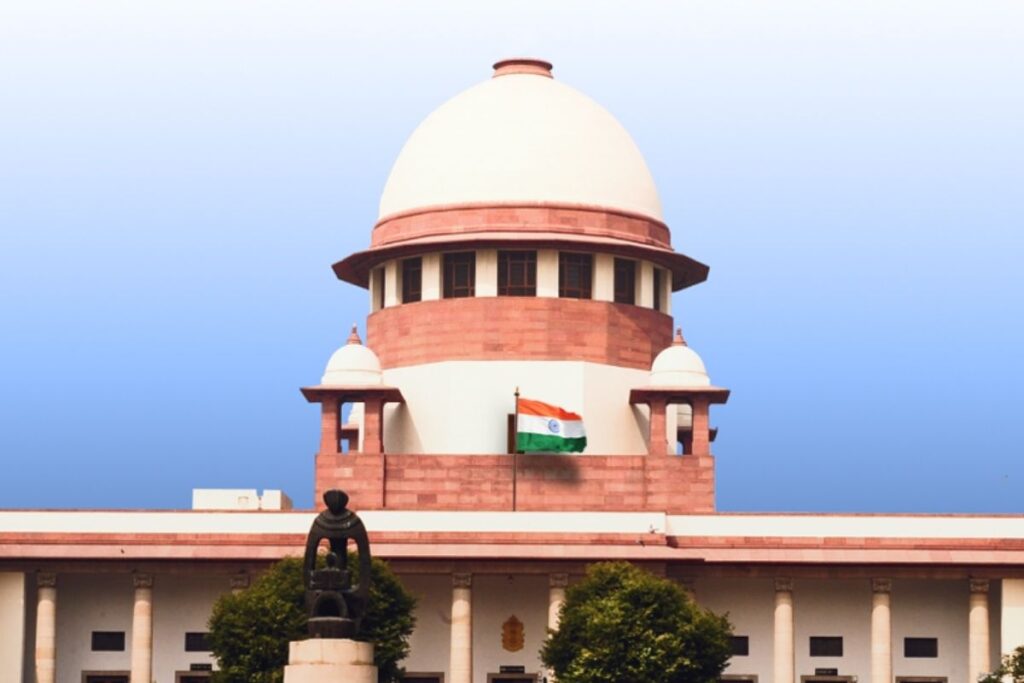
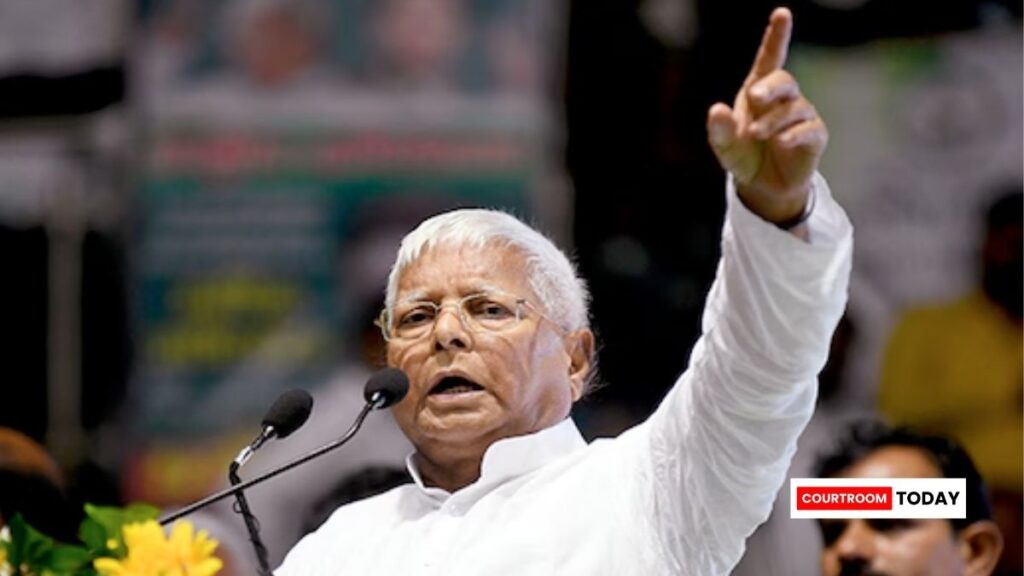
The Supreme Court, in Lalu Prasad Yadav v. CBI (land-for-jobs case), has refused to grant relief to former Bihar Chief Minister Lalu Prasad Yadav, allowing the criminal proceedings against him to continue.
The Bench comprising Justices MM Sundresh and N Kotiswar Singh declined to interfere with the Delhi High Court’s earlier decision. However, the Court permitted Yadav to raise all his legal objections during the trial stage.
The matter arises from allegations of a “land-for-jobs” scheme during Yadav’s tenure as Union Railway Minister between 2004 and 2009. The Central Bureau of Investigation (CBI) claims that appointments to Group D posts were made in exchange for land transferred to Yadav’s family.
According to the prosecution, individuals seeking railway jobs allegedly transferred land parcels in Patna and nearby areas to Yadav’s relatives at undervalued rates. These transactions, the agency argues, were part of an unlawful quid pro quo arrangement.
Yadav and his family have denied all allegations, maintaining that the case is politically motivated. They have consistently argued that there was no wrongdoing in the transactions in question.
Earlier, the Delhi High Court had dismissed Yadav’s plea seeking quashing of the proceedings. It held that Section 17A of the Prevention of Corruption Act applies prospectively and would not cover actions allegedly committed before its introduction in 2018.
Before the Supreme Court, Additional Solicitor General SV Raju contended that prior approval under Section 17A was not required in this case. He argued that Yadav was not the competent authority responsible for railway appointments, and therefore, the statutory protection did not apply.
“Wherever 17A applies we have taken permission… Why would we not take for him? Because it’s not required,” Raju submitted before the Court.
The Bench, however, questioned this interpretation. It observed that influence could still flow from a high office, even if formal authority was not exercised.
“Decision can be formal or informal but if you say he is at the apex of the entire Ministry, your own case is because he was holding the post he has influence.”
On behalf of Yadav, Senior Advocate Kapil Sibal argued that the prosecution had changed its stance. He emphasised that the High Court’s decision was based on the prospective application of Section 17A, not on the question of authority.
“Completely wrong what my learned friend is saying. This is not the ground on which High Court has rejected,” Sibal argued.
He further submitted that the prosecution’s own case indicated that Yadav acted in his official capacity. According to him, influencing appointments while serving as Railway Minister would fall within the scope of official duties.
The Supreme Court, however, chose not to decide these legal issues at this stage. It clarified that questions regarding the applicability of Section 17A and related protections would remain open for consideration during the trial.
While disposing of the appeal, the Court granted liberty to Yadav to raise all permissible legal arguments before the trial court.
Additionally, the Court relaxed the requirement of Yadav’s personal appearance before the trial court, offering limited procedural relief.
——————————————–
Have a case update, article, or deal to share? Courtroom Today welcomes contributions from lawyers, law firms, and legal professionals. Write to contact@courtroomtoday.com