
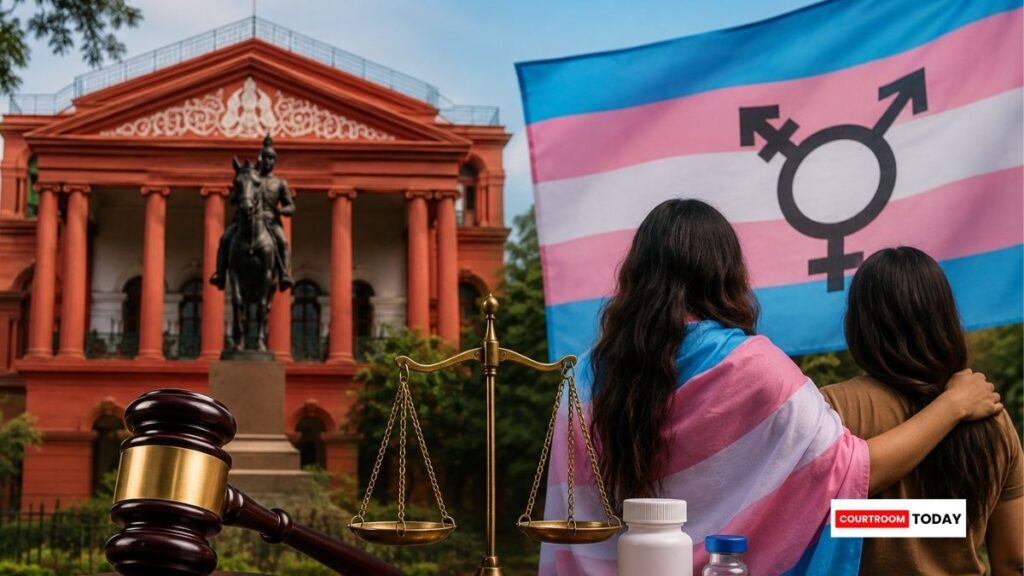
In Akira Mujawar v. Union of India, the Karnataka High Court has protected the right of two transgender women to continue their hormone replacement therapy (HRT) despite the recent changes introduced through the Transgender Persons Amendment Act, 2026.
Justice Sachin Shankar Magadum observed that both petitioners had been undergoing HRT since November 2023 and stopping the treatment midway could seriously affect their physical and mental health. The Court noted that abrupt discontinuation of such treatment may have “adverse and detrimental consequences” on their well-being.
The petitioners had approached the High Court challenging the amended definition of “transgender” under the new law. According to the amended provisions, self-identification as a transgender person is no longer recognised in the same manner as before. The petitioners argued that this directly conflicts with the principles laid down by the Supreme Court in the landmark National Legal Services Authority (NALSA) v. Union of India judgement delivered in 2014.
Senior Advocate Jayna Kothari submitted that after the amendment came into force, several doctors became hesitant to prescribe medicines required for HRT. This created practical difficulties for transgender women who were already undergoing treatment.
It was argued before the Court that denial of access to medical care violates fundamental rights guaranteed under Articles 14 and 21 of the Constitution. The petitioners claimed that access to gender-affirming healthcare forms an essential part of dignity, equality, and personal liberty.
On the other hand, Additional Solicitor General Arvind Kamath, appearing for the Central government, argued that there was no material showing any coercive action preventing the petitioners from continuing their treatment. He submitted that nobody had stopped them from taking medication.
After hearing both sides, the Court directed medical professionals to continue facilitating the petitioners’ HRT. However, the Court clarified that this interim protection would remain subject to the final outcome of the pending petitions and any future orders passed by the Supreme Court on the constitutional validity of the Amendment Act.
The High Court’s order comes at a time when the constitutional validity of the Transgender Persons Amendment Act, 2026 is already under challenge before the Supreme Court. The apex court had recently refused to stay the operation of the law while issuing notice to the Central government in the matter.
The order is significant because it recognises the possible medical and psychological impact of interrupting ongoing gender-affirming treatment. It also highlights the continuing legal debate surrounding self-identification rights of transgender persons in India after the NALSA judgement
——————————————–
Have a case update, article, or deal to share? Courtroom Today welcomes contributions from lawyers, law firms, and legal professionals. Write to contact@courtroomtoday.com