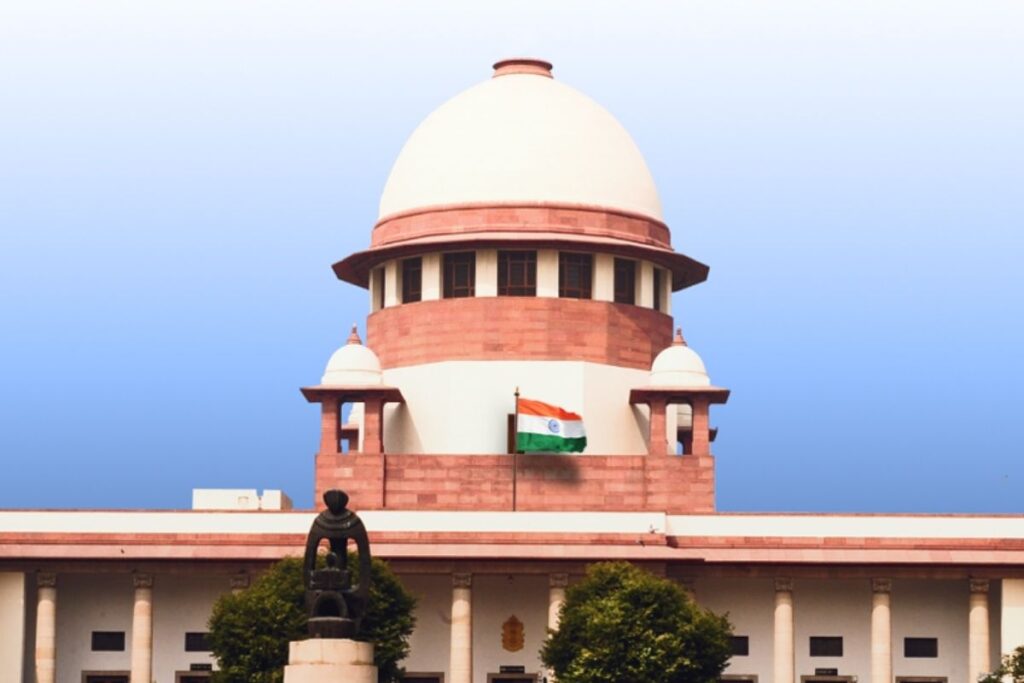
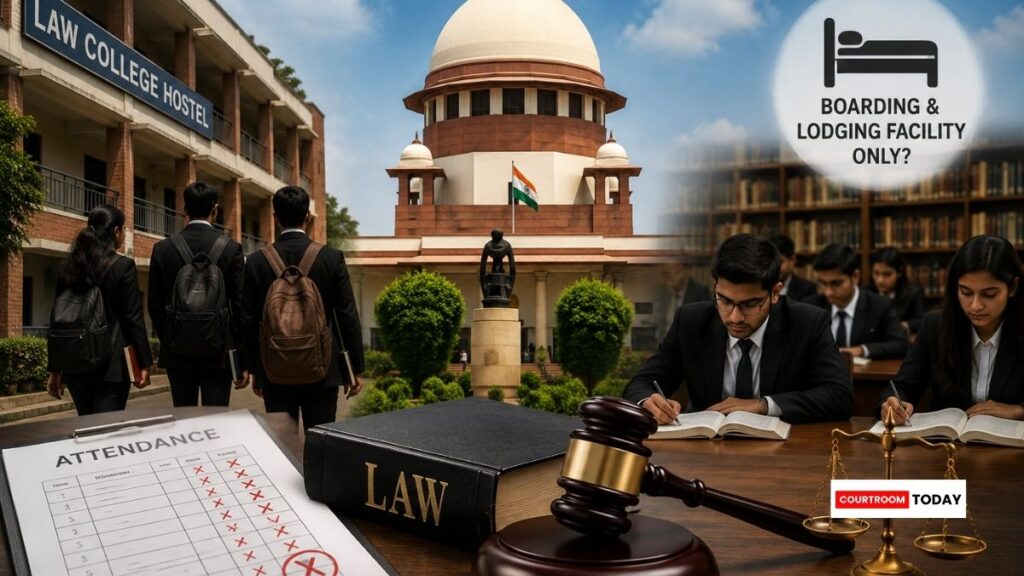
In SVKMS Narsee Monjee Institute of Management Studies v. Bar Council of India, the Supreme Court on Wednesday raised serious concerns over a Delhi High Court ruling that prevented law colleges from stopping students from appearing in examinations due to low attendance. The Court observed that without mandatory attendance requirements, law college hostels may turn into mere “boarding and lodging facilities.”
A Bench of Justices Vikram Nath, Sandeep Mehta and Vijay Bishnoi issued notice on a plea filed by Narsee Monjee Institute of Management Studies challenging the 2025 Delhi High Court judgement.
During the hearing, Justice Mehta remarked that the impact of the High Court’s order could be damaging for legal education institutions. The Court noted that if attendance rules lose significance, students may stop attending classes altogether despite National Law Universities being known for quality legal education and faculty.
Senior Advocate Mukul Rohatgi, appearing for NMIMS, argued that the Delhi High Court ruling had effectively made attendance norms meaningless. He submitted that the judgment had triggered several legal proceedings by students seeking relief from attendance requirements.
Rohatgi also argued before the Court that regular classroom participation remains essential in professional legal education. He questioned the growing reluctance among students to physically attend classes despite being enrolled in full-time law programmes.
However, the Supreme Court refused to stay the Delhi High Court judgment for now. Justice Nath stated that the Court would hear the matter in detail and later determine the correct legal position regarding mandatory attendance in law colleges. The matter has been listed for hearing on May 26.
The Bench also tagged the case with pending petitions challenging various circulars issued by the Bar Council of India relating to attendance compliance, simultaneous academic pursuits and criminal background disclosures for law students.
The controversy originates from a 2025 Delhi High Court judgement delivered in proceedings connected to the 2016 suicide of a law student. Allegations were made that the student had faced harassment over attendance shortages.
The Delhi High Court had ruled that students enrolled in recognised law colleges or universities should not be barred from examinations solely due to inadequate attendance. The High Court observed that attendance regulations should not be enforced so rigidly that they create mental distress or contribute to extreme consequences.
The High Court had also directed the Bar Council of India to reconsider mandatory attendance rules for three-year and five-year LLB programmes while keeping in mind the National Education Policy, 2020 and changing educational systems.
The ruling later became the basis for relief granted to several law students from the University of Delhi whose examination permissions or results were withheld due to low attendance.
Earlier as well, while hearing petitions filed by students from NALSAR University of Law, the Supreme Court had expressed concern over the Delhi High Court decision and remarked that it had created “chaos” for National Law Universities across the country.
——————————————–
Have a case update, article, or deal to share? Courtroom Today welcomes contributions from lawyers, law firms, and legal professionals. Write to contact@courtroomtoday.com