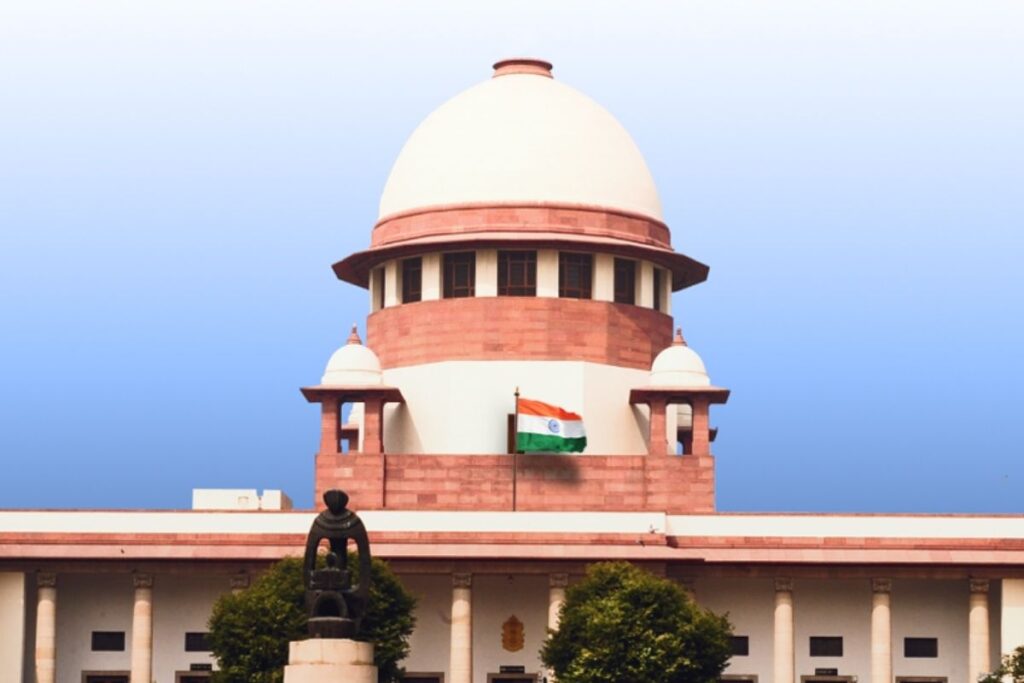
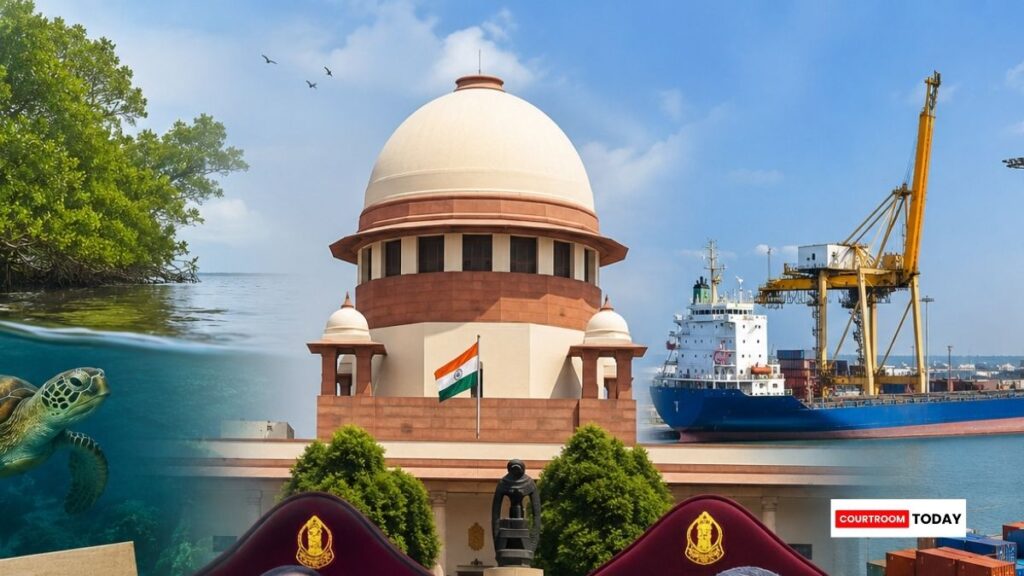
In a sharp observation during the hearing on the expansion of Pipavav Port in Gujarat, the Supreme Court questioned whether there was “a single project” that environmental activists had supported, while stressing that infrastructure growth was essential for the country’s development.
The matter came before a Bench of Chief Justice of India Surya Kant and Justice Joymalya Bagchi, which refused to entertain a plea challenging the environmental clearance granted for the port expansion project.
The petition was filed by environmentalist Chetan Kumar Navintray Vyas, who raised concerns about the impact of the project on marine ecology, including Olive Ridley turtles, mangroves, marine mammals and bird species in the region.
Senior advocate Anitha Shenoy argued before the Court that the environmental clearance was granted without properly considering the ecological consequences. She also submitted that the project had remained stalled for over a decade and that deficiencies in the Environment Impact Assessment report were ignored.
However, the Bench pointed out that both the Environment Impact Assessment and the National Green Tribunal had already examined the objections and found no substantial environmental threat.
The Court remarked, “Show us a single project where these environmentalists have said we welcome this.” It further observed that projects linked to ports and infrastructure were necessary for national development and economic growth.
The Bench said, “You want to stall everything in the name of the environment. How can the country develop without infrastructure?” At the same time, the judges clarified that precautionary environmental safeguards remained important.
The Court also highlighted Gujarat’s geographical suitability for deep-sea ports. It questioned where else such large ports could realistically be established and whether India should allow port-related economic activities to shift to other countries.
During the hearing, the petitioner’s counsel submitted that nearly 90% of fish landing along the Saurashtra coast takes place near the Pipavav area and that the expansion could seriously affect the livelihood of fisherfolk dependent on the fishing economy.
In response, the Bench stated that economic activity linked to fisheries was not the determining factor in assessing environmental clearance under the EIA process.
The judges further noted that the petitioner’s primary objection related to turtle nesting zones had already been examined by the Expert Appraisal Committee. According to the Court, the committee’s inspection report found the apprehensions to be unsupported by evidence.
The Supreme Court ultimately declined to interfere with the National Green Tribunal’s earlier order approving the project expansion. However, it permitted the petitioner to approach the western zone bench of the National Green Tribunal in Pune if there were specific objections that had allegedly not been considered earlier.
The Tribunal, in its earlier order dated November 26, had relied on multiple scientific studies included in the EIA report. These studies covered marine ecology, biodiversity, plant diversity and avian impact assessment, and reportedly concluded that the project would not cause significant adverse environmental impact. The report had even described the port region as an area rich in bird diversity.
——————————————–
Have a case update, article, or deal to share? Courtroom Today welcomes contributions from lawyers, law firms, and legal professionals. Write to contact@courtroomtoday.com