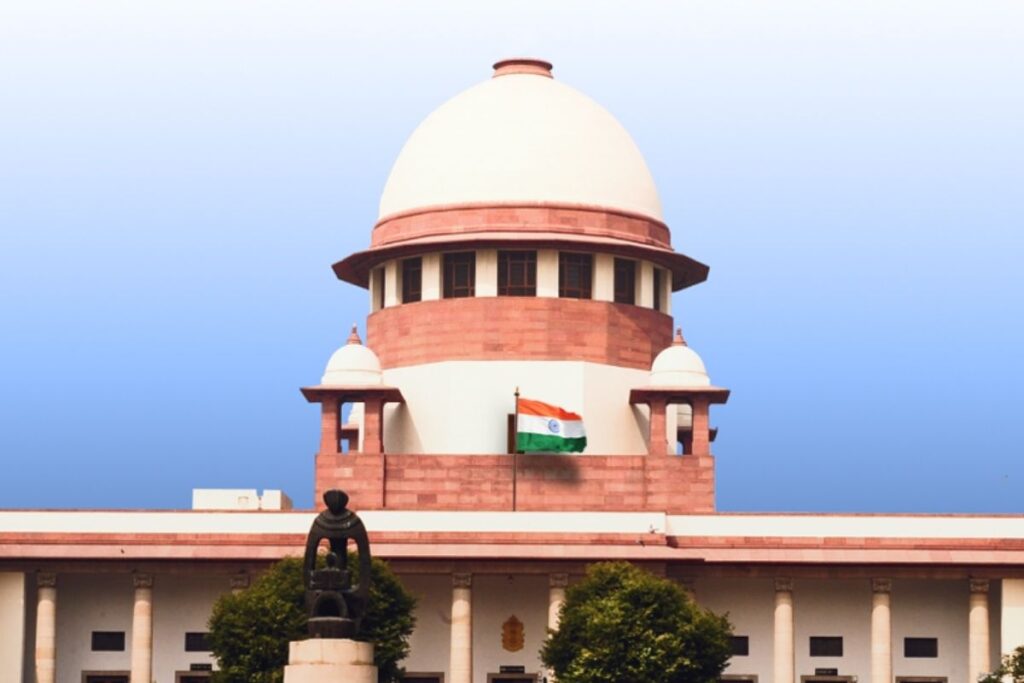
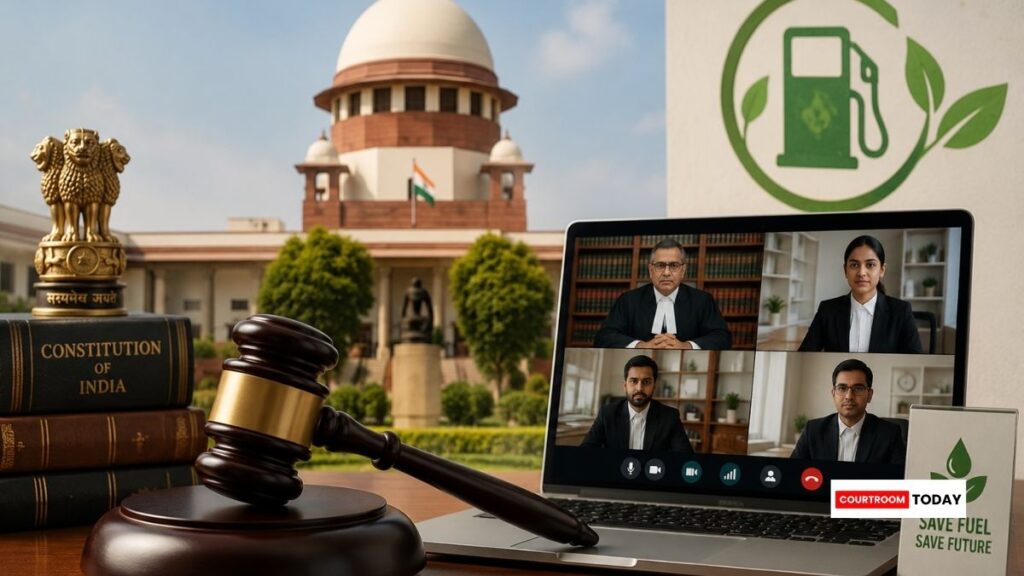
In a significant observation on virtual court proceedings, Surya Kant stated that issuing judicial directions to mandate virtual hearings across courts would not be appropriate, while noting that requests have already been made to High Court Chief Justices to facilitate such hearings voluntarily.
The remarks came when the Supreme Court was asked to urgently hear a plea seeking directions for virtual hearings in all Delhi district courts as a fuel-saving measure amid the ongoing fuel conservation efforts linked to the West Asia crisis.
The petitioner’s counsel argued that expanding virtual hearings would serve the “national interest” by reducing fuel consumption. However, the Chief Justice clarified that district courts fall under the administrative supervision of High Courts and decisions regarding hearing modes should be taken at that level.
CJI Surya Kant informed the court that he had already written to Chief Justices of various High Courts requesting them to permit virtual hearings wherever possible. According to him, several High Courts have already implemented such measures.
“It may not be appropriate issue directions on judicial side. I have already requested the Chief Justices. Most have already implemented. It has to be voluntary exercise by both the Bar and the Bench,” the CJI observed during the hearing.
The Court further emphasised that district courts are administered by High Courts, making it more suitable for individual High Courts to decide whether virtual hearings should be expanded in their jurisdictions.
The development follows a recent administrative decision by the Supreme Court to introduce mandatory virtual hearings for selected categories of matters on miscellaneous working days and partial court working days. The move was part of broader fuel conservation efforts being adopted in light of the US-Iran conflict and the resulting West Asia situation.
After concerns were raised by members of the Bar, the Supreme Court later clarified that lawyers facing genuine difficulties in appearing virtually would still be permitted to appear physically before the court.
The latest observations indicate that while the judiciary is encouraging wider adoption of virtual proceedings, the Supreme Court does not presently favour imposing a uniform judicial mandate across all courts in the country. Instead, the Court appears inclined towards an administrative and voluntary approach involving cooperation between judges, lawyers, and High Court administrations.
——————————————–
Have a case update, article, or deal to share? Courtroom Today welcomes contributions from lawyers, law firms, and legal professionals. Write to contact@courtroomtoday.com