The High Court of Chhattisgarh has issued fresh directions for the 2026 Summer Vacation, introducing video conferencing hearings and partial work-from-home arrangements for court staff. The move comes after recent circulars issued by the Supreme Court of India regarding fuel conservation and vehicle pooling.
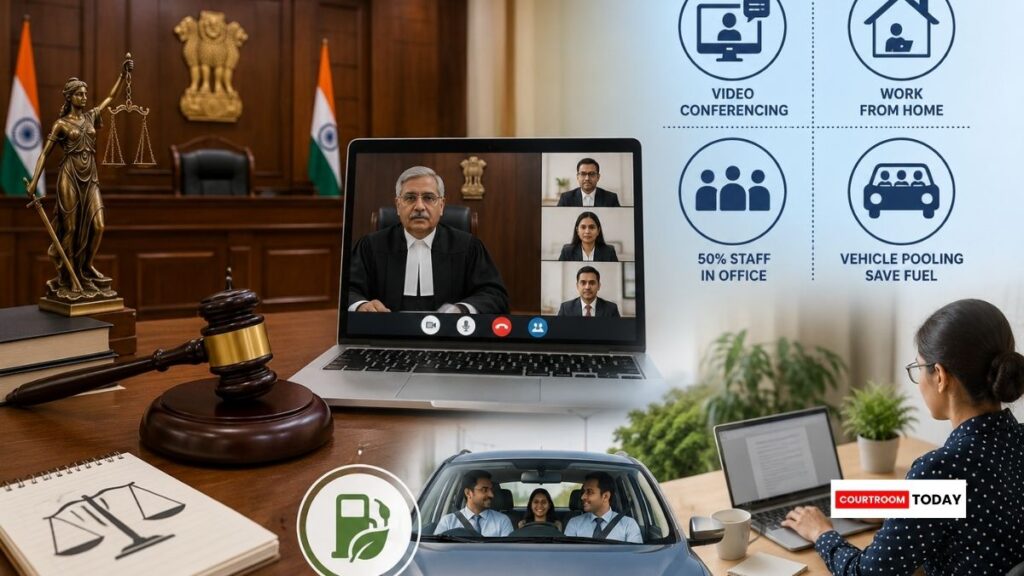
According to the circular issued by Registrar General Rajnish Shrivastava, all hearings during the vacation period will ordinarily be conducted through virtual mode. However, advocates facing unavoidable difficulties in joining online hearings will still be allowed to appear physically before the Court.
The High Court has also clarified that benches will continue to have discretion to direct physical hearings in matters where in-person proceedings are considered necessary. This means hybrid functioning may continue depending on the nature of the case and judicial requirements.
The circular further directs Section In-Charges and Heads of Offices in both the High Court and District Judiciary to permit employees to work from home for up to two days every week. At the same time, authorities must ensure that at least 50 percent of staff members remain physically present in office for smooth functioning.
Employees availing work-from-home arrangements have been instructed to remain accessible through telephone communication and attend office whenever required by the administration.
In another important step aimed at reducing fuel consumption, Judicial Officers and Ministerial Officers attached to the High Court and District Judiciary have been advised to use vehicle pooling arrangements and share official vehicles wherever possible.
The High Court has also assigned responsibility for ensuring smooth virtual functioning during the vacation period. The Registrar (Judicial) and Registrar (Computerization) have been directed to supervise and ensure proper compliance with video conferencing arrangements.
The circular states that the continuation of these measures after the Summer Vacation period will depend on the prevailing circumstances at that stage. The Court may reassess the functioning model before deciding whether such arrangements should continue beyond the vacation period.
——————————————–
Have a case update, article, or deal to share? Courtroom Today welcomes contributions from lawyers, law firms, and legal professionals. Write to contact@courtroomtoday.com