Indian workplaces are witnessing a meaningful transformation in the way professional relationships are understood and managed. Earlier corporate structures often prioritised authority, hierarchy, and output while giving limited attention to employee dignity and interpersonal conduct. Presently, organisations across sectors are recognising respect as an essential component of sustainable workplace governance. Respect-centered work culture is no longer treated as an abstract ethical aspiration. It has become a practical necessity connected with compliance obligations, employee retention, institutional reputation, and operational stability.
This transition is visible across multinational corporations, start-ups, educational institutions, healthcare establishments, financial organisations, and traditional family-owned enterprises. Employers are increasingly acknowledging the legal and commercial risks associated with hostile work environments, discriminatory practices, and insensitive leadership behaviour. Simultaneously, employees are becoming more aware of their legal entitlements and less willing to tolerate professional environments characterised by intimidation, exclusion, or humiliation.
The growing emphasis upon respectful workplace culture reflects broader societal developments involving constitutional values, labour rights awareness, gender sensitivity, and evolving employment expectations. Modern organisations are gradually understanding respect not merely as a behavioural preference but as a governance principle with direct implications for institutional credibility and legal accountability.
Changing Nature of Employer Employee Relationships
Professional relationships within Indian workplaces have undergone substantial changes during the past decade. Earlier employment structures frequently operated through rigid hierarchies where authority remained concentrated within senior management. Employees were often expected to accept managerial conduct without questioning workplace behaviour or institutional practices.
Modern workplaces function differently. Employees increasingly expect transparent communication, procedural fairness, equal opportunity, and professional courtesy within day to day interactions. Organisational culture is now evaluated through leadership behaviour, grievance handling mechanisms, and institutional responsiveness towards employee concerns.
This transformation has been influenced by educational advancement, global workplace exposure, and increased professional mobility. Employees today possess greater awareness regarding labour protections, workplace rights, and anti-discrimination principles. Consequently, organisations can no longer rely solely upon traditional authority structures to maintain operational discipline.
Respect centered culture has therefore emerged as an important organisational objective because businesses recognise the long-term consequences of employee dissatisfaction, workplace hostility, and governance failures. Professional respect is increasingly viewed as essential for maintaining employee trust and institutional legitimacy.
Legal Developments Encouraging Respectful Work Environments
Indian legal frameworks have significantly contributed towards changing workplace culture expectations. Employment jurisprudence increasingly reflects constitutional principles relating to dignity, equality, and fair treatment within professional environments.
The implementation of workplace harassment legislation created substantial compliance obligations for employers concerning employee protection and grievance redressal. Organisations became legally responsible for establishing Internal Committees, conducting fair inquiries, preserving confidentiality standards, and implementing preventive safeguards against inappropriate workplace conduct.
These legal obligations encouraged employers to examine broader organisational behaviour patterns rather than focusing only upon isolated incidents of misconduct. Many businesses recognised that respectful workplace culture serves as an important preventive mechanism against disputes, complaints, and reputational exposure.
Several organisations now seek guidance from a Posh law firm in Delhi to strengthen compliance structures, review inquiry procedures, and ensure legally sustainable workplace governance practices. Employers increasingly appreciate that compliance cannot be achieved merely through policy documentation unless organisational culture genuinely supports respectful interaction and accountability.
Judicial observations concerning employee dignity and institutional fairness have further reinforced the importance of maintaining respectful professional environments. Courts increasingly examine whether organisations acted responsibly during grievance handling and whether procedural fairness was maintained throughout internal proceedings.
Respect Has Become a Retention Strategy
Employee retention has become a significant concern across Indian industries. Skilled professionals frequently prioritise workplace environment alongside compensation structures while evaluating employment opportunities. Respectful treatment, transparent communication, and professional recognition now influence career decisions to a considerable extent.
Organisations with reputations for toxic leadership behaviour, workplace harassment, or discriminatory conduct often struggle to retain experienced employees. In contrast, businesses known for fair treatment and ethical workplace culture frequently enjoy stronger employee loyalty and institutional credibility.
Modern professionals seek workplaces where contributions are acknowledged and where interpersonal conduct reflects professionalism rather than intimidation. Employees increasingly value psychological comfort, collaborative work culture, and accessible leadership practices.
This transition has encouraged organisations to reassess managerial training, communication protocols, and employee engagement strategies. Businesses are gradually recognising that productivity and operational efficiency cannot be sustained within environments characterised by hostility or disrespect.
Respect centered workplace culture therefore serves not only as an ethical objective but also as an important commercial consideration influencing recruitment and retention outcomes.
Workplace Respect and Gender Sensitivity
Gender sensitivity has become an integral aspect of workplace culture discussions within Indian organisations. Employees increasingly expect workplaces to maintain environments free from harassment, exclusionary behaviour, inappropriate remarks, and discriminatory treatment.
The implementation of workplace harassment legislation created greater awareness regarding acceptable professional conduct and employer accountability. Organisations realised that failure to address gender related concerns may expose them to legal proceedings, reputational damage, and institutional distrust.
Many companies now conduct regular posh awareness training sessions to familiarise employees with professional conduct standards, reporting mechanisms, and workplace behavioural expectations. Such initiatives are gradually encouraging more open discussions regarding employee dignity, interpersonal boundaries, and organisational accountability.
Importantly, employees today expect more than formal compliance measures. They evaluate whether organisational leadership genuinely supports gender inclusion through transparent conduct, equal opportunity practices, and impartial grievance handling mechanisms.
Respect centered culture therefore increasingly includes protection against discriminatory conduct and active encouragement of professional equality within workplace environments.
Leadership Conduct Shapes Organisational Behaviour
The conduct of senior management plays a defining role in determining workplace culture. Employees frequently observe leadership behaviour to assess whether organisational values are genuinely implemented or merely reflected within written policies.
Leaders who communicate respectfully, respond fairly to grievances, and maintain procedural integrity contribute significantly towards institutional trust. Conversely, workplaces where leadership tolerates intimidation, favouritism, or retaliatory conduct often experience weakened employee morale and increased workplace conflict.
Indian organisations are therefore paying greater attention towards leadership sensitisation programmes and governance training initiatives. Managers are increasingly expected to understand legal obligations concerning employee protection, confidentiality requirements, and fair inquiry procedures.
The role of leadership has expanded beyond operational supervision. Senior executives are now expected to maintain professional ethics, encourage respectful communication, and ensure organisational accountability during difficult situations.
This shift reflects growing recognition that workplace culture is shaped through daily managerial conduct rather than only through formal compliance documents.
Digital Workspaces Have Redefined Professional Conduct
Technology has significantly altered modern workplace interactions. Digital communication platforms, remote collaboration systems, and virtual meetings now form an essential part of professional life across Indian organisations.
These developments have created new expectations regarding respectful conduct within online environments. Employees increasingly expect professional communication standards during virtual interactions, electronic correspondence, and digital collaboration processes.
Inappropriate online remarks, exclusionary communication practices, and disrespectful virtual behaviour may create workplace hostility despite the absence of physical interaction. Organisations are therefore expanding workplace conduct policies to regulate behaviour across digital platforms.
Employers are also recognising the evidentiary significance of digital communication records during internal investigations. Emails, messaging applications, and virtual meeting interactions frequently become relevant during workplace disputes involving misconduct allegations or grievance proceedings.
Consequently, modern respect centered workplace culture extends beyond physical office premises and includes digital professionalism, online accountability, and communication ethics.
Mental Wellbeing and Respectful Workplace Practices
Professional respect is closely connected with employee mental wellbeing. Hostile work environments characterised by humiliation, excessive pressure, public criticism, or intimidation may significantly affect emotional health and workplace productivity.
Indian organisations increasingly acknowledge the relationship between respectful communication and employee wellbeing. Persistent workplace hostility can contribute towards stress related concerns, employee disengagement, absenteeism, and declining institutional morale.
Many businesses are consequently adopting employee support mechanisms such as counselling assistance, wellness initiatives, flexible communication structures, and structured grievance redressal systems. Employers are gradually understanding that respectful workplace practices contribute towards healthier organisational functioning.
Importantly, employees now expect organisations to address workplace concerns proactively rather than react only after disputes escalate. This expectation has encouraged businesses to strengthen internal complaint mechanisms and encourage early conflict resolution processes.
Respect centered workplace culture therefore increasingly includes emotional safety, professional courtesy, and constructive communication standards within everyday organisational interactions.
Public Reputation Depends Upon Workplace Culture
Corporate reputation today is heavily influenced by employee experiences and workplace conduct standards. Social media visibility, professional networking platforms, and employee review forums have increased public scrutiny regarding organisational behaviour.
Allegations involving harassment, discrimination, abusive leadership practices, or unfair treatment can rapidly damage institutional credibility. Consequently, companies are becoming more cautious regarding workplace governance and employee relations management.
Investors, business partners, and prospective employees increasingly examine workplace culture while evaluating organisational reliability. Respect centered governance practices therefore influence not only internal operations but also broader market perception.
Businesses now appreciate that reputational stability depends upon consistent employee treatment standards and legally compliant organisational conduct. Workplace culture has effectively become an important component of corporate governance assessment and risk management strategy.
Conclusion
The rise of respect centered work culture within Indian organisations reflects a deeper transformation in professional expectations, legal awareness, and governance standards. Respect is no longer viewed as a secondary interpersonal value disconnected from organisational performance. It has emerged as an essential requirement influencing employee trust, legal compliance, institutional reputation, and workplace stability.
Indian workplaces are gradually moving away from rigid authority driven structures towards more accountable and employee conscious professional environments. Employees increasingly expect dignity, fairness, transparency, and professional recognition within their workplaces.
Legal developments, workforce awareness, digital visibility, and evolving corporate governance expectations will likely continue strengthening the importance of respectful organisational culture in future years. Businesses which ignore these developments may face increased legal exposure, reputational challenges, and workforce instability.
Modern workplace governance therefore requires more than policy compliance alone. It requires organisations to create professional environments where respect is reflected consistently through leadership behaviour, institutional procedures, and everyday workplace interactions.
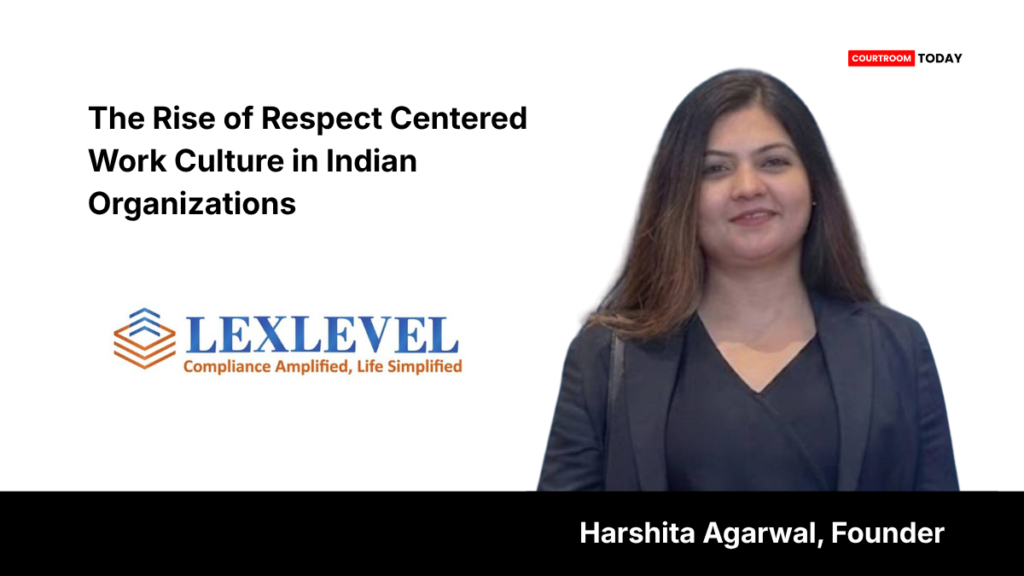
Author: Harshita Agarwal is the Founder of Lexlevel Services.
——————————————–
Have a case update, article, or deal to share? Courtroom Today welcomes contributions from lawyers, law firms, and legal professionals. Write to contact@courtroomtoday.com