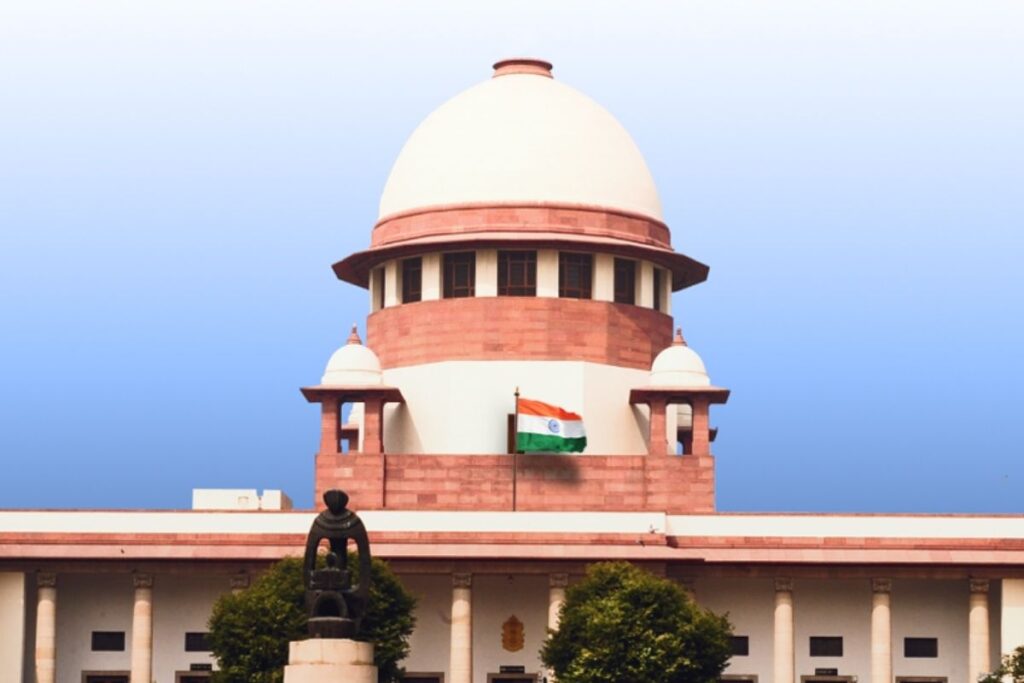
In Shishupal @ Shish Ram and Ors. v. Surjeet and Ors., the Supreme Court delivered a significant judgement recognising homemakers as “nation builders” and introducing a new approach for calculating compensation in motor accident cases involving their death or incapacitation.
A Bench of Justice Sanjay Karol and Justice A.G. Masih held that the loss of domestic care provided by a homemaker is a distinct and compensable head of damages. The Court fixed the minimum value of such domestic care at ₹30,000 per month for compensation purposes.
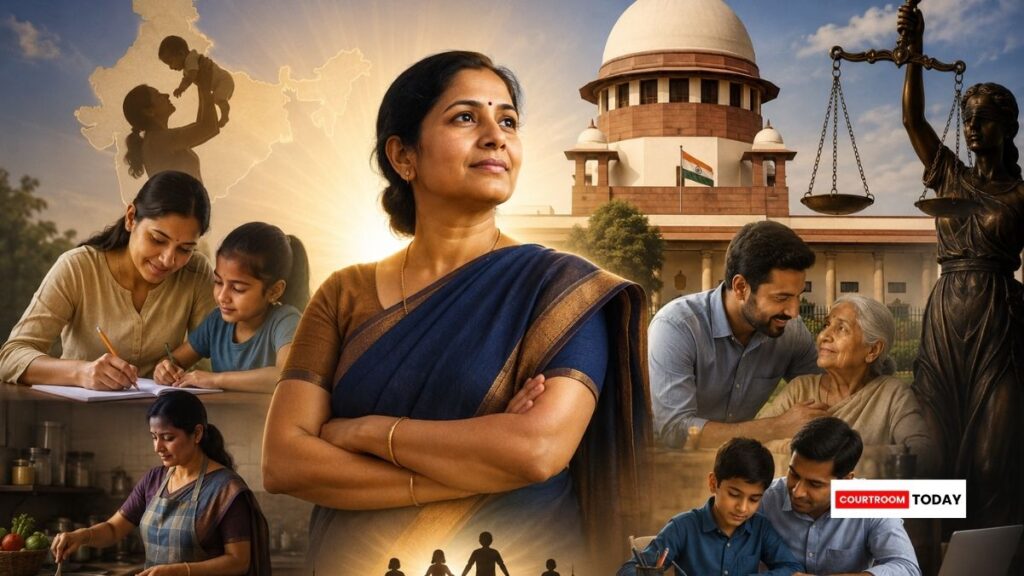
The Bench observed that homemakers perform vital work that keeps families functioning smoothly. Their contribution extends beyond household management and includes raising children, supporting spouses, caring for elderly family members, and creating an environment that enables others to pursue education and employment.
While delivering the judgement, Justice Karol remarked, “The homemaker builds nation.” The Court expressed hope that the term homemaker would increasingly be viewed as synonymous with a nation builder because of the immense role played in shaping families and society.
The Court directed that where a claim involves the death of a homemaker, a composite amount of ₹30,000 per month may be added under the head of “loss of domestic care” if the case involves loss of household management, maternal support, and spousal or parental care. This amount will increase by 10% every three years.
Importantly, the Bench clarified that the ₹30,000 figure serves as a minimum benchmark where a homemaker does not have an independently proven income. In cases where the homemaker is also employed, compensation for loss of domestic care will be awarded in addition to the established income.
The Court noted that homemakers are often wrongly viewed as dependants despite families relying heavily on their unpaid labour. It highlighted that unpaid caregiving and domestic work contribute significantly to the economy but remain largely unrecognised in monetary terms.
Referring to earlier decisions such as Lata Wadhwa, Arun Kumar Agrawal, and Kirti, the Court observed that judicial recognition of homemakers’ contributions has steadily evolved. It also stressed that compensation calculations must reflect present-day realities rather than outdated notional income standards.
Apart from compensation principles, the Supreme Court expressed concern over delays in motor accident claim cases. It urged High Courts and Motor Accident Claims Tribunals to ensure faster disposal of such matters and observed that claims under beneficial legislation should ordinarily not remain pending for more than four years.
The judgement is expected to have a far-reaching impact on motor accident compensation law by formally acknowledging the economic and social value of homemakers’ contributions to families and society.
——————————————–
Have a case update, article, or deal to share? Courtroom Today welcomes contributions from lawyers, law firms, and legal professionals. Write to contact@courtroomtoday.com