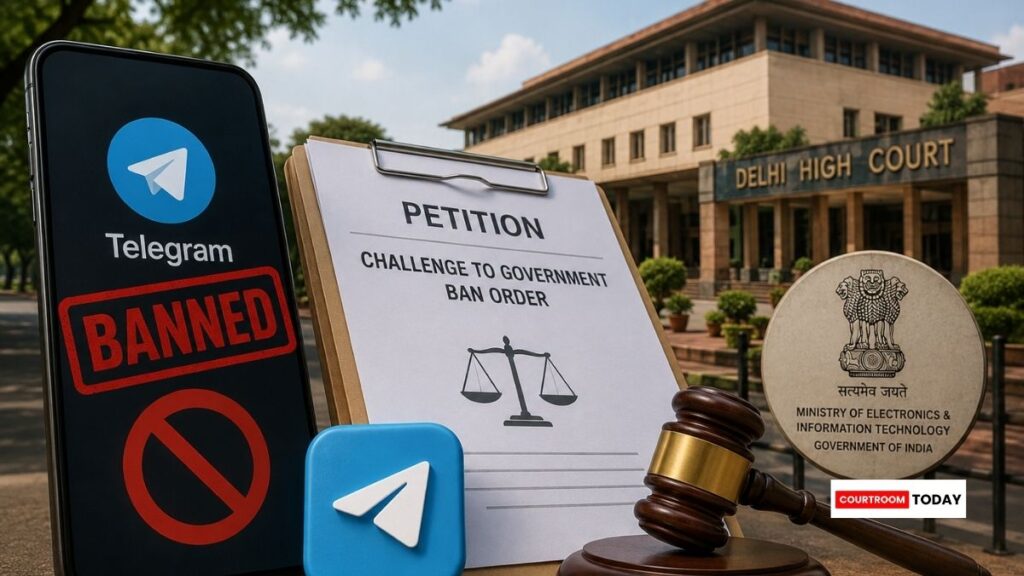
Messaging platform Telegram has moved the Delhi High Court against the Central government’s decision to block access to its services in India until June 22, a measure imposed ahead of the NEET-UG re-examination scheduled for June 21.
The matter was mentioned urgently before Justice Tejas Karia by advocate Madhav Khosla. The Court agreed to hear the petition on the same day, considering the urgency of the challenge.
Telegram has argued that the ban affects more than 150 million users across India and unfairly targets a single platform while other social media and messaging services continue to operate without restrictions. According to the company, such selective treatment violates Article 14 of the Constitution, which guarantees equality before the law.
In its petition, Telegram contended that the government cannot justify blocking an entire platform merely because some users may have misused it. The company warned that accepting such an approach could create a precedent allowing authorities to suspend digital platforms whenever unlawful activity is detected among a section of users.
The platform further stated that it had been cooperating with government agencies for several weeks. It claimed that after receiving specific URLs linked to objectionable NEET-related content on June 9, the content was removed within an hour. Telegram also said it had taken down more than 900 links connected to unlawful examination material.
The company highlighted its existing moderation framework, which includes artificial intelligence tools, machine-learning systems, and manual review mechanisms to identify and remove harmful or illegal content. It alleged that the government failed to consider these measures before issuing the blocking order.
Telegram also questioned the decision-making process behind the ban. According to the petition, the authorities accepted allegations made by the National Testing Agency (NTA) without adequately sharing the material relied upon or providing reasons demonstrating why a complete platform ban was necessary.
The Central government had invoked Section 69A of the Information Technology Act, 2000, to restrict access to Telegram until June 22. In a separate direction, authorities also ordered the platform to disable the message-editing feature for already-posted messages until June 30.
The government has defended the move as a temporary and necessary step to protect the integrity of the NEET-UG re-examination. Authorities maintain that certain Telegram channels were allegedly used to circulate leaked or fake question papers, coordinate cheating activities, and manipulate message timestamps through editing tools.
The Delhi High Court’s decision on Telegram’s challenge is expected to have wider implications for the balance between examination security measures and digital platform rights in India.
——————————————–
Have a case update, article, or deal to share? Courtroom Today welcomes contributions from lawyers, law firms, and legal professionals. Write to contact@courtroomtoday.com