
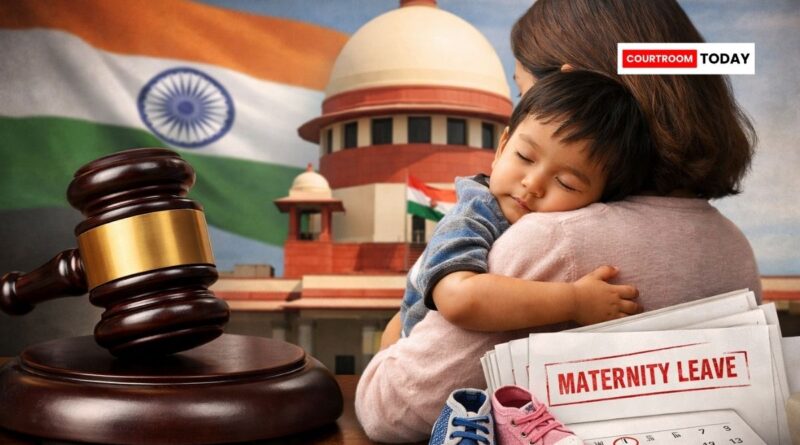
Adoptive Mothers Entitled to Maternity Leave Irrespective of Child’s Age: Supreme Court
The Supreme Court, in Hamsaanandini Nanduri v. Union of India, has declared that denying maternity benefits to adoptive mothers based on the age of the child is unconstitutional. The ruling marks a significant step towards recognising the rights of adoptive mothers under India’s social welfare framework.
A bench comprising Justice JB Pardiwala and Justice R. Mahadevan struck down Section 60(4) of the Social Security Code, 2020 to the extent that it restricted maternity leave only to adoptive mothers of children below three months. The Court held that such a restriction was arbitrary and legally unsustainable.
The Court clarified that an adoptive mother is entitled to 12 weeks of maternity leave regardless of the age of the adopted child. The benefit will begin from the date the child is handed over. This interpretation ensures that adoptive mothers are not denied essential care time due to procedural delays in adoption.
Explaining its reasoning, the Court noted that maternal responsibilities remain the same irrespective of the child’s age. It emphasised that there is no logical basis to differentiate between adoptive mothers based on whether a child is below or above three months at the time of adoption.
“The age limit renders the provision illusory and devoid of practical application,” Justice Pardiwala observed, highlighting that the provision violated Articles 14 and 21 of the Constitution. The Court held that the classification lacked a rational nexus with the objective of the law.
The judgment also considered the realities of the adoption process in India. It recognised that legal procedures under the Juvenile Justice Act and adoption regulations often result in children being declared legally free for adoption only after several months.
The petitioner had argued that this delay unfairly excludes adoptive mothers from maternity benefits, even when they take responsibility for raising infants. The Court found merit in this argument and acknowledged the practical challenges faced by adoptive parents.
The Union Government had defended the provision by distinguishing between biological and adoptive mothers, citing recovery needs after childbirth. However, the Court clarified that the issue was not about the duration of leave but the denial of benefits altogether based on an arbitrary age condition.
Importantly, the Court also urged the Union Government to introduce a law recognising paternity leave as a social security benefit. It observed that parental responsibilities are shared and the law must reflect the needs of both parents and the child.
This judgement strengthens the principle of equality and recognises evolving family structures. It ensures that adoptive mothers receive the support necessary to nurture children, regardless of procedural timelines or age-based classifications.
——————————————–
Have a case update, article, or deal to share? Courtroom Today welcomes contributions from lawyers, law firms, and legal professionals. Write to contact@courtroomtoday.com