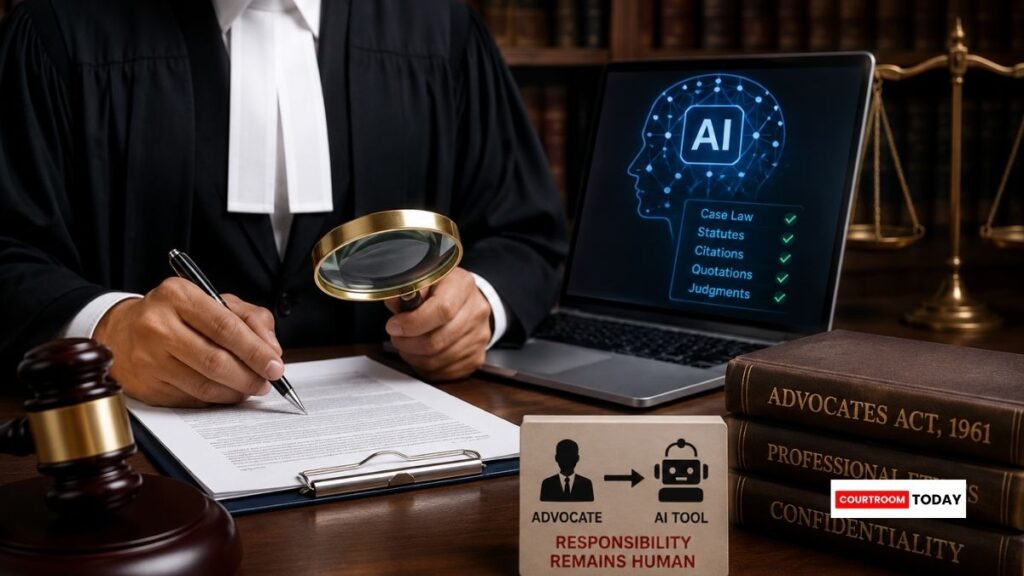
The Bar Council of India (BCI) has made it clear that lawyers cannot avoid responsibility for fake citations, fabricated quotations, or non-existent judgments generated through artificial intelligence tools. Responding to a parliamentary query on the use of AI in the legal profession, the BCI said advocates remain fully accountable for everything filed before courts.
The Council emphasised that legal professionals cannot shift blame to technology if incorrect or misleading material is submitted in court proceedings. According to the BCI, responsibility always rests with the advocate who signs and files the pleading.
In its response, the BCI stated, “If a false case, fake quote, or misleading proposition is filed, the advocate cannot avoid accountability by saying that a machine produced it. The machine neither signs the pleading nor owes duties to the court. The advocate does.”
The Council recognised that AI tools can be useful in legal practice. Lawyers may use such technology for preliminary legal research, drafting assistance, document organisation, summarisation, transcription, indexing of records, and language refinement. However, AI cannot replace professional judgment or ethical duties owed by advocates to courts and clients.
The BCI stressed that every statute, judicial precedent, quotation, and legal proposition generated through AI must be independently verified using reliable and authoritative legal sources before being relied upon in legal proceedings.
The clarification comes at a time when courts have increasingly expressed concern about AI-generated inaccuracies entering legal filings. Across jurisdictions, instances have emerged where lawyers relied on AI-produced research containing fabricated authorities and non-existent judgments.
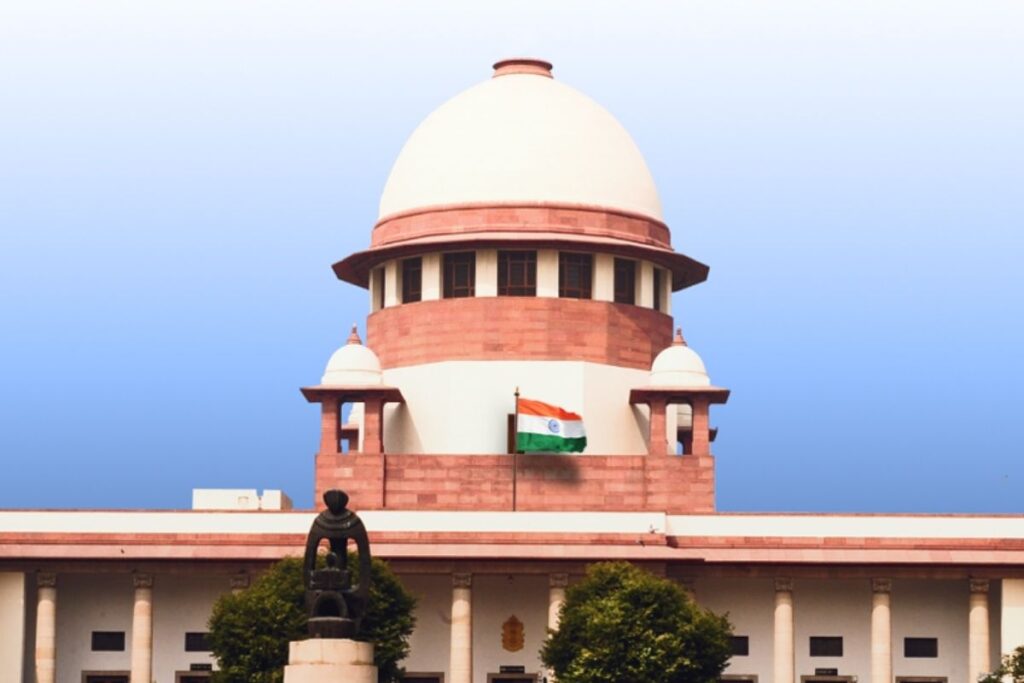
Referring to recent developments, the BCI noted concerns raised by the Supreme Court regarding lawyers filing petitions containing fake citations generated through AI platforms. The Court had also highlighted the decline in drafting standards and the growing tendency to submit lengthy compilations instead of precise legal pleadings.
The Council also referred to the Supreme Court’s observations in the case of Gummadi Usha Rani v Sure Mallikarjuna Rao. In that matter, allegations were raised that a trial court had relied upon AI-generated judgments that did not actually exist. The Supreme Court observed that reliance on such fake authorities could have consequences beyond mere judicial error and may amount to misconduct.
Addressing confidentiality concerns, the BCI warned advocates against uploading privileged client information, confidential communications, or sensitive legal strategies onto unsecured AI platforms. It reiterated that professional duties relating to confidentiality continue to apply even when technology is used.
The Council further stated that the existing provisions of the Advocates Act, 1961 are sufficient to deal with AI-related misuse. Lawyers who submit false citations, fabricated authorities, misleading arguments, negligent pleadings, or breach client confidentiality through AI-assisted work may face disciplinary proceedings under Sections 35 and 36 of the Act.
The BCI concluded that AI can assist lawyers, but accountability for legal work will always remain with the human professional, not the technology.
——————————————–
Have a case update, article, or deal to share? Courtroom Today welcomes contributions from lawyers, law firms, and legal professionals. Write to contact@courtroomtoday.com