BCI Withdraws 3-Year Ban on New Law Colleges, Supreme Court Disposes Petition
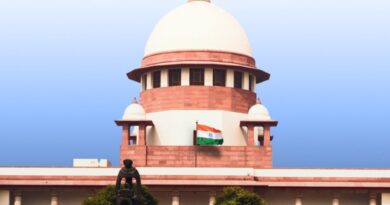
In Jatin Sharma v. Bar Council of India and Vocational Education Foundation Society v. Bar Council of India, the Supreme Court was informed that the Bar Council of India has withdrawn its three-year moratorium on opening new law colleges.
A Bench of Justices Vikram Nath and Sandeep Mehta was hearing a writ petition challenging the Bar Council of India’s 2025 notification that had imposed a blanket restriction on establishing new law institutions across the country.
During the hearing, Advocate Radhika Gautam, appearing for the Bar Council of India, informed the Court that the earlier decision to impose the moratorium had been revoked. Recording this statement, the Bench disposed of the petition.
The Court also permitted the petitioner society to apply for approval to start a law college for the academic session 2025–26, in accordance with the applicable rules and regulations.
The challenge had been raised by the Vocational Education Foundation Society. It argued that the three-year moratorium was arbitrary and unfairly prevented institutions from establishing new law colleges despite meeting necessary requirements.
The petition questioned the constitutional validity of the Rules of Legal Education–Moratorium (Three-Year Moratorium) with respect to Centres of Legal Education, 2025. It contended that the restriction violated Articles 14, 19(1)(g) and 21 of the Constitution.
According to the petitioner, the Advocates Act, 1961 does not grant the Bar Council of India the power to impose such a moratorium. It was argued that the blanket ban was neither reasonable nor proportionate.
The society further claimed that it had complied with all regulatory norms. It had resolved to start law courses under Chaudhary Charan Singh University, Meerut, and had secured land, infrastructure, and necessary approvals from the University and the State Government.
The petitioner alleged that it had been prevented from submitting its application because the online portal was not opened. Later, when the moratorium was introduced, only pending applications were exempted, leaving it without relief.
Reliance was also placed on a 2020 judgement of the Punjab and Haryana High Court in Chandigarh Education Society v. Bar Council of India, which had struck down a similar moratorium as unconstitutional.
With the Bar Council’s decision to withdraw the restriction, the primary grievance in the present petition no longer survived. The Supreme Court, therefore, closed the proceedings.
However, a related challenge in Jatin Sharma v. Bar Council of India remains pending before the Court, where the broader validity of the earlier moratorium is under consideration.
The development brings relief to institutions seeking to establish new law colleges and marks an important moment in the ongoing debate over regulation and expansion of legal education in India.