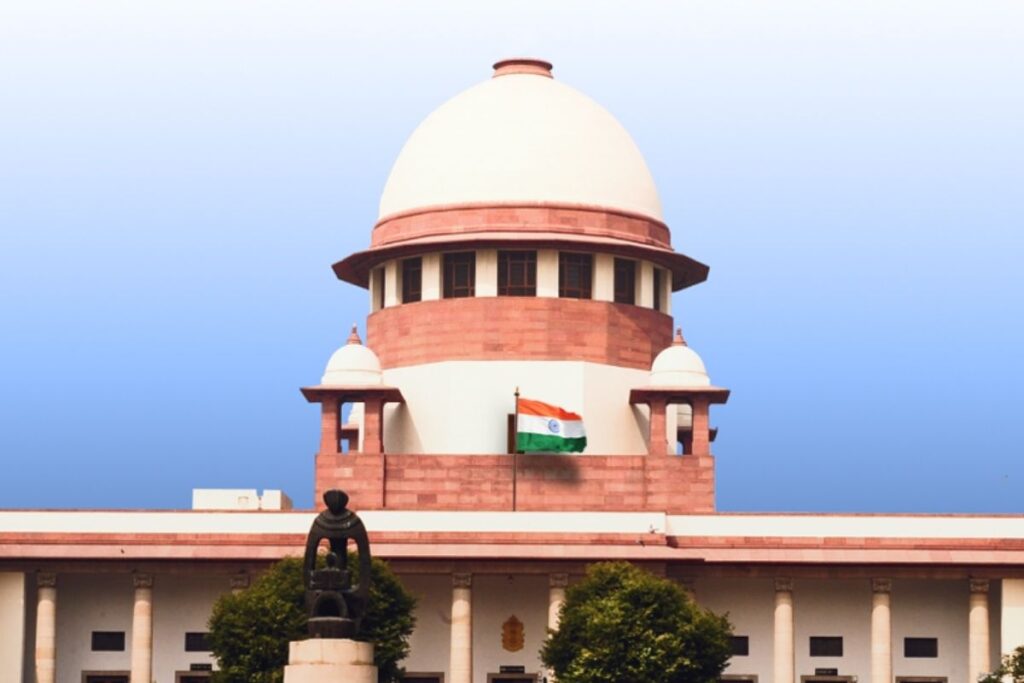

The Supreme Court will examine in Haji Abdul Razzak v. State of Madhya Pradesh and Others whether a habeas corpus petition can challenge continued detention caused by successive arrests, even after the detainee’s bail application has been rejected.
A Bench of Justices M.M. Sundresh and Sheel Nagu issued notice on July 1, 2026, while hearing Haji Abdul Razzak’s challenge against a Madhya Pradesh High Court order dismissing his habeas corpus petition.
Razzak has reportedly remained in custody since August 2021. He claims that whenever his release becomes likely, fresh criminal proceedings, preventive detention orders or other coercive measures are initiated to ensure that he continues to remain incarcerated.
Senior Advocate Siddharth Dave, appearing for Razzak, argued that the written grounds of arrest were not supplied to him. He relied on Mihir Rajesh Shah v. State of Maharashtra and questioned the High Court’s decision to reject the habeas plea merely because bail had earlier been denied.
Additional Solicitor General S.V. Raju, representing Madhya Pradesh, opposed the petition’s maintainability. He submitted that the High Court had already considered the relevant arguments and found Razzak’s custody to be “correct” after noting that his bail request had been rejected.
Justice Sundresh observed that the dispute raised broader legal questions beyond the rejection of bail. The Supreme Court consequently issued notice and agreed to examine the challenge against the High Court’s ruling.
Razzak was first arrested in August 2021 in an attempt-to-murder case under Section 307 of the Indian Penal Code. Preventive detention orders under the National Security Act were subsequently passed against him in August 2021, April 2022 and January 2023.
According to the petition, each preventive detention order was later revoked because it did not receive approval from the State Advisory Board. Razzak alleges that repeated criminal proceedings and preventive detention measures reflect a continuing pattern of executive action intended to restrict his liberty.
He has also claimed that bank accounts belonging to his family were frozen, demolition proceedings were initiated and mining operations connected with the family were suspended. The petition describes these measures as a “sustained and coordinated exercise of executive power”.
Razzak maintains that his habeas corpus petition was not filed as an alternative to regular bail proceedings. Instead, it challenged the overall legality of his continued detention arising from repeated arrests, criminal cases and preventive detention orders.
The High Court had relied on State of Madhya Pradesh v. Kusum Sahu to dismiss the petition. Razzak argues that his case is different because his constitutional challenge was initiated independently and not merely after repeated rejection of bail applications.
He has further contended that Article 22(1), which protects the right to know the grounds of arrest, applies to all offences. The Supreme Court will now consider whether bail rejection prevents constitutional scrutiny of detention allegedly prolonged through successive arrests.
——————————————–
Have a case update, article, or deal to share? Courtroom Today welcomes contributions from lawyers, law firms, and legal professionals. Write to contact@courtroomtoday.com