Judicial Officer Above Collector and Police Chief While Acting as Judge: Allahabad High Court
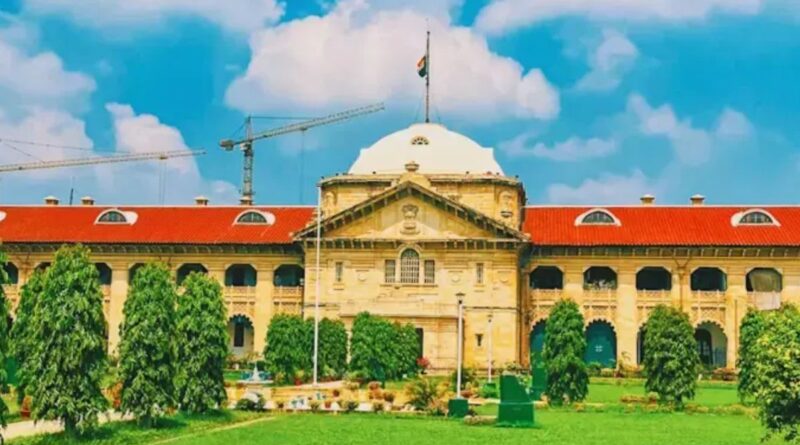
In Sanu @ Rashid v State of UP, the Allahabad High Court has observed that a judicial officer, while performing judicial duties, stands above the district magistrate, district police chief and even the political head of the State.
The observation was made by Justice Arun Kumar Singh Deshwal while dealing with a petition alleging illegal detention by the Uttar Pradesh Police.
The case arose after police officers allegedly ignored an order issued by the Chief Judicial Magistrate (CJM) directing the production of CCTV footage from a police station. The footage was sought in connection with allegations that a man had been illegally detained by the police.
While examining the issue, the Court emphasised the constitutional position of judicial officers within the justice system. It clarified that when a judicial officer is performing judicial functions, their authority is superior to administrative and executive officers, including the district magistrate and the district police chief.
The Court referred to the Supreme Court’s ruling in All India Judges Association v Union of India, which recognised that judges cannot be compared with administrative or executive authorities.
The High Court stated:
“It is clear that while a Judicial Officer (may be the Judicial Officer of Junior Division) is discharging his judicial function, he is above to the District Magistrate or District Police Chief and even to political head of a State.”
The Court stressed that anyone entering a courtroom must respect the authority of the judicial officer presiding over the court. Disregarding orders passed by a magistrate, the Court said, not only amounts to contempt of court but also undermines the rule of law.
Justice Deshwal also noted concerns about police officers allegedly attempting to pressure judges to pass particular orders. The Court remarked that once a judicial officer sits on the dais, they command authority over all individuals present in the courtroom.
The judgement further addressed the issue of CCTV monitoring in police stations. The Court noted that despite directions from the Supreme Court, CCTV cameras installed in police stations are not being regularly checked.
To ensure accountability, the Court held that Chief Judicial Magistrates and other magistrates may conduct random inspections of police stations after court hours to verify whether CCTV systems are functioning properly. Such inspections must be carried out with prior intimation to the District Judge.
The Court directed that police officials must cooperate during these inspections and warned that any obstruction or disrespect shown to a judicial officer would be dealt with strictly.
On the merits of the case, the Court found that the petitioner had been illegally detained by the police for three days. His formal arrest was shown only after his sister approached the CJM seeking intervention.
In view of the illegal detention, the Court directed the State government to pay compensation of ₹1 lakh to the petitioner. The Court further allowed the State to recover the compensation amount from the salaries of officials responsible for the illegal detention.
The Station House Officer and Investigating Officer admitted their fault in the matter. The Court therefore held them guilty of contempt of court but took a lenient view and sentenced them to custody till the rising of the court.
Additionally, the Court directed the Director General of Police (DGP), Uttar Pradesh, to examine the broader issues raised in the case and take appropriate action against erring police officials in accordance with law.
——————————————–
Have a case update, article, or deal to share? Courtroom Today welcomes contributions from lawyers, law firms, and legal professionals. Write to contact@courtroomtoday.com