
Justice Nagarathna Backs 3-Year Practice Rule, Says Experience Key To Becoming Judge
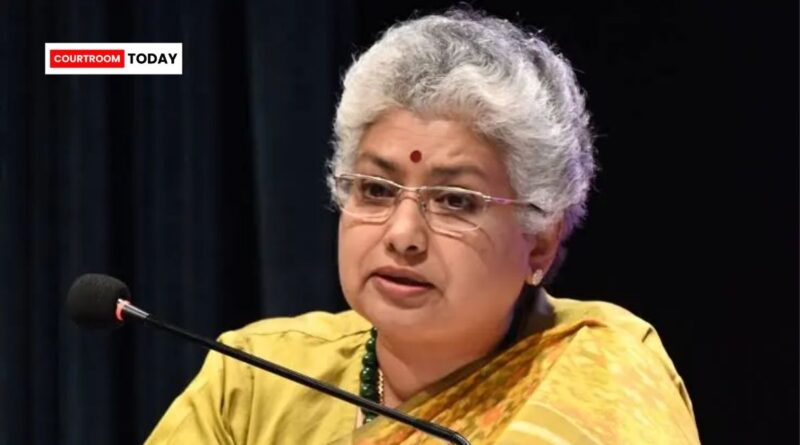
Justice BV Nagarathna, while addressing students at Chanakya National Law University, Patna, spoke on the Supreme Court’s judgement mandating a minimum three years of legal practice for entry into judicial service. She strongly defended the rule, stating that practical experience is essential for becoming a capable judge.
She rejected the concern that this requirement may discourage women candidates from pursuing judicial careers. According to her, the perception that three years of practice is a loss of time reflects a misunderstanding of the profession and its demands.
“I disagree with you Sir. Next year, I will be completing 40 years in the Bar. I have so many things to learn. If students who come from the bench of the classroom to the bench of the Court hall, they are losing out on experience- please don’t think losing three years is a loss of life. I am learning still at 40…If the student is not able to stand before a judge and make an argument, seeking a relief, how will you, as a judge, grant relief? Don’t think the three year of life is lost. That is a very negative attitude you have.”
Justice Nagarathna emphasised that exposure to courtroom practice builds confidence and equips future judges with essential decision-making skills. She pointed out that without understanding how lawyers function, a judge may struggle to effectively handle proceedings.
“Three years is not sufficient, according to me. However, the Supreme Court has said three years. If a case is dismissed for default, what will you do? You will go and give your personal affidavit as a lawyer and seek restoration because a litigant has suffered because you have not appeared. If you have not done that as a lawyer, how will you grant relief as a judge?… If you have not been in the Bar, how will you face the advocates in the Court? You will not be successful. You will start crying on the bench, that will add a very negative aspect to your personality. Unless you get into the water, you can’t swim.”
She further stressed that maturity plays a crucial role in judicial functioning, especially in serious matters. She noted that even High Court judges are generally expected to have attained a certain level of experience before appointment.
“Unless you know the tactics and strategy of a lawyer, you can’t be a successful judge. If you want to be a successful judge, practice for more than 3 years and then write the exam. This is my advice.”
On judicial administration, Justice Nagarathna clarified the scope of the “Master of the Roster” principle. She explained that once the Chief Justice assigns a case to a bench, the matter is entirely within the control of that bench.
“Chief Justice, whether of the High Court or the Supreme Court is the Master of the Roster. Nothing more can be said about it… Thereafter, he has no say in the matter. It is for that particular bench to decide.”
Addressing gender representation, she highlighted that women often face challenges due to dual responsibilities at home and work, which affects long-term participation in the legal profession.
She also suggested that governments should ensure at least 30 percent representation of women as law officers to improve visibility and create a stronger pipeline for judicial appointments. Despite existing challenges, she expressed optimism about the increasing number of women entering the judiciary.
——————————————–
Have a case update, article, or deal to share? Courtroom Today welcomes contributions from lawyers, law firms, and legal professionals. Write to contact@courtroomtoday.com