Karnataka High Court Asked to Frame Clear Rules for Access to Live-Streamed Hearing Recordings
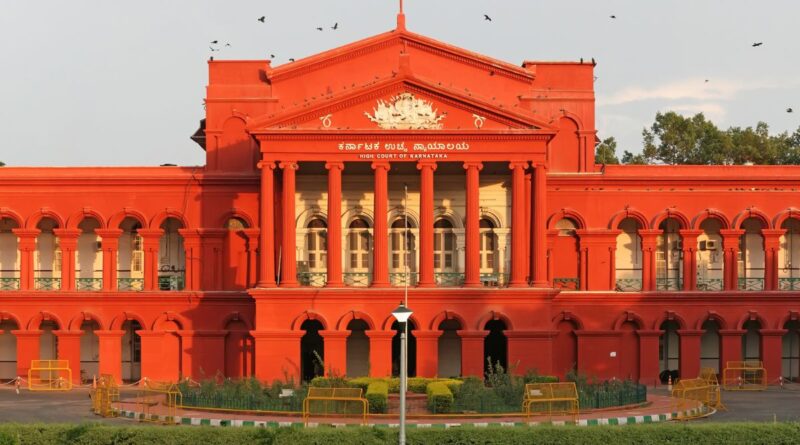
A petition has been filed before the Karnataka High Court seeking clear guidelines on how people can access recordings of live-streamed court hearings.
The plea was filed by advocate Angad Kamath, after his request for a recorded court proceeding was rejected by the High Court’s Assistant Registrar (IT). He had sought access to the recording for academic purposes under the Karnataka Rules on Live Streaming and Recording of Court Proceedings, 2021.
Advocate Kamath has challenged the rejection, arguing that the existing rules do not clearly explain when access to recorded hearings can be granted or refused. According to him, this lack of clarity leads to inconsistent and arbitrary decisions.
The matter was heard by Justice BM Shyam Prasad, who has now asked the High Court’s administrative side, including the Registrar (IT) and Assistant Registrar (IT), to respond. The case will be heard next on February 6.
The recording request was rejected on December 30, 2025, by relying on Rule 10 of the 2021 Rules. Rule 10 limits how recordings can be used and states that archived footage is not an official court record unless a Bench directs otherwise.
However, the petitioner argued that Rule 8 deals with access, while Rule 10 deals only with usage. He stated that he was asking only for access, not permission to use the recording. According to him, the authority wrongly mixed up these two separate issues.
He also pointed out that Rule 8(3) does not specify the grounds on which access can be allowed or denied. Because of this gap, he has requested the Court to direct the High Court administration to frame and publish proper guidelines or standard operating procedures (SOPs). These should clearly mention timelines, reasons for rejection or approval, and a review mechanism.
The petition argues that the absence of such safeguards can result in arbitrary decisions and violates Article 14 of the Constitution, which guarantees equality before law.
During the hearing, the Court questioned how the petitioner would deal with the restrictions under Rule 10. In response, he referred to Rule 10(2)(iv), which allows the Court to permit the use of authorised recordings for academic, training, or educational purposes.
The petitioner also requested an interim order to preserve the specific recording, as recordings are kept only for a limited period. The Court declined to pass an interim order for now but allowed him to raise the issue again on the next date.
——————————————–
Have a case update, article, or deal to share? Courtroom Today welcomes contributions from lawyers, law firms, and legal professionals. Write to contact@courtroomtoday.com