Karur stampede: Supreme Court flags conflicting Madras HC orders, seeks propriety
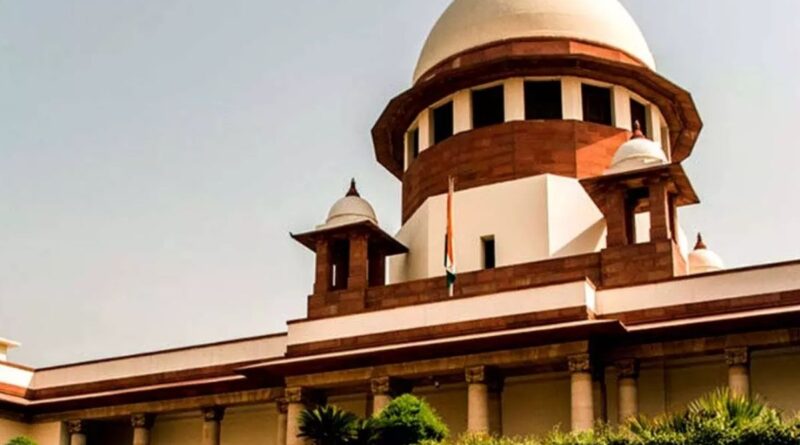
The Supreme Court on Friday raised serious concerns over how two different benches of the Madras High Court dealt with the same incident—the tragic Karur stampede in Tamil Nadu that claimed 41 lives.
A Bench of Justices JK Maheshwari and NV Anjaria was hearing an appeal filed by Tamilaga Vettri Kazhagam (TVK), the political party founded by actor Vijay, challenging the High Court’s October 3 order directing a Special Investigation Team (SIT) probe into the tragedy.
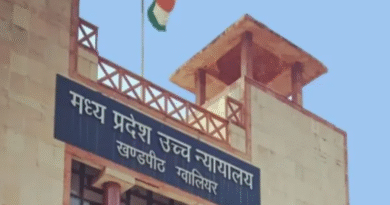
The top court pointed out that while the Madurai Bench of the High Court had earlier rejected a plea seeking a CBI probe, the principal bench in Chennai later entertained another plea related to the same incident and went beyond its limited scope to order an SIT probe.
The Supreme Court questioned why the Chennai bench took up a petition that was primarily meant for creating a Standard Operating Procedure (SOP) for rallies and roadshows, especially when the Madurai Bench was already hearing related pleas.
“Once the Madurai Bench was dealing with the Karur incident, why did the principal bench entertain this case? The petition only asked for an SOP, not a criminal probe,” the Bench observed.
The judges noted that the High Court’s principal bench went beyond the petitioner’s request and directed an SIT investigation, which was never sought in the plea.
Background
The stampede took place on September 27, 2025, during a political rally addressed by actor-turned-politician Vijay in Karur. The tragedy occurred after a massive crowd gathered at the venue.
Following the incident, Justice N Senthilkumar of the Madras High Court directed an SIT probe, observing that the State police had failed to act promptly and register proper criminal cases. The order came even though the original petition only sought the framing of guidelines for safe conduct of rallies.
TVK’s appeal before the Supreme Court argued that the High Court had passed remarks and directions without hearing the party or verifying facts. The party also claimed that video clips mentioned in the High Court order were presented without confirmation of authenticity, leading to prejudice against TVK.
The plea also criticised the High Court’s decision to form an SIT comprising only State Police officers, despite expressing doubts about their independence.
Arguments before the Supreme Court
Senior Advocate Gopal Subramanium, representing TVK, contended that the matter should have been heard by the Madurai Bench, not the principal bench in Chennai. He said the order was passed without hearing TVK or even making it a party to the case.
“I was not even made a party. How can observations be made without giving a chance to explain? There was no affidavit, no status report, no case diary,” he submitted.
Senior Advocate Aryama Sundaram supported the need for an independent probe but requested that the SIT be chaired by a retired Supreme Court judge to ensure fairness.
“All we want is a fair investigation. Let a retired Supreme Court judge oversee it and decide who will be part of the SIT,” he said.
Representing the Tamil Nadu government, Senior Advocate Mukul Rohatgi clarified that the State had not suggested any names for the SIT, which was entirely formed by the High Court itself.
However, the Supreme Court Bench pointed out that both benches of the High Court had taken contradictory stands—while the Madurai Bench had refused to interfere with the police probe, the Chennai bench had ordered a separate SIT on the same day.
“There must be some judicial propriety. Two different benches cannot pass conflicting orders on the same issue,” Justice Maheshwari remarked.
Senior Advocate P Wilson, also representing the State, said that the actor’s late arrival at the venue caused the crowd to swell and led to the tragedy.
Meanwhile, Senior Advocate V Raghavachari, representing one of the victims, accused the State police of mishandling the situation and conducting post-mortems hastily, suggesting a lack of seriousness in the investigation.
After hearing all sides, the Supreme Court reserved its verdict, saying it would decide whether the High Court’s SIT order was justified and whether the principal bench had overstepped its jurisdiction.
——————————————–
Have a case update, article, or deal to share? Courtroom Today welcomes contributions from lawyers, law firms, and legal professionals. Write to contact@courtroomtoday.com