
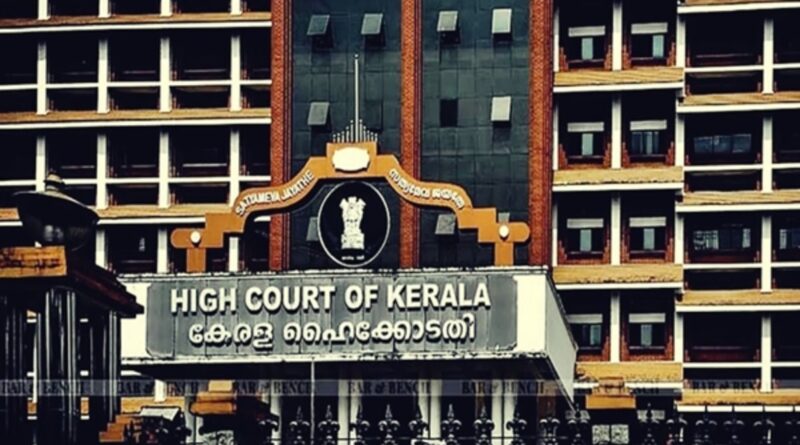
Kerala High Court: CCTV Camera Installed for Elderly Woman’s Safety Cannot Be Removed
A dispute over a CCTV camera between neighbours in Kerala recently reached the Kerala High Court in Sivasankaran @ Sankarankutty v. State of Kerala & ors. A married couple wanted the Court to order removal of a CCTV camera installed in the neighbouring house. They claimed that the camera directly faced their drawing-cum-dining area and bedroom, and that this amounted to an invasion of their privacy.
However, the High Court refused to grant their request. Instead, it focused on why the camera had been installed and whose rights were really at stake.
Background: CCTV, Family Dispute and Criminal Case
The camera was not a routine security device in a random neighbourhood dispute. The neighbours included an elderly woman and her two children. She was not just any neighbour – she was the widow of the petitioner’s late brother.
More importantly, she was also a victim in a serious criminal case. According to the records, she had accused the petitioner (her brother-in-law) of grave offences, including:
- criminal intimidation,
- attempt to rape, and
- outraging of modesty.
The petitioner was the sole accused in that case.
Her children told the Court that the CCTV camera had been installed only because of the continuing threat and harassment from the petitioner. In their version, the camera was a shield, not a weapon — a way to ensure her safety.
Petitioners’ Argument: “Our Privacy Is Violated”
The couple who approached the Court argued that:
- the CCTV camera and focus light were pointed into their home;
- this allowed the neighbours to monitor their private life; and
- this violated their right to privacy under Article 21 of the Constitution.
They also claimed that the purpose of the camera was to harass them, not to provide security.
They had lodged a police complaint earlier, but when no action was taken to remove the camera, they decided to file a writ petition before the High Court.
Respondents’ Stand: “The Camera Protects an Elderly Victim”
The elderly woman and her children narrated a very different story.
They said that:
- the petitioner himself was accused of serious offences against the elderly woman;
- he continued to cause harassment and threats; and
- the CCTV system was installed as a safety measure to protect her from further harm.
In short, they argued that the camera was connected to her right to life and security, not to any intention to spy on the couple.
Court’s Legal Approach: Privacy vs Security
Justice N Nagaresh did not treat the case as a simple “camera facing the house” issue. The Court placed the dispute within the larger framework of fundamental rights.
The judge referred to the Supreme Court’s landmark decision in KS Puttaswamy (Retd.) v. Union of India, where the right to privacy was recognised as a part of the right to life and personal liberty. However, the High Court stressed that this right is not absolute.
The Court underlined an important point:
- Individuals live in society, not in isolation.
- One person’s autonomy and privacy must coexist with the rights and safety of others.
- When rights clash, courts must balance them using principles like proportionality.
In this case, the Court had to weigh:
- the couple’s right to privacy, against
- the elderly woman’s right to life, safety and security as a crime victim.
No Proof of “Snooping” by CCTV
After examining the materials placed on record, the Court noticed an important gap in the petitioners’ case:
They had not produced concrete evidence to show that:
- the CCTV cameras were actually being misused to watch the inside of their house, or
- any recorded footage was being used to interfere with their personal life.
On the other hand, the Court accepted that:
- the elderly woman was a victim in a pending criminal matter;
- the accused was the very person now seeking removal of the camera; and
- there were credible concerns about her safety.
In these circumstances, the Court held that the purpose of the CCTV system was protection, not surveillance of the petitioners’ private space.
Decision: Petition Dismissed, Camera Stays
The High Court concluded that the elderly woman and her children had a strong claim to protection of their right to life and security. Unless there was clear proof that the camera was being used to intrude into the petitioners’ private affairs, the Court could not direct its removal.
Therefore:
- the writ petition filed by the couple was dismissed;
- no order was passed directing removal of the CCTV camera.
Lawyers in the Case
- The petitioners were represented by Advocates VM Krishnakumar and PR Reena.
- The elderly woman and her children were represented by Advocates SK Saju and Sreejith Cherote.
- Government Pleader Dheeraj AS appeared for the State.
——————————————–
Have a case update, article, or deal to share? Courtroom Today welcomes contributions from lawyers, law firms, and legal professionals. Write to contact@courtroomtoday.com