
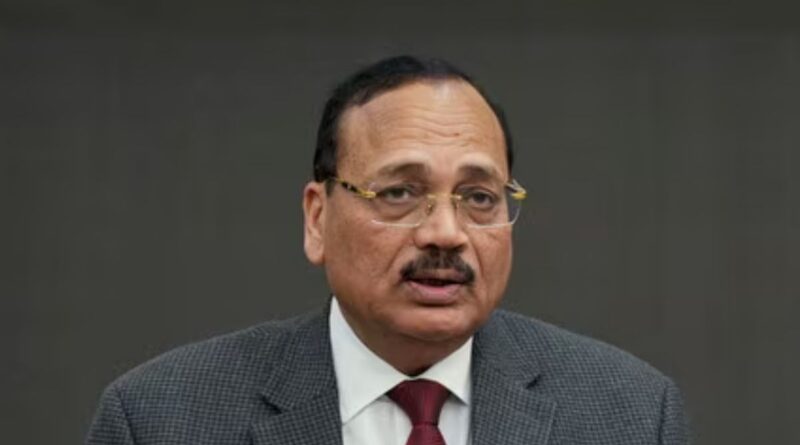
Legal Profession Rewards Depth, Not Everything At Once: CJI Surya Kant
At the 16th Convocation Ceremony of Gujarat National Law University (GNLU), Gandhinagar, Chief Justice of India Justice Surya Kant drew a striking parallel between T20 cricket and the legal profession, urging young lawyers to embrace specialisation rather than attempting to master every field at once.
Addressing the graduating batch, the Chief Justice observed that the legal profession does not reward those who try to do everything equally. He said that clarity of role and understanding one’s strengths are essential for long-term growth and credibility at the Bar.
Using a cricket analogy, he remarked that in a T20 match, no one expects Suryakumar Yadav to bowl the death overs or Jasprit Bumrah to anchor a batting chase. Each player is trusted to perform the role best suited to their abilities.
“The teams that succeed are not built on the assumption that every player must excel at everything. No one expects Suryakumar Yadav to bowl the death overs, or Bumrah to anchor a chase. They are trusted to do precisely what they do best, and the team is built around that clarity,” he said.
He explained that the same principle applies to advocacy. Lawyers must gradually discover where their thinking finds discipline and where their skills can develop depth. According to him, those who eventually become distinguished do so by recognising their natural strengths over time.
Justice Surya Kant noted that this understanding does not emerge immediately. It may take years of practice to identify one’s professional path. However, confronting this question early can help lawyers shape their identity with confidence and purpose.
Reflecting on the early years of practice, he said that many young advocates experience a sharp difference between academic study and courtroom realities. While textbooks provide conceptual knowledge, real practice demands discipline, responsibility and the ability to function under pressure.
He described this shift as the difference between “learning the map and navigating the territory.” In courtrooms and chambers, practical judgement and preparation often matter as much as doctrinal clarity.
The Chief Justice also highlighted that much of a lawyer’s work remains unseen. Research, drafting and internal discussions rarely receive public recognition. Effort in the profession, he observed, often precedes acknowledgment by several years.
Emphasising integrity, he said that public trust in the justice system depends on the conduct of those who practise law. Every professional decision either strengthens or weakens confidence in the legal system.
He expressed hope that legal education would increasingly adopt an apprenticeship-based model, allowing students to learn within the profession through sustained engagement with its responsibilities.
Concluding his address, Justice Surya Kant invoked the Upanishadic injunction, “Satyam Vada, Dharmam Chara” (Speak truth, Walk in righteousness), reminding graduates that reliability in difficult moments ultimately defines a lawyer’s character.